
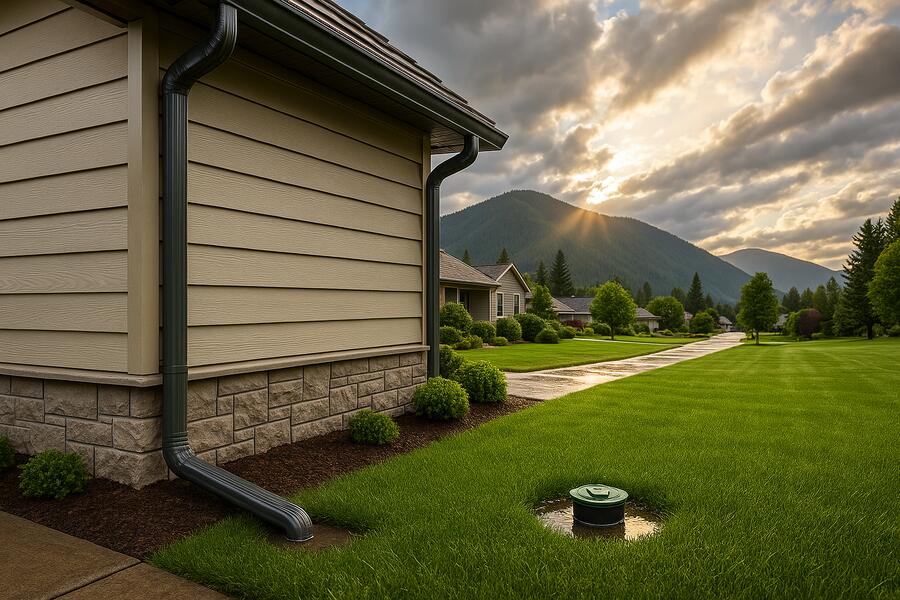
Effective roof drainage is crucial for protecting your home’s foundation and landscaping, especially in Missoula, MT, where we experience significant rainfall and snowmelt. While traditional above-ground downspout extensions work for many properties, some homeowners face challenges with surface water runoff, aesthetic concerns, or limited space. This is where underground downspout drainage solutions become invaluable.
At Aces Seamless Gutters, we specialize in comprehensive gutter and downspout systems, including advanced subsurface drainage. Underground downspout drainage routes roof water through buried pipes, carrying it far away from your foundation to a designated discharge point. It’s a permanent, discreet, and highly effective way to manage rainwater, preventing common issues like foundation cracks, basement flooding, and landscape erosion. We often recommend these systems to homeowners looking for a cleaner, more robust alternative to standard downspout extensions.
Why Consider Underground Downspout Drainage?
Addressing Common Drainage Challenges
Traditional downspout extensions, while functional, can sometimes fall short in specific scenarios:
-
Aesthetic Concerns
Long, unsightly extensions snaking across your lawn can detract from curb appeal and interfere with landscaping.
-
Obstruction and Tripping Hazards
Above-ground extensions can be tripping hazards, get in the way of lawnmowers, or simply be inconvenient for foot traffic.
-
Limited Discharge Options
Sometimes, simply extending the downspout still leaves water pooling too close to the house or creates new erosion problems further away.
-
Foundation Protection
For homes with persistent basement leaks, crawl space moisture, or a history of foundation issues, getting water as far away as possible is paramount.
The Benefits of a Buried System
Opting for underground downspout drainage offers several significant advantages:
- Invisible and Aesthetically Pleasing: The pipes are buried, maintaining the beauty of your landscaping and eliminating visible clutter.
- Superior Foundation Protection: Water is reliably channeled 10-20+ feet away from the foundation, drastically reducing hydrostatic pressure and erosion risks.
- Enhanced Landscape Preservation: Prevents trenches, washouts, and damage to garden beds caused by concentrated surface runoff.
- Increased Property Value: A well-designed and installed underground drainage system is a valuable upgrade, demonstrating proactive home maintenance.
- Reduced Maintenance: Once installed correctly, these systems require minimal ongoing maintenance compared to constantly adjusting surface extensions.
💡 Key Takeaway: Underground downspout drainage offers an aesthetically pleasing, permanent solution to water management challenges, providing superior foundation protection, preserving landscaping, and enhancing property value by discreetly moving water far from your home.
Key Components and Options for Underground Drainage
Choosing the Right Pipe Material
The type of pipe used is critical for the longevity and performance of your underground system:
-
Solid PVC Pipe (SDR 35 or Schedule 40)
This is the premium choice for buried downspout drainage. Smooth-walled PVC offers excellent flow rates, is highly durable, resistant to crushing, and less prone to blockages than corrugated pipe. We typically recommend 4-inch solid PVC for its superior performance and lifespan.
-
Dual-Wall HDPE (High-Density Polyethylene)
This pipe has a smooth interior for good flow and a corrugated exterior for strength and flexibility. It’s a robust option, especially suitable for areas where ground movement might be a concern.
-
Avoid Corrugated Flexible Drain Pipe
While cheaper, flexible corrugated pipe is highly susceptible to clogging with sediment and debris due to its ribbed interior. It also crushes easily and is much harder to clean, leading to frequent blockages and system failure. We strongly advise against using it for permanent underground solutions.
Effective Discharge Options
How the water is released at the end of the underground pipe is as important as the pipe itself:
-
Pop-Up Emitters
These are discreet, low-profile covers typically installed flush with the ground. They “pop up” when water pressure builds within the pipe, releasing water onto the surface, and then recede when drainage stops. They are excellent for lawn areas where aesthetics are a priority.
-
Dry Wells
A dry well is an underground chamber filled with gravel that allows water to slowly percolate into the surrounding soil. This is a good option in areas with well-draining soil where surface discharge might not be ideal, such as small yards or properties adjacent to neighbors.
-
French Drains
An underground downspout can connect to a French drain, which is a trench filled with gravel and a perforated pipe. This system is designed to collect and redirect subsurface water, making it a comprehensive solution for managing both roof runoff and general yard drainage.
-
Daylight Outlet / Swale
If your property has a natural slope, the pipe can be routed to “daylight” at a lower elevation, discharging water into a natural swale, ditch, or a municipal storm drain. This is often the simplest and most cost-effective discharge method.
💡 Key Takeaway: For underground drainage, solid PVC (SDR 35 or Schedule 40) or dual-wall HDPE pipe is recommended for durability and flow. Discharge options include discreet pop-up emitters, dry wells for slow absorption, French drains for comprehensive yard drainage, or simple daylighting on sloped properties.
Installation Considerations for a Durable System
Proper installation is paramount for the long-term success of any underground downspout drainage system. Cutting corners here will lead to costly issues down the road.
-
Call Before You Dig (811)
Always call 811 to have underground utility lines marked before any digging begins. This is a non-negotiable safety step.
-
Adequate Slope
The pipe must have a continuous, consistent slope to ensure gravity effectively moves water away and prevents standing water. A minimum 2% slope (a 2-inch drop for every 100 feet of run) is recommended, with 3-5% being ideal.
-
Proper Depth
Pipes should be buried deep enough to protect them from surface loads and freezing, typically 12-24 inches beneath the turf, depending on local frost lines in Missoula.
-
Secure Connections
All pipe connections, including the transition from the downspout to the buried pipe, must be watertight and securely fastened to prevent leaks and infiltration of soil.
-
Cleanout Access
Installing accessible cleanout points can make future maintenance and unclogging much easier, although a well-designed system with proper slope and solid pipe is less prone to blockages.
| Component | Recommended Options | Why it Matters |
|---|---|---|
| Pipe Type | 4-inch Solid PVC (SDR 35 / Schedule 40) or Dual-Wall HDPE | Smooth interior prevents clogs, durable against crushing, long lifespan. |
| Discharge Point | Pop-up Emitter, Dry Well, French Drain, Daylight Outlet | Prevents water pooling, protects foundation, integrates with landscaping. |
| Slope | Minimum 2% (ideally 3-5%) continuous slope | Ensures gravity flow, prevents standing water and blockages. |
| Depth | 12-24 inches (below frost line) | Protects from freezing, crushing, and surface interference. |
| Safety | Call 811 before digging | Essential for avoiding underground utility lines. |
Investing in underground downspout drainage is a smart decision for homeowners in Missoula, MT, seeking a superior, long-term solution to managing roof runoff. It’s a system that works silently and effectively, protecting your home’s integrity and enhancing your property’s value for decades to come.
Have questions about underground downspout drainage? Reach out to our team today.
Frequently Asked Questions About Underground Downspout Drainage
How much does underground downspout drainage typically cost?
The cost of professionally installed underground downspout drainage can vary widely based on the length of the runs, the number of downspouts, the chosen discharge method, and local labor rates. Generally, homeowners in Missoula can expect to pay between $300-$800 per downspout run, though comprehensive systems with multiple downspouts and complex discharge points could range from $2,500 to $8,000 for a full residential setup.
Can underground downspout drains freeze in Missoula’s winter?
Properly installed underground downspout drainage systems are designed to minimize freezing risks. This involves burying the pipes below the frost line (typically 12-24 inches deep in Missoula), ensuring a continuous slope for water to drain completely, and using solid pipe that doesn’t trap water. If designed correctly, water should not sit in the pipes to freeze.
What kind of maintenance do underground downspout drains require?
Compared to above-ground extensions, underground drains require minimal maintenance. The most important tasks are ensuring leaves and debris don’t clog the downspout entry point and occasionally checking pop-up emitters for proper function. If a blockage does occur, an accessible cleanout or a simple garden hose flush can often resolve it. Regular gutter cleaning also helps prevent debris from entering the underground system.

