
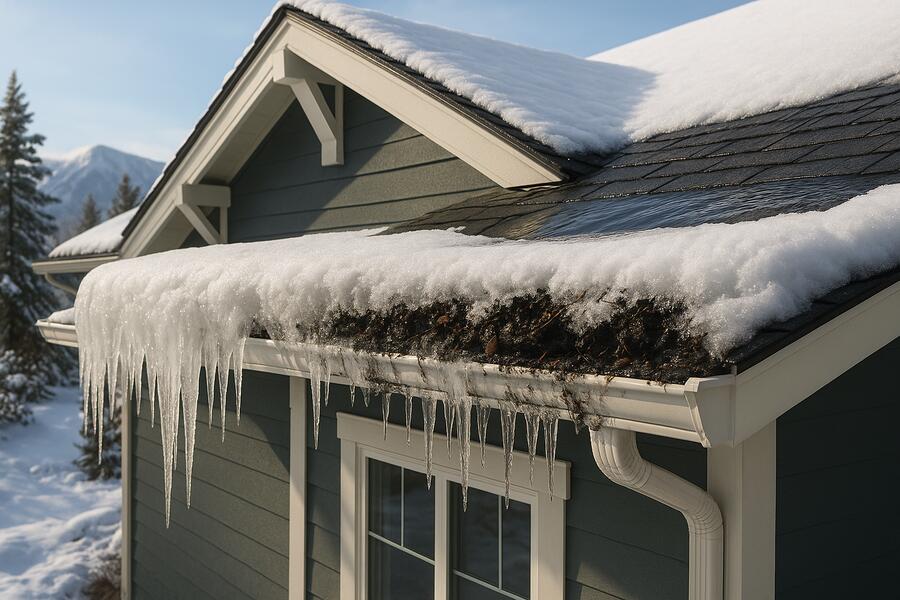
Winter in Missoula, MT, brings with it beautiful snowfalls, but it also ushers in a common and potentially destructive homeowner headache: ice dams. These ridges of ice that form at the edge of your roof can cause significant damage to your home, from structural issues to interior water leaks. While many factors contribute to ice dam formation, one of the most significant and often overlooked culprits is clogged gutters.
At Aces Seamless Gutters, we regularly encounter homes suffering the aftermath of severe ice dams, and almost invariably, a primary contributing factor is a neglected gutter system. Understanding the connection between clogged gutters and ice dams is crucial for protecting your property during the colder months. A professional gutter cleaning near me before winter can make all the difference. Let’s explore the mechanism by which blocked gutters contribute to this damaging phenomenon.
Understanding Ice Dams: The Basics
Before diving into how clogged gutters exacerbate the problem, let’s briefly understand what an ice dam is and why it forms.
1. The Role of Uneven Roof Temperatures
Heat loss from your home is the primary driver.
-
Warm Roof, Cold Eaves:
Ice dams typically form when snow on the upper, warmer parts of your roof (directly over the heated interior of your home) melts. This melting is usually due to poor attic insulation and/or ventilation, which allows heat from your home to escape and warm the roof deck.
-
Refreezing at the Eaves:
As this meltwater flows down the roof, it reaches the colder eaves and overhangs (which extend beyond the heated portion of the house and cool to the outside air temperature). Here, the water refreezes, forming a barrier of ice—the ice dam.
2. The Damming Effect
Why a small ice ridge causes big problems.
-
Trapped Water:
Once an ice dam forms, it creates a literal dam that prevents subsequent meltwater from draining off the roof. This water pools behind the ice dam.
-
Water Intrusion:
The trapped water, now unable to flow into the gutters, can seep backward and upward under your roof shingles. From there, it can penetrate the roof decking, attic insulation, and eventually leak into your home’s ceilings and walls, causing extensive water damage.
💡 Key Takeaway: Ice dams primarily form due to uneven roof temperatures, where heat loss from the home melts snow on upper roof sections. This meltwater then refreezes at the colder eaves, creating an ice barrier. This “damming effect” traps subsequent meltwater, forcing it under shingles and into the home, causing significant water damage.
The Critical Link: Clogged Gutters and Ice Dams
How a blocked gutter system directly contributes to the problem.
1. Blocked Drainage Pathway
No escape for the meltwater.
-
Debris Accumulation:
In Missoula, gutters often accumulate leaves, pine needles, shingle grit, and other debris, especially after the fall season. If not cleaned out thoroughly before winter, this debris acts as a blockage.
-
Initial Freezing:
When the first cold snap hits, any standing water or damp debris in these clogged gutters will freeze solid. This frozen mass creates an immediate, low-level ice dam within the gutter itself.
2. Exacerbating the Refreezing Process
A cold, solid obstacle.
-
Extended Cold Surface:
A gutter full of frozen debris provides an extended, consistently cold surface at the very edge of the roof. As meltwater from the warmer parts of the roof reaches this already-frozen gutter, it encounters a vast, cold expanse perfect for refreezing.
-
Elevated Ice Barrier:
Instead of flowing freely away from the house, the meltwater hits the frozen debris in the gutter and instantly begins to refreeze, building upon the existing ice. This forms a larger, more formidable ice dam that quickly extends beyond the gutter and onto the lower edge of the roof.
3. The Vicious Cycle of Water Backup
More ice, more damage.
-
No Outlet:
With the gutters completely blocked by ice, there is no escape route for the accumulating meltwater. It has nowhere to go but to back up onto the roof surface.
-
Increased Pressure:
As more snow melts and more water pools, the hydrostatic pressure behind the ice dam increases. This pressure forces water through even the smallest gaps in your roofing materials, leading to leaks, rot in fascia boards, and damage to interior walls and ceilings.
-
Heavy Ice Loads:
The accumulation of ice in and around clogged gutters can become incredibly heavy, potentially tearing gutters from their fascias, damaging the roof edge, and straining the entire roof structure.
💡 Key Takeaway: Clogged gutters directly contribute to ice dams by forming an initial frozen blockage that prevents proper meltwater drainage. This frozen debris creates a large, cold surface, accelerating refreezing and building up a formidable ice dam that extends onto the roof. With no escape, meltwater backs up, increasing hydrostatic pressure and forcing water under shingles, causing severe leaks, fascia rot, and potentially structural damage due to heavy ice loads.
| Condition | Impact on Ice Dam Formation | Why it Matters |
|---|---|---|
| Clogged Gutters | Create an initial frozen barrier and an extended cold surface at the roof edge. | Directly obstructs drainage, promotes refreezing, and builds ice mass. |
| Poor Attic Insulation | Allows warm air to escape into the attic, heating the roof deck. | Causes snow on the upper roof to melt prematurely. |
| Inadequate Attic Ventilation | Traps warm air in the attic, contributing to a warm roof deck. | Prevents the roof surface from maintaining a consistent, cold temperature. |
| Low Roof Pitch / Complex Rooflines | Water may drain slowly, increasing time for refreezing. | Can create natural areas for snow and ice to accumulate. |
The link between clogged gutters and ice dams is undeniable. A properly maintained gutter system is your first line of defense against the costly damage ice dams can inflict on your Missoula home. Ensuring your gutters are thoroughly cleaned before winter sets in, combined with proper attic insulation and ventilation, is the best strategy to keep your roofline clear and your home protected throughout the snowy season.
Have questions about why clogged gutters lead to ice dams? Reach out to our team today.
Frequently Asked Questions About Ice Dams and Gutters
What are the signs of an ice dam forming?
The most obvious signs are large icicles forming along your eaves and gutters, especially thick ones that seem to create a shelf. You might also see a visible ridge of ice on your roof edge. Inside your home, signs include water stains on ceilings, walls, or dripping from light fixtures, which indicate that water has backed up under your shingles and is leaking into your home.
Can gutter guards prevent ice dams?
Some gutter guards can help prevent ice dams by keeping debris out of the gutters, thus preventing that initial blockage where ice can build. However, gutter guards alone cannot completely stop ice dams. The primary cause is still heat loss from your attic warming the roof. While debris-free gutters are beneficial, robust attic insulation and ventilation are essential for comprehensive ice dam prevention. Some specialized heated gutter guard systems can also actively melt ice.
What should I do if I already have an ice dam?
Never try to chip away large ice dams with a hammer or axe, as this can severely damage your roof and gutters. A safer temporary solution is to create channels through the ice using calcium chloride (filled in old pantyhose/socks) placed across the dam. For significant ice dams, it’s best to call a professional roofing or gutter contractor who has specialized equipment (like steam removers) to safely remove the ice and address the underlying causes without damaging your roof.

