
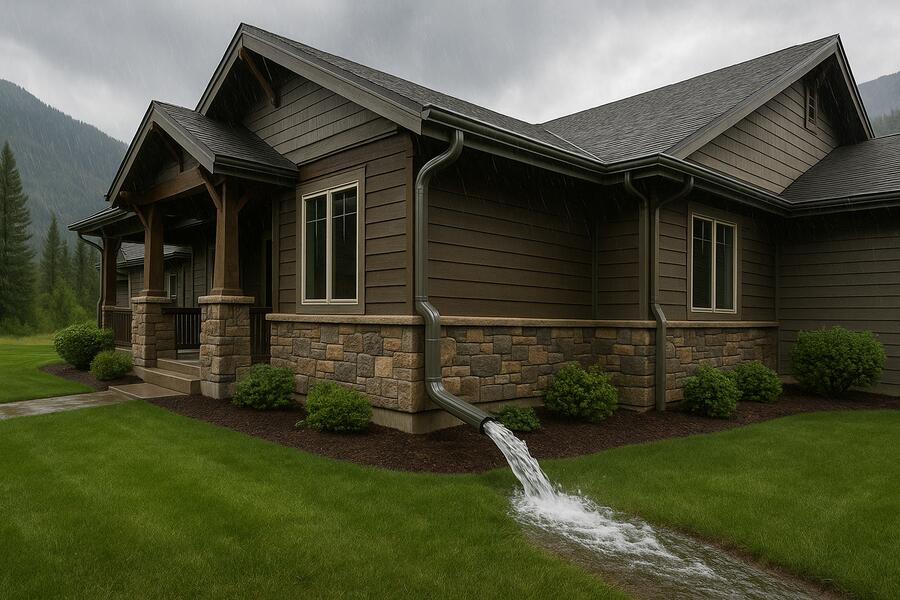
For homeowners in Missoula, MT, safeguarding your property against the unique challenges of our weather—heavy rains, significant snowmelt, and fluctuating temperatures—is a top priority. While many focus on roof integrity, a crucial component often overlooked in the grand scheme of home protection is the gutter system. Your gutters do far more than just keep rainwater from pouring off your roof; they are your home’s primary defense against one of the most destructive forces: water-related foundation damage.
At Aces Seamless Gutters, we consistently emphasize that effective gutters and foundation protection go hand-in-hand. An improperly functioning or non-existent gutter system can lead to severe soil erosion, hydrostatic pressure against your basement walls, and ultimately, costly foundation cracks. Understanding the crucial role of a well-maintained system for your home’s longevity and structural integrity is paramount. This is where quality rain gutters missoula come into play, serving as your home’s first line of defense against water-related structural issues.
The Mechanics of Gutters and Foundation Protection
1. Uncontrolled Runoff: The Enemy of Foundations
Imagine gallons of water pouring directly off your roof, unimpeded. This is precisely what happens without a functional gutter system. This uncontrolled runoff creates several significant problems for your foundation:
-
Direct Impact and Pooling:
Water slams into the ground directly at your home’s perimeter. This creates concentrated pooling, saturating the soil right next to your foundation walls.
-
Soil Erosion (Scouring):
The force of falling water, combined with saturation, can rapidly erode the soil around your foundation. This process, known as scouring, removes the bearing material that supports your footings, potentially leading to uneven settlement.
-
Uneven Saturation:
Without gutters, some areas of your foundation will be constantly waterlogged, while others remain relatively dry. This uneven moisture content causes the soil to expand and contract inconsistently, putting immense stress on the concrete.
2. How Gutters Redirect Water Flow
The primary function of gutters is to collect all the water shed by your roof and channel it to specific discharge points. This controlled redirection is the first and most vital step in foundation protection.
-
Collection:
Gutters intercept roof runoff before it can fall directly to the ground near the foundation.
-
Channeling:
They provide a controlled pathway, guiding the water along the eaves towards downspouts, rather than letting it cascade freely.
-
Controlled Discharge:
Downspouts then direct this large volume of collected water to a precise location, ideally well away from the foundation.
💡 Key Takeaway: Without gutters, roof runoff pools directly against your foundation, causing soil erosion and uneven saturation. Properly installed gutters intercept and channel this water, providing controlled discharge points that are critical for safeguarding your home’s structural integrity.
3. The Role of Downspout Extensions and Proper Grading
Collecting water is only half the battle; getting it far enough away from your foundation is equally important.
-
Downspout Placement:
Properly installed downspouts, strategically placed around your home, are essential for efficiently moving water from the gutters.
-
Extensions:
Downspout extensions or splash blocks are crucial for ensuring water is released at least 5 to 10 feet away from your foundation. This prevents the concentrated discharge from causing localized saturation and erosion.
-
Landscape Grading:
Complementary to gutters, the landscape around your home should be graded to slope away from the foundation (ideally a 5% grade for at least 10 feet). This ensures any water that does reach the ground near the house naturally flows away.
4. Preventing Soil Erosion and Scouring
By directing water away, gutters actively combat soil erosion, which is a common precursor to foundation problems.
-
Stable Soil Base:
When soil remains stable and un-eroded, it maintains its structural integrity as a consistent base for your foundation. This prevents differential settlement, where one part of the foundation sinks more than another.
-
Avoiding Voids:
Erosion can create voids beneath your foundation, removing essential support and leaving sections of your footings unsupported.
💡 Key Takeaway: Effective downspout extensions and proper landscape grading are vital to direct water 5-10 feet away from the foundation. This prevents soil erosion and maintains a stable base, eliminating the risk of voids and differential settlement that can damage your home’s foundation.
5. Mitigating Hydrostatic Pressure and Foundation Cracking
Consistent soil saturation around your foundation leads to hydrostatic pressure, a significant threat to your home’s structure.
-
Saturated Soil:
When the soil around your foundation becomes waterlogged, it expands and exerts tremendous outward pressure on your basement or crawl space walls.
-
Pressure and Cracks:
This hydrostatic pressure can literally push against concrete walls, causing them to bow inward, crack, or even leak. Over time, these cracks can worsen, leading to water infiltration into basements and extensive damage.
-
Consistent Moisture Levels:
Gutters help maintain more consistent moisture levels in the soil around your home, preventing the extreme wet-to-dry cycles that contribute to soil expansion and contraction, thereby reducing pressure on the foundation.
| Gutter Function | Problem Prevented | Benefit to Foundation |
|---|---|---|
| Intercepts Roof Runoff | Water pooling directly at foundation. | Prevents localized saturation and erosion. |
| Channels Water | Uncontrolled water flow down walls. | Protects siding, fascia, and prevents water from seeping into walls. |
| Directs Water Away | Concentrated discharge near perimeter. | Maintains stable soil, prevents scouring and hydrostatic pressure. |
| Controls Soil Moisture | Uneven soil expansion/contraction. | Reduces stress on foundation walls, preventing cracks. |
For any homeowner in Missoula, investing in a robust and well-maintained gutter system is one of the smartest decisions you can make for your home’s long-term health. It’s a proactive measure that prevents a host of expensive problems by simply managing water effectively. Don’t underestimate the power of properly directed water flow in protecting your most valuable asset.
Have questions about gutters and foundation protection? Reach out to our team today.
Frequently Asked Questions About Gutters and Foundation Protection
What are the signs that my foundation is being damaged by poor drainage?
Signs of foundation damage due to poor drainage include cracks in your foundation walls (horizontal, vertical, or stair-step), bowing or bulging basement walls, water in your basement or crawl space, sticky doors and windows, uneven or sloping floors, and visible soil erosion or sinking around your home’s perimeter. Exterior signs like bare spots along the foundation or concrete slabs showing cracking or pitting can also indicate problems.
How often should I clean my gutters to protect my foundation?
To effectively protect your foundation, gutters in Missoula should typically be cleaned at least twice a year: once in the spring after tree budding and again in the late fall after most leaves have fallen. If your property has many deciduous trees nearby, or if you experience particularly heavy storms, more frequent checks and cleanings might be necessary. Gutter guards can significantly reduce the frequency of cleaning needed.
Can I install gutter extensions myself, or should a professional do it?
Basic gutter extensions, such as simple roll-out or flex extensions, can often be installed as a DIY project. However, for more permanent or underground drainage solutions, or if your property has specific grading challenges, it’s advisable to consult a professional. Proper installation ensures that extensions are securely attached, adequately sloped, and direct water far enough away to be effective without creating new problems.

