
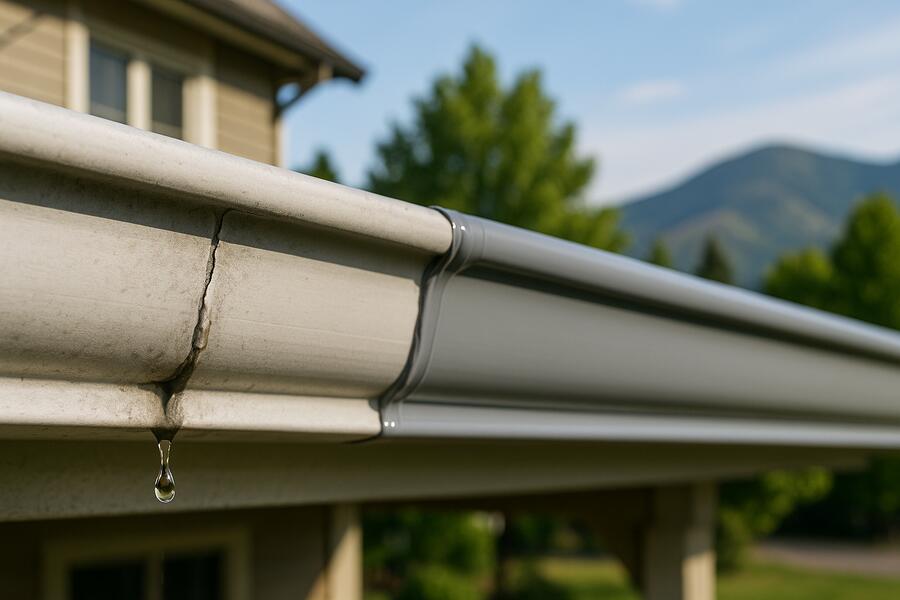
For homeowners in Missoula, MT, the sight of a dripping gutter can be concerning. Small leaks, often at seams, miters (corners), or end caps, might seem minor, but they can lead to significant water damage to your foundation, landscaping, and fascia over time. While the idea of “resealing” might sound simple, a professional gutter resealing process involves several critical steps that ensure a lasting, watertight repair. It’s more than just slapping on some caulk; it’s about meticulous preparation and the right application.
At Aces Seamless Gutters, we routinely perform gutter resealing services, understanding that proper execution is key to stopping leaks for good. Our experienced technicians know that cutting corners on prep work inevitably leads to recurring problems. We approach every resealing job with a detailed, step-by-step method, ensuring that when we perform gutter repair missoula mt, the fix is durable and effective.
Step 1: Thorough Inspection and Cleaning
The first and arguably most crucial step in any successful gutter resealing is identifying the exact source of the leak and ensuring the area is pristine.
-
Pinpointing the Leak:
Before any work begins, our technicians will carefully inspect the entire gutter section, often running water through it, to confirm the precise location of the leak. This ensures we don’t miss any subtle drips.
-
Clearing Debris:
The affected gutter section, and typically several feet on either side, must be completely cleared of leaves, twigs, dirt, and any standing water. A clean surface is paramount for sealant adhesion.
-
Removing Old Sealant:
This is where many DIY attempts fall short. Any old, deteriorated sealant must be meticulously scraped away using a putty knife, wire brush, or specialized tools. Leaving old, compromised sealant creates a poor bonding surface for new material.
💡 Key Takeaway: The initial phase of a gutter resealing service involves a thorough inspection to pinpoint the exact leak source. Crucially, the area must be completely cleared of debris and all old sealant meticulously removed to ensure a clean, optimal bonding surface for the new material.
Step 2: Surface Preparation and Drying
Even after cleaning, further preparation is needed to guarantee maximum adhesion and a long-lasting seal.
-
Wiping and Degreasing:
Once old sealant is removed, the gutter interior around the leak is wiped down with a rag soaked in isopropyl alcohol or mineral spirits. This removes any remaining residue, grease, or oxidation that could prevent proper bonding.
-
Ensuring Complete Dryness:
Sealant will not adhere effectively to a wet or even damp surface. The area must be completely air-dried. In some cases, a heat gun or torch might be used carefully to accelerate drying, especially in cooler or humid Missoula weather. This step cannot be rushed.
-
Roughing the Surface (If Necessary):
For certain gutter materials or if advised by the sealant manufacturer, lightly roughing the surface with sandpaper can create a better mechanical bond for the new sealant.
Step 3: Sealant Application
With the surface thoroughly prepared, the new, high-quality gutter sealant can be applied.
-
Choosing the Right Sealant:
Professionals use high-quality, flexible gutter-specific sealants designed to withstand UV exposure, temperature fluctuations, and constant water immersion. This is typically a commercial-grade product, far superior to standard silicone caulk.
-
Applying a Continuous Bead:
Using a caulking gun, a steady, generous bead of sealant is applied directly over the seam, miter, or end cap on the inside of the gutter. The goal is to create a complete, watertight barrier.
-
Smoothing and Tooling:
The sealant is then smoothed with a smoothing tool or a gloved finger to ensure good contact with both surfaces of the joint and to create a clean, uniform, waterproof seal. Care is taken not to apply sealant to the underside or outside of the gutter, as this can trap water.
💡 Key Takeaway: Proper surface preparation after cleaning includes degreasing and ensuring the area is completely dry, which is critical for sealant adhesion. High-quality, flexible gutter-grade sealant is then applied in a continuous bead, precisely smoothed to create a durable, watertight seal against future leaks.
Step 4: Curing and Final Verification
The job isn’t done until the sealant has properly cured and the repair is confirmed.
-
Curing Time:
Most gutter sealants require a specific curing time, often several hours to 24 hours, during which they should not be exposed to water. Our technicians will advise on the specific curing time based on the product used and current weather conditions.
-
Testing the Seal:
Once cured, the repair is tested. This typically involves running water through the gutter with a hose to visually confirm that the leak has stopped and the new seal is performing as expected.
-
Cleanup:
Any tools, excess sealant, or debris from the repair process are thoroughly cleaned up, leaving your property tidy.
| Gutter Resealing Step | Key Actions Involved | Why It’s Essential for a Lasting Fix |
|---|---|---|
| 1. Inspection & Cleaning | Locate leak, clear debris, remove all old sealant. | Ensures new sealant bonds to clean, undamaged surface. |
| 2. Surface Preparation | Wipe with solvent, ensure complete dryness, light roughing if needed. | Maximizes adhesion of new sealant, prevents premature failure. |
| 3. Sealant Application | Apply continuous bead of high-quality sealant, smooth evenly. | Creates a durable, watertight, flexible barrier. |
| 4. Curing & Verification | Allow proper curing, test with water, clean up site. | Confirms successful repair, ensures long-term performance. |
A professional gutter resealing service from Aces Seamless Gutters is a meticulous, multi-step process designed to provide a lasting solution to gutter leaks in your Missoula home. By prioritizing thorough preparation, using high-quality materials, and applying expert techniques, we ensure that small leaks are effectively stopped, protecting your home’s foundation and integrity for years to come. Don’t let a drip turn into a flood.
Have questions about the gutter resealing process? Reach out to our team today.
Frequently Asked Questions About Gutter Resealing
How long does a gutter reseal typically last?
The lifespan of a gutter reseal depends heavily on the quality of the preparation, the sealant used, and environmental factors. A professional resealing job using high-grade, flexible gutter sealant, with proper surface preparation, can often last 5-10 years or even longer. DIY attempts with standard caulk or poor preparation may only last a year or two before failing again, especially in climates with significant temperature fluctuations like Missoula.
Can I just apply new sealant over old sealant?
No, simply applying new sealant over old, deteriorated sealant is one of the most common reasons DIY gutter reseals fail quickly. The new sealant will not properly adhere to the compromised surface of the old material. For a durable repair, it is crucial to completely remove all traces of old sealant, clean the surface thoroughly, and ensure it is dry before applying any new material. This creates a clean, solid bonding surface for the fresh sealant.
What kind of sealant is best for gutters?
For gutters, it’s best to use a high-quality, elastomeric (flexible) sealant specifically designed for outdoor metal applications, often referred to as gutter sealant or roof and flashing sealant. These products are formulated to withstand extreme temperatures, UV exposure, and constant water contact without cracking or losing adhesion. Avoid standard silicone or latex caulk, as they are generally not flexible or durable enough for the dynamic conditions gutters experience.

