
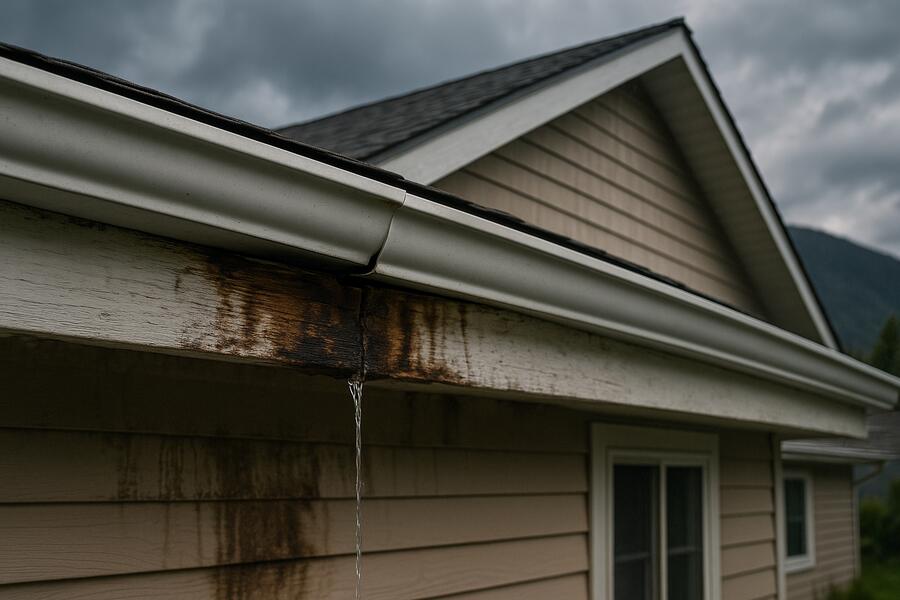
For homeowners in Missoula, MT, well-functioning gutters are essential for protecting your home from the relentless forces of nature. They channel rainwater away from your foundation, siding, and landscaping. However, over time, your gutters can become stressed and begin to pull away from your roofline. This seemingly minor issue can quickly escalate into significant water damage if not addressed promptly. Recognizing the early signs of gutters pulling away from the roofline is key to preventing costly repairs.
At Aces Seamless Gutters, we’ve seen countless instances where loose or detached gutters have led to severe issues, from damaged fascia boards to basement flooding. We know how critical it is to catch these problems early to avoid more extensive and expensive gutter repair near me. This guide will describe what a separating gutter looks like, explain why it happens, and emphasize why it needs your prompt attention to safeguard your Missoula home.
Visual Cues: What a Separating Gutter Looks Like
The most obvious signs are usually visible from the ground.
1. Visible Gaps and Sagging
Look for discrepancies along the roofline.
-
Gap Between Gutter and Fascia:
Stand back from your home and look along the entire length of your gutters. If you notice a visible gap, even a small one (1/4 inch or more), between the back edge of the gutter trough and the fascia board, it’s a clear indicator that your gutters are pulling away. You might even see daylight through this gap.
-
Bowing or Sagging Sections:
Gutters should run straight and maintain a consistent, slight pitch towards the downspouts. If you see sections that are visibly bowed downwards, dipping, or appearing to “belly out,” this indicates stress on the hangers or the fascia itself. These sagging areas will collect standing water, exacerbating the problem.
-
Tilting Forward:
Instead of sagging directly downwards, some gutters may tilt forward and away from the house. This shift in angle means the front edge of the gutter is lower than the back, causing water to spill over the front rather than flowing towards the downspouts.
2. Water Overflow and Stains
These are the consequences of improper drainage.
-
Water Leaking Behind the Gutter:
During rainfall, observe your gutters. If water is leaking *between* the gutter and the fascia board, rather than flowing into the trough, it’s a definite sign of separation. This “waterfall behind the gutter” effect can quickly erode the fascia and underlying components.
-
Fascia Board Staining:
Dark streaks, water stains, or peeling paint on your fascia board directly behind or below the gutter are clear indicators that water is repeatedly overflowing or leaking from the gutter system. This constant moisture will eventually lead to rot.
-
Erosion Around the Foundation:
If water is consistently spilling over or behind the gutters, you’ll likely see signs of erosion in the soil around your home’s foundation. This can manifest as trenches, washed-out landscaping, or displaced mulch, all pointing to uncontrolled water flow.
💡 Key Takeaway: Visibly separating gutters manifest as gaps between the gutter and fascia, sagging or bowed sections, or a forward tilt. During rain, watch for water leaking behind the gutter. These issues lead to fascia staining, peeling paint, and soil erosion around your foundation, all signaling a critical need for attention.
Reasons Your Gutters Pull Away & Why It Needs Prompt Attention
Several factors contribute to gutter detachment, and the consequences can be severe.
1. Causes of Gutter Separation
Understanding the root problem helps with the fix.
-
Clogged Gutters:
This is the most common reason. When gutters are packed with leaves, twigs, and debris, rainwater cannot drain. The stagnant water, combined with accumulated debris, becomes incredibly heavy. This excessive weight puts immense stress on the gutter hangers and fasteners, causing them to pull away from the fascia board.
-
Rotted Fascia Board:
The fascia board is the wooden trim attached directly to your roof rafters, to which your gutters are typically nailed or screwed. If the fascia itself becomes soft, spongy, or rotted due to prolonged moisture exposure (often from overflowing gutters or a faulty drip edge), the fasteners lose their grip, and the gutters will inevitably pull away.
-
Weakened Hangers/Fasteners:
Over time, the spikes or screws holding the gutters in place can corrode, loosen, or simply fail due to repeated stress from heavy rainfall, snow, or ice. Improper installation, where inadequate or incorrect fasteners were used, can also lead to premature detachment.
-
Heavy Snow and Ice:
In Missoula, heavy snow accumulation and ice dams can exert incredible force on gutters. The weight of ice and snow can bend gutters, rip them from their fastenings, or cause them to sag significantly.
2. Why Prompt Attention is Crucial
Ignoring pulling gutters can lead to escalating damage.
-
Fascia and Soffit Damage:
Water continuously leaking behind separating gutters will rapidly rot your fascia boards, and potentially spread to the soffits and even the underlying roof rafters. This can compromise the structural integrity of your roofline.
-
Foundation Problems:
Uncontrolled water pouring down around your home’s foundation can lead to soil erosion, hydrostatic pressure against basement walls, cracks in the foundation, and severe basement or crawl space flooding. Foundation repairs are among the most expensive home repairs.
-
Siding and Landscaping Damage:
Water flowing down your exterior walls can stain, warp, or rot siding. It can also destroy landscaping, wash away mulch, and create muddy areas around your home.
-
Pest Infestations:
Rotten wood creates attractive entry points and nesting grounds for pests like insects (termites, carpenter ants) and rodents, leading to further damage inside your walls and attic.
💡 Key Takeaway: Gutters pull away primarily due to heavy clogs, rotted fascia, or failing fasteners, exacerbated by snow and ice. Ignoring this issue leads to severe and costly damage to fascia, soffits, and roof rafters. It also causes foundation damage, siding deterioration, landscaping erosion, and potential pest infestations, making prompt repair essential to protect your home’s entire envelope.
| Sign of Gutter Separation | Why It Occurs | Immediate Risk |
|---|---|---|
| Visible Gap/Sagging | Overweight gutters (clogs, ice), weak hangers, rotted fascia. | Overflows, water behind gutters, fascia damage. |
| Water Leaking Behind Gutter | Separation, poor drip edge, gutter pitch issues. | Fascia rot, siding damage, foundation issues. |
| Fascia Staining/Peeling Paint | Consistent water exposure from gutter overflow/leaks. | Accelerated wood rot, structural compromise. |
| Erosion Near Foundation | Uncontrolled water runoff from gutter failure. | Foundation damage, basement flooding, landscaping destruction. |
The signs of gutters pulling away from the roofline are often subtle at first, but they are critical indicators that your home’s primary defense against water damage is failing. In Missoula’s climate, these issues can rapidly worsen due to heavy rain, snow, and ice. By understanding these visual cues and the underlying causes, you can take prompt action to inspect and repair your gutter system, protecting your property from potentially devastating and expensive damage. Don’t delay—a healthy gutter system is key to a healthy home.
Have questions about gutters pulling away from the roofline? Reach out to our team today.
Frequently Asked Questions About Gutters Pulling Away
How can I tell if my fascia board is rotted, or if it’s just a loose hanger?
To distinguish between a loose hanger and rotted fascia, gently press on the fascia board directly behind the sagging or separated gutter. If the wood feels firm, your issue is likely a loose or failed hanger that needs re-securing. If the wood feels soft, spongy, or crumbles easily, the fascia is rotted and will need to be replaced before the gutter can be properly reattached. Always exercise caution when using ladders and consider calling a professional for an accurate assessment.
Can I fix a gutter pulling away myself?
Minor cases of gutters pulling away due to a single loose spike or hanger can sometimes be a DIY fix if you’re comfortable and safe on a ladder. This might involve re-hammering a spike or replacing a hanger with a gutter screw. However, if there’s extensive sagging, widespread detachment, rotted fascia, or if you’re unsure of the cause, it’s always best to call a professional. Improper repairs can exacerbate the problem and lead to greater damage.
What happens if I ignore gutters that are pulling away?
Ignoring gutters that are pulling away will lead to increasingly severe and costly problems. The uncontrolled water flow will cause extensive damage to your fascia and soffit boards, potentially leading to wood rot in your roof rafters. More critically, water will pour directly onto your foundation, leading to erosion, cracks, and potential basement or crawl space flooding. This can also damage your home’s siding and landscaping, significantly decreasing your property value and requiring expensive structural repairs.

