
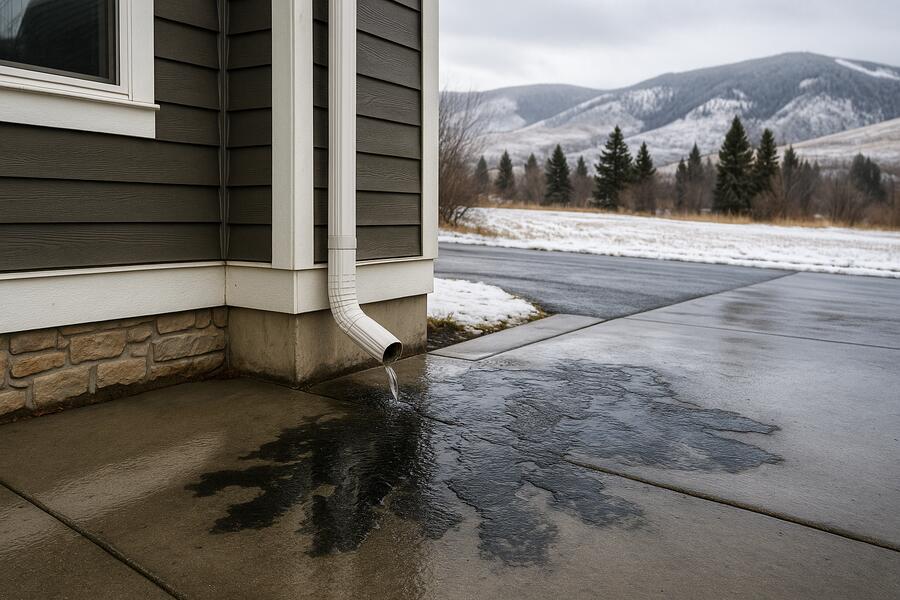
In Missoula, MT, managing rainwater effectively is crucial for protecting your home’s foundation and maintaining safe outdoor spaces. While gutters do an excellent job of collecting water from your roof, the downspouts are responsible for directing that water safely away. A common oversight is allowing downspouts to discharge directly onto or too close to walkways, driveways, or patios. This not only creates slippery hazards during rain but can also lead to dangerous ice buildup in colder months, posing a serious risk to anyone traversing your property.
At Aces Seamless Gutters, we understand the importance of strategic water management. We frequently advise homeowners on optimal routing downspouts away from walkways and high-traffic areas. Proper downspout placement and the use of effective downspout extensions are essential to prevent ice formation, minimize erosion, and keep your property safe. This guide will cover practical routing choices that ensure water is safely diverted, protecting both your property and those who use it.
Why Routing Water Away From Paved Surfaces Matters
The seemingly small issue of misplaced downspouts can have significant repercussions.
1. Safety Hazards
Water on paved surfaces creates slippery conditions.
-
Slip and Fall Risks:
During rain, water flowing across walkways or driveways makes surfaces slick, significantly increasing the risk of slips and falls for residents and visitors. This liability is a serious concern for any homeowner.
-
Dangerous Ice Buildup:
In colder climates like Missoula, standing water on paved surfaces will quickly freeze. This creates treacherous patches of black ice that are nearly invisible but extremely hazardous. Ice near entryways, steps, or driveways can lead to severe injuries and is a persistent winter problem.
2. Property Damage
Misdirected water can cause long-term damage.
-
Erosion and Foundation Issues:
If water from downspouts pools near your foundation, it can saturate the soil, leading to hydrostatic pressure against basement walls, cracks in the foundation, and potential basement flooding. Even if it’s on a paved surface, if that surface slopes back towards the house, the problem persists.
-
Damage to Paved Surfaces:
Repeated freezing and thawing of water on concrete or asphalt can accelerate cracking, spalling, and deterioration of these surfaces. The continuous flow of water can also stain driveways and walkways, diminishing your home’s curb appeal.
-
Landscaping Damage:
Concentrated blasts of water from downspouts can erode topsoil, wash away mulch, and damage plants in your garden beds.
💡 Key Takeaway: Routing downspouts away from paved surfaces is critical for safety and property protection. Direct discharge creates dangerous slip-and-fall hazards, especially from winter ice buildup. Furthermore, it causes foundation damage from pooling water, accelerates the deterioration and staining of paved surfaces, and erodes landscaping, making proper water diversion essential.
Practical Solutions for Rerouting Downspouts
There are several effective ways to divert water safely.
1. Extend Downspouts
The simplest and often most effective solution.
-
Splash Blocks:
These are basic, inexpensive plastic or concrete blocks placed under downspouts to disperse water away from the foundation. While better than nothing, they offer limited reach.
-
Roll-Out Extensions:
Flexible plastic extensions that unroll during rain and retract afterward. They are easy to install but can get damaged by lawnmowers or foot traffic.
-
Rigid Extensions (Permanent):
Aluminum or PVC extensions that attach to the downspout elbow. These can direct water several feet away, ideally 6 to 10 feet from the foundation, into a vegetated area with proper grading. Ensure they maintain a consistent slope away from the house.
2. Underground Drainage Systems
For a more discreet and effective solution.
-
PVC or Corrugated Pipes:
These systems involve connecting the downspout to a sealed pipe that runs underground, discharging water at a safe distance from the house, typically into a rain garden, dry well, or a more suitable graded area on your property. This is ideal for crossing walkways or driveways without creating surface hazards.
-
Burying Extensions:
Simple buried extensions connect directly to the downspout and pop up in a designated area. They require careful trenching to ensure a consistent slope for gravity drainage.
3. Strategic Downspout Relocation
Sometimes, moving the downspout entirely is the best option.
-
Repositioning:
If a downspout is inherently positioned to empty onto a high-traffic area, it might be feasible to reroute the gutter system slightly to move the downspout to a less problematic location on the house. This might involve extending the horizontal gutter run.
-
Additional Downspouts:
In some cases, adding an extra downspout can reduce the volume of water flowing to a problematic downspout, allowing for easier diversion.
💡 Key Takeaway: Effective downspout rerouting involves several options: simple splash blocks or roll-out extensions for short distances, rigid permanent extensions for 6-10 feet of diversion, or comprehensive underground drainage systems (PVC/corrugated pipes) to safely cross paved areas. In some cases, strategic downspout relocation or adding new downspouts can optimize water flow and eliminate problem areas.
| Rerouting Method | Pros | Cons | Best Use Case |
|---|---|---|---|
| Splash Blocks | Inexpensive, easy to install. | Limited reach, can get clogged or displaced. | Very minor water diversion needed, temporary solution. |
| Rigid Extensions | Effective for 6-10 ft diversion, durable. | Can be visible, may require moving for landscaping. | Directing water to vegetated areas with good grading. |
| Underground Drainage | Invisible, highly effective, crosses paved areas cleanly. | Higher cost, more complex installation (trenching). | Crossing walkways/driveways, long-distance diversion, aesthetic preference. |
| Downspout Relocation | Solves the problem at the source, improves overall gutter efficiency. | Requires modifying entire gutter run, professional work. | Chronic problem areas, major renovations, optimizing full system. |
Effectively routing downspouts away from walkways and driveways is a critical aspect of home maintenance in Missoula. By choosing the right method—whether simple extensions or a more comprehensive underground system—you can prevent dangerous ice buildup, protect your property from water damage, and enhance the safety and longevity of your paved surfaces. Investing in proper downspout management is a small step that yields significant, long-term benefits for your home.
Have questions about routing downspouts away from walkways? Reach out to our team today.
Frequently Asked Questions About Downspout Routing
How far away from the foundation should downspouts discharge water?
Ideally, downspouts should discharge water a minimum of 6 to 10 feet away from your home’s foundation. This distance ensures that water has enough space to soak into the ground or be carried away by proper grading, preventing it from pooling and seeping into your basement or crawl space. The exact distance can depend on your soil type and yard grading.
Can I run a downspout directly into the ground?
You can run a downspout into an underground drainage system, but it should not simply discharge directly into the soil at the base of the foundation. Instead, connect the downspout to a dedicated underground pipe (PVC or corrugated) that extends to a suitable discharge point away from the house, maintaining a proper slope for gravity drainage. This prevents immediate pooling and directs water safely away.
What are the potential problems with underground downspout drains?
While effective, underground downspout drains can have issues. They are prone to clogging from leaves, shingle grit, and silt if not properly maintained, especially if they lack cleanouts or proper filtration. In cold climates, they can freeze, leading to blockages and potential backups. Improper installation (lack of slope, incorrect pipe type) can also lead to pooling and inefficiency. Regular inspection and flushing are essential for these systems.

