
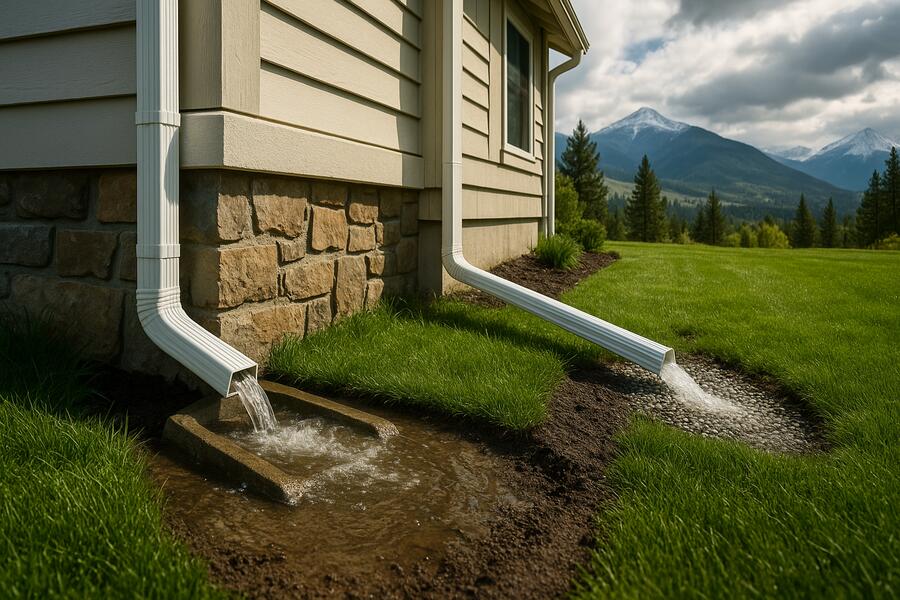
In Missoula, MT, managing rainwater effectively is crucial for protecting your home’s foundation and landscaping. Your gutter system directs water from the roof to downspouts, but what happens at the bottom of those downspouts is just as important. If water isn’t directed far enough away, it can pool around your foundation, leading to serious and costly problems like basement flooding, foundation cracks, and soil erosion. Homeowners often face a choice between two common solutions for downspout outlets: splash blocks or downspout extensions.
At Aces Seamless Gutters, we’ve seen countless homes benefit from proper water diversion. Understanding the difference between splash blocks vs downspout extensions is key to making the right choice for your property. While both aim to move water away from the foundation, they differ significantly in their effectiveness, particularly during heavy rainfall or on uneven terrain. For robust water management, consider professional downspout extensions.
Splash Blocks: The Simple, Cost-Effective Solution
Basic diversion for specific situations.
1. What They Are and How They Work
A basic surface-level water disperser.
-
Design and Material:
Splash blocks are typically rectangular, angled pieces made of concrete or heavy-duty plastic. They sit on the ground directly beneath the downspout outlet.
-
Dispersion Mechanism:
When water exits the downspout, it hits the splash block, which is designed to spread the water out and gently guide it a short distance away from the foundation. The slight incline helps direct flow.
2. Pros of Splash Blocks
Quick, easy, and affordable.
-
Inexpensive and Easy to Install:
Splash blocks are very affordable (typically $5-$15 each) and require no installation beyond simply placing them under the downspout. They are a DIY-friendly solution.
-
Minimal Visual Impact:
Their low profile can make them less visually intrusive than some types of extensions, especially if they match the surrounding landscaping.
-
Good for Light Rain:
They can be effective for light to moderate rainfall on flat lots with well-draining soil, preventing immediate erosion at the downspout base.
3. Cons of Splash Blocks
Limited effectiveness in many scenarios.
-
Limited Diversion Distance:
The primary drawback of splash blocks is their limited reach. They typically only divert water 1-3 feet away from the foundation. Building codes and best practices usually recommend directing water at least 4-6 feet away, making splash blocks often inadequate.
-
Ineffective for Heavy Rain/Sloped Yards:
During heavy downpours, water can easily overflow or bypass the splash block, especially if the ground is already saturated. On sloped yards, water can simply run back towards the foundation.
-
Can Be Displaced:
They can be moved by foot traffic, lawnmowers, or heavy water flow, rendering them ineffective. They also collect debris, requiring frequent cleaning.
💡 Key Takeaway: Splash blocks are inexpensive, easy-to-install, and low-profile devices (typically $5-15) that disperse water a short distance (1-3 feet) from the downspout. While suitable for light rain on flat, well-draining lots, their limited reach often falls short of recommended foundation protection (4-6 feet), making them largely ineffective during heavy rainfall or on sloped yards, and they can be easily displaced.
Downspout Extensions: The More Robust Solution
Extended protection for serious water management.
1. What They Are and How They Work
Directing water further and more deliberately.
-
Attachment to Downspout:
Downspout extensions are attachments that fit directly onto the end of your existing downspout, extending its length to move water further away from your home.
-
Types:
They come in various forms: flexible (corrugated plastic tubes that can be rolled out or buried), rigid (metal or PVC pipes), and even underground systems that pop up to release water or connect to a drainage network.
2. Pros of Downspout Extensions
Superior water diversion and foundation protection.
-
Superior Diversion Distance:
The main advantage is their ability to direct water significantly further away from the foundation—typically 4 to 10 feet or more, depending on the type and length. This meets or exceeds most expert recommendations for foundation protection.
-
Handles Heavy Rainfall:
Extensions are much more effective at handling large volumes of water during heavy storms, preventing overflow and localized saturation near your home.
-
Versatility:
They can be adapted to various landscaping needs, including routing water around obstacles or into garden beds. Underground extensions offer an aesthetic solution, keeping the yard clear.
-
Durability and Stability:
Rigid and buried extensions are much more stable and durable than splash blocks, less prone to displacement, and require less frequent adjustment.
3. Cons of Downspout Extensions
Can be more involved to install and maintain.
-
Higher Cost and Installation:
Extensions are more expensive (typically $8-$30 for surface types, much more for underground systems) and often require more involved installation, especially rigid or buried options which may involve trenching.
-
Potential for Obstruction/Aesthetics:
Surface-level extensions can sometimes be tripping hazards, interfere with mowing, or be visually unappealing if not properly integrated into the landscape. Flexible roll-out types can clog and degrade over time.
-
Maintenance:
While generally more effective, extensions still need to be checked for clogs, especially flexible corrugated types which can trap debris easily. Underground systems require cleanouts to prevent blockages.
💡 Key Takeaway: Downspout extensions provide superior water diversion (4-10+ feet) compared to splash blocks, effectively protecting foundations from heavy rainfall and preventing soil saturation. While they are more expensive (from $8-$30 for surface, more for underground) and may involve more complex installation and occasional maintenance (like checking for clogs), their versatility, durability, and robust performance make them a far more effective long-term solution for comprehensive water management.
| Feature | Splash Block | Downspout Extension |
|---|---|---|
| Cost | $5 – $15 | $8 – $30 (surface); higher for underground |
| Diversion Distance | 1 – 3 feet | 4 – 10+ feet (depending on type/length) |
| Effectiveness (Heavy Rain) | Limited, prone to overflow/bypass | High, effectively manages large volumes |
| Installation Effort | Very Low (place on ground) | Moderate to High (attachment, possibly trenching) |
| Aesthetics | Low profile, can be unobtrusive | Can be noticeable; underground options are discreet |
| Maintenance | Frequent repositioning/cleaning debris | Occasional clog checks, especially flexible/underground |
| Foundation Protection | Minimal, often inadequate | Robust, highly effective |
While splash blocks offer a very basic, temporary solution for diverting minimal rainwater, downspout extensions provide significantly more effective and reliable protection for your home’s foundation. For homeowners in Missoula, MT, who experience varied weather patterns and want to ensure their property is safeguarded against water damage, investing in quality downspout extensions—or even an underground drainage system—is almost always the superior choice. Assess your specific needs, soil type, and yard slope to determine the best approach for long-term foundation health.
Have questions about splash blocks vs downspout extensions? Reach out to our team today.
Frequently Asked Questions About Downspout Drainage
How far should a downspout extend away from the foundation?
Most building professionals and general guidelines recommend that downspouts should extend at least 4 to 6 feet away from your home’s foundation. Ideally, extending them 10 feet or more provides optimal protection against water pooling, basement flooding, and foundation damage.
Can I connect multiple downspouts to one extension?
It is generally not recommended to connect multiple downspouts directly into a single surface-level extension, especially if they are from different sections of the roof. Each downspout is designed to handle a specific volume of water from its designated roof area. Combining them into one smaller extension can overwhelm the system, causing overflow and clogs. For connecting multiple downspouts, a professionally designed underground drainage system with adequately sized pipes is the more appropriate solution.
What are the signs that my downspout drainage is inadequate?
Signs of inadequate downspout drainage include: visible puddles or standing water around your home’s foundation after rain, water stains on your basement walls, cracks in your foundation, eroded landscaping or bare soil spots near downspout outlets, or water overflowing from gutters or downspouts during heavy rainfall. Addressing these signs promptly can prevent more extensive and costly water damage.

