
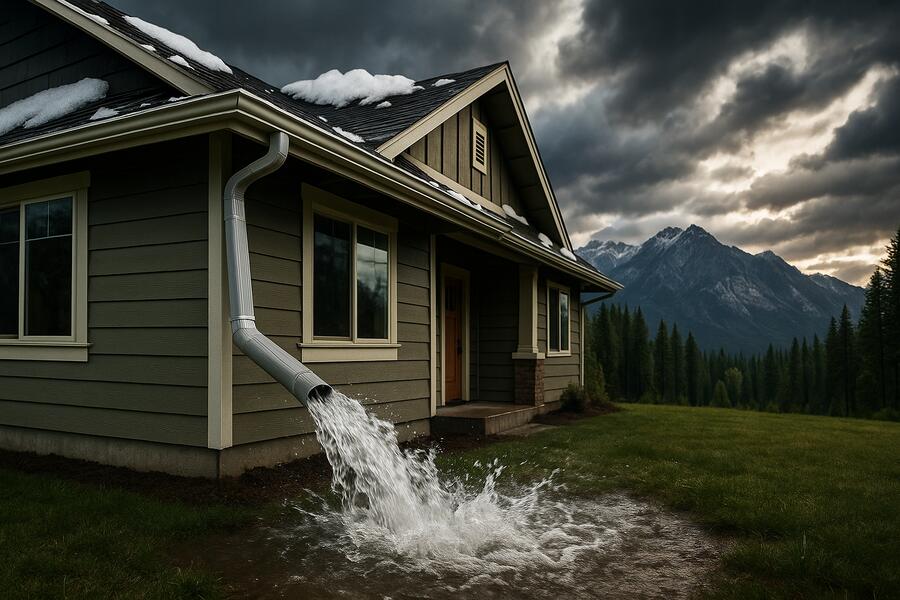
In Missoula, MT, homeowners know that managing water runoff from their roofs is a year-round challenge. While heavy rain events can quickly overwhelm an inadequate system, the sudden rush of snowmelt runoff in spring can be just as demanding, if not more so. Your home’s downspouts are the critical final stage of your gutter system, tasked with channeling significant volumes of water safely away from your foundation. But how well are they truly equipped to handle these intense conditions?
At Aces Seamless Gutters, we understand that effective water management is vital for protecting your home from costly damage. The capacity of your gutter downspouts missoula mt homeowners rely on is put to the test during sudden snowmelt or heavy rain events. This often overlooked aspect of gutter systems is crucial for preventing basement flooding, foundation erosion, and landscape destruction. Let’s delve into how downspouts are designed and tested to manage these formidable challenges.
Understanding Downspout Capacity and Sizing
It’s not just about the size of the pipe; it’s about the entire system.
1. Factors Influencing Downspout Sizing
More than just guesswork, it’s a science.
-
Roof Area:
The total square footage of your roof that drains into a particular gutter section is the primary factor. Rain falls vertically, so the “footprint” of the roof is measured, not the sloped surface area. A larger roof area means more water needs to be managed.
-
Rainfall Intensity:
Local historical rainfall data, specifically the maximum expected rainfall rate in inches per hour for your region (e.g., Missoula, MT), is critical. Downspouts must be sized to handle peak intensity events, not just average rainfall.
-
Gutter Size and Pitch:
The downspout’s capacity must match or exceed the flow capacity of the gutter it’s draining. If the gutter is sized to handle a large volume of water but the downspouts are too small or too few, the system will fail.
-
Number of Downspouts:
A common guideline is one downspout for every 20-40 linear feet of gutter or for every 600-1,200 square feet of roof area, depending on rainfall intensity. Proper spacing ensures water doesn’t have to travel too far along the gutter before finding an exit.
2. Common Downspout Sizes and Their Capacity
Matching the right size to the need.
-
2×3 Inch Rectangular:
Typically handles roof areas up to 600-700 square feet. Suitable for smaller homes or sections of roofs with moderate runoff.
-
3×4 Inch Rectangular:
Handles larger roof areas, up to 1,200-1,500 square feet. This is often recommended for 6-inch gutters, steeper roof pitches, or areas prone to heavy rain and snowmelt.
-
Round Downspouts (3 or 4 inch):
Often used for aesthetic reasons, particularly with half-round gutters. Their capacity is similar to their rectangular counterparts, with a 3-inch round often comparable to a 2×3, and a 4-inch round to a 3×4.
💡 Key Takeaway: Downspout capacity isn’t simply about pipe size; it’s a calculated decision based on the roof’s footprint, local rainfall intensity, and the gutter’s size and pitch. Properly sizing downspouts (e.g., 2×3 inch for smaller roofs, 3×4 inch for larger or steeper roofs) and ensuring adequate numbers and spacing (1 per 20-40 linear feet of gutter or 600-1,200 sq ft of roof) are critical for effective water management during heavy rain and snowmelt.
The Challenge of Snowmelt Runoff
A unique test of your downspout system.
1. Rapid Thaw Events
When winter’s accumulation becomes spring’s deluge.
-
Concentrated Water Volume:
Unlike rain, which comes and goes, snowmelt represents the cumulative precipitation of an entire winter. When temperatures rise suddenly, particularly during a “pineapple express” type event common to the Pacific Northwest and areas like Missoula, MT, this massive volume of water is released rapidly and simultaneously from the entire roof surface.
-
Increased Debris Load:
Snowmelt often carries with it accumulated winter debris—pine needles, shingle grit, and twigs—that were previously frozen in the snow. This can quickly overwhelm and clog downspout openings, drastically reducing their flow capacity just when it’s needed most.
-
Ice Dams and Blockages:
Even with proper downspout sizing, residual ice in gutters or downspouts can create blockages, diverting water over the gutter edges or causing dangerous icicles. Effective downspout design must account for the potential for partial blockages.
2. Testing Downspout Performance
Ensuring the system holds up under pressure.
-
Simulated Flow Rates:
Engineers use formulas that consider roof area, pitch, and anticipated rainfall/snowmelt intensity to calculate the required flow rate (in gallons per minute) that downspouts must handle. Downspouts are then selected based on their tested capacity to meet or exceed these flow rates.
-
Real-World Observation:
The ultimate test comes during actual heavy rain or rapid snowmelt events. Signs of an inadequate system include:
- Water overflowing gutters (often between downspouts).
- “Waterfalling” over downspout elbows.
- Pooling water around the foundation.
- Erosion in landscaping below downspouts.
💡 Key Takeaway: Snowmelt runoff presents a unique challenge, releasing a massive, concentrated volume of water rapidly, often accompanied by accumulated winter debris that can clog downspouts and reduce their flow capacity. Downspout capacity is tested through engineering calculations of required flow rates and real-world observation during heavy rain or thaw events. Signs of failure include overflowing gutters, pooling water, and erosion around the foundation.
| Challenge | Impact on Downspouts | Solution/Best Practice |
|---|---|---|
| Heavy Rain Events | Sudden high volume, rapid flow demands. | Sizing downspouts based on roof area and local peak rainfall intensity. |
| Snowmelt Runoff | Large cumulative volume, potential for debris and ice blockages. | Oversizing downspouts (e.g., 3×4 over 2×3), ensuring clear openings, regular cleaning. |
| Clogging from Debris | Reduced flow, blockages, overflows, water damage. | Regular gutter and downspout cleaning, consider quality gutter guards, downspout screens. |
| Ice Dams / Frozen Downspouts | Complete blockage, water backing up into eaves, structural damage. | Proper attic ventilation, heat cables (if necessary), clear downspout exits. |
| Insufficient Downspout Exits | Water pooling at foundation, erosion, basement flooding. | Using downspout extensions to direct water 5-10 feet away or into underground drainage. |
The effective management of heavy rain and snowmelt runoff by your downspouts is paramount to your home’s structural integrity and longevity in Missoula, MT. Proper sizing, strategic placement, and diligent maintenance are not merely recommendations; they are essential safeguards against water damage. By understanding how downspout capacity is calculated and what factors truly test their limits, you can ensure your home’s water management system is robust enough to handle whatever Mother Nature throws its way.
Have questions about downspouts and snowmelt runoff? Reach out to our team today.
Frequently Asked Questions About Downspout Performance
How can I tell if my downspouts are properly sized?
A good indicator of properly sized downspouts is the absence of overflow from your gutters during the heaviest rain or fastest snowmelt. If you see water cascading over the sides of your gutters or backing up at downspout openings, it suggests the downspouts (or gutters themselves) are overwhelmed. A professional gutter inspection can accurately assess your system’s capacity against local rainfall data and your roof’s specifications.
What is the ideal spacing for downspouts?
The ideal spacing for downspouts depends on several factors, including your roof’s size and pitch, local rainfall intensity, and gutter size. A general rule of thumb is to have one downspout for every 20 to 30 linear feet of gutter. For larger roofs or areas with very heavy precipitation, spacing them every 20 feet is safer. This ensures water doesn’t have to travel too far horizontally, minimizing overflow risk.
Can downspouts get clogged from snowmelt?
Yes, downspouts are highly susceptible to clogging from snowmelt. As snow on the roof melts, it often carries accumulated winter debris—leaves, twigs, shingle grit—directly into the gutters and downspouts. This sudden influx of debris, combined with potentially slower flow rates at colder temperatures, can quickly lead to blockages. Regular gutter cleaning before winter and after significant thaws is crucial to prevent these clogs.

