
Gutters are often overlooked until they stop working correctly. In Missoula, MT, where we experience a full range of weather conditions from heavy rains to significant snowmelt, a properly functioning gutter system is crucial for protecting your home. While clogs are a common culprit for gutter issues, one underlying problem that often goes unnoticed until it’s too late is improper gutter slope. This subtle but critical detail can lead to a cascade of expensive and damaging problems for your home.
At Aces Seamless Gutters, we consistently encounter homes suffering from the long-term effects of incorrect gutter pitch. Understanding how improper slope leads to gutter problems is the first step in addressing these issues effectively. Whether you need a simple adjustment or a full gutter repair near me, recognizing the signs of an improperly sloped gutter can save you significant hassle and cost down the line. Let’s delve into why gutter slope matters and the issues it can cause.
Understanding Proper Gutter Slope
The subtle angle that makes all the difference.
1. What is Gutter Slope?
The foundation of effective drainage.
-
The Downward Angle:
Gutter slope, also known as gutter pitch, refers to the subtle downward angle at which gutters are installed. This angle is not arbitrary; it’s meticulously calculated to use gravity to direct rainwater efficiently towards the downspouts.
-
Standard Pitch:
The industry standard for proper gutter pitch is typically 1/16 to 1/4 inch of drop for every 10 feet of gutter run. This slight incline is usually imperceptible to the eye but is essential for water flow. For very long runs (over 40 feet), gutters are often pitched down from the middle towards downspouts at both ends.
2. Why Proper Slope is Critical
Ensuring continuous flow and preventing accumulation.
-
Gravity’s Role:
Without the correct pitch, water cannot effectively overcome friction and move along the gutter trough. It relies on gravity to maintain a continuous flow, preventing stagnation.
-
Preventing Standing Water:
A consistent slope ensures that all water drains out of the system, preventing pooling. Even a quarter-inch of standing water can cause problems over time.
💡 Key Takeaway: Proper gutter slope (or pitch) is a subtle but critical downward angle, typically 1/16 to 1/4 inch per 10 feet of gutter run, that uses gravity to efficiently direct rainwater towards downspouts. This precise incline is essential to prevent standing water and ensure continuous flow, forming the foundation of effective gutter drainage.
Problems Caused by Improper Gutter Slope
When the angle is off, the consequences can be significant.
1. Standing Water in Gutters
The most immediate and obvious sign of an issue.
-
Debris Accumulation:
When gutters are pitched incorrectly or become saggy, water will pool in low spots. This standing water becomes a magnet for debris like leaves, shingle grit, and seeds, which settle and decompose, forming stubborn clogs much faster than in a free-flowing system.
-
Mosquito Breeding Ground:
Even a small amount of standing water can become an ideal breeding ground for mosquitoes, posing a nuisance and health risk to your family in Missoula summers.
-
Accelerated Corrosion and Wear:
Constant exposure to stagnant water and decaying organic matter can accelerate corrosion and wear on your gutters, especially at seams in sectional gutters. This significantly shortens the lifespan of your gutter system and can lead to premature leaks.
2. Gutter Overflow and Related Damage
When water can’t get out, it goes where it shouldn’t.
-
Exterior Damage:
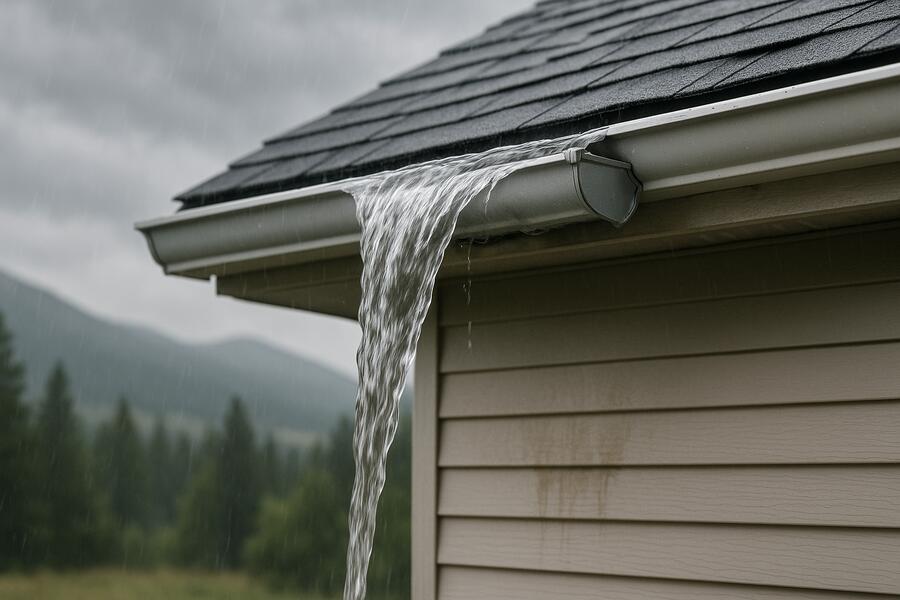
If water pools in the gutters, even a moderate rain can cause it to overflow. This overflowing water can damage fascia boards, soffits, siding, and windows, leading to wood rot, paint peeling, and mold growth. You might notice persistent wet spots or staining on your home’s exterior.
-
Foundation Problems:
Water continually spilling over the side of the gutters falls directly around your home’s foundation. Over time, this can saturate the soil, leading to hydrostatic pressure against the foundation walls, cracks, basement leaks, and even compromise the structural integrity of your home.
-
Landscape Erosion:
The uncontrolled deluge of water from overflowing gutters can erode flower beds, wash away mulch, and damage plants directly below the roofline.
3. Ice Dams in Winter
A particularly damaging problem in colder climates.
-
Refreezing Water:
In Missoula winters, standing water in improperly sloped gutters can easily freeze. When snow on the roof melts and flows into these frozen gutters, it can create ice dams—ridges of ice that form at the edge of the roof. These dams prevent further meltwater from draining off the roof.
-
Water Back-up and Interior Leaks:
Water trapped behind an ice dam can back up under shingles, into the attic, and down interior walls, causing severe water damage to ceilings, insulation, and paint. This is one of the most destructive consequences of poor gutter pitch.
💡 Key Takeaway: Improper gutter slope leads to standing water, which accelerates debris accumulation, fosters mosquito breeding, and causes premature corrosion. This pooling water then results in gutter overflow during rain, damaging fascia, siding, and crucially, your home’s foundation through erosion and hydrostatic pressure. In winter, standing water creates destructive ice dams, causing severe leaks and interior damage.
| Gutter Problem | Caused by Improper Slope | Signs to Look For |
|---|---|---|
| Standing Water | Gutters are level, tilted backward, or sagging. | Visible water pooling after rain, debris accumulation, mosquitoes. |
| Overflowing Gutters | Water cannot drain fast enough due to pooling. | Water cascading over edges, staining on siding/fascia. |
| Accelerated Wear/Corrosion | Constant exposure to stagnant water and decaying organic matter. | Rust spots, peeling paint, small leaks in gutter trough. |
| Foundation Damage | Overflowing water saturates soil around the foundation. | Basement leaks, foundation cracks, damp crawl spaces. |
| Landscape Erosion | Uncontrolled water flow washes away soil, mulch, and plants. | Bare spots, trenches, damaged plants in flower beds. |
| Ice Dams | Stagnant water freezes, preventing proper snowmelt drainage. | Large icicles, ice buildup on eaves, interior ceiling/wall leaks. |
Improper gutter slope might seem like a minor detail, but its long-term impact on your home can be significant and costly. Regularly inspecting your gutters for signs of standing water or overflow, especially after heavy rain or snowmelt, is crucial. If you suspect your gutters aren’t pitched correctly, addressing the issue promptly can prevent extensive damage and ensure your home remains protected for years to come.
Have questions about gutter slope problems? Reach out to our team today.
Frequently Asked Questions About Gutter Pitch
How can I check my gutter slope?
You can check your gutter slope visually after a rain event – look for standing water. For a more precise check, you can use a level. Place a 4-foot level on the bottom of a dry gutter. If it shows level, or slopes away from the downspout, your pitch is incorrect. For long runs, check multiple spots. Alternatively, a professional can accurately measure and adjust the pitch.
Can improper gutter slope be fixed without replacing the entire gutter system?
Often, yes. For minor sagging or incorrect pitch, a professional can sometimes detach and re-pitch sections of the gutter by adjusting the hangers or adding new ones. For very long runs, adding an additional downspout in the middle can help alleviate the issue. However, if the gutters are severely warped, damaged, or poorly installed from the start, a full replacement might be the most cost-effective long-term solution.
How much standing water is acceptable in a gutter?
Ideally, there should be no standing water in your gutters once the rain has stopped. A small amount of residual moisture is normal, but if you have persistent puddles that are more than 1/4 inch deep (the depth of a quarter) or that last for hours after rainfall, it indicates an improper slope. Any standing water will attract debris and lead to the problems discussed above.

