
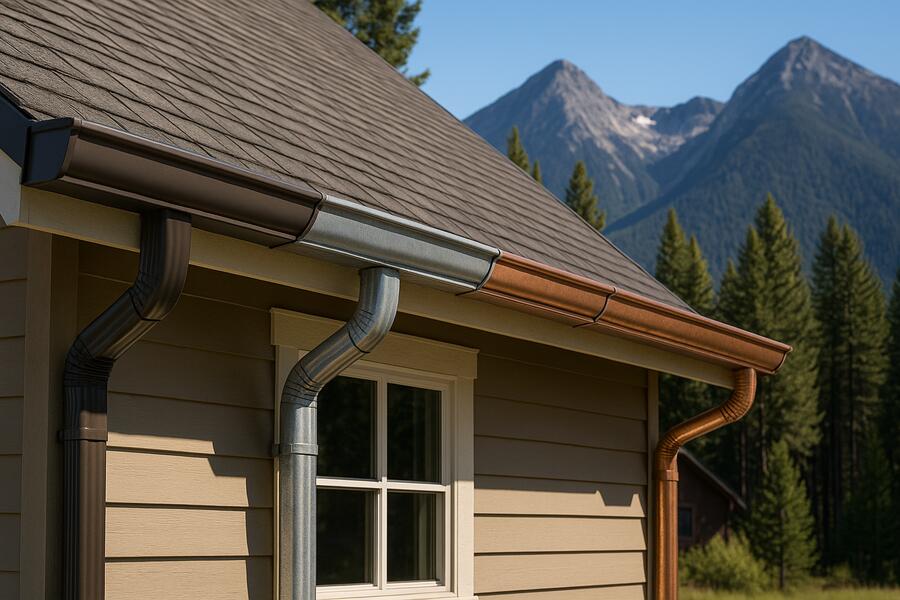
Choosing the right gutter material for your home in Missoula, MT, is a decision that balances aesthetics, budget, and long-term performance. With a variety of options available, understanding the pros and cons of each can help you make an informed choice that best suits our local climate and your property’s specific needs. At Aces Seamless Gutters, we often guide homeowners through this critical selection process.
The three most common materials for seamless gutters are aluminum, steel, and copper. Each offers distinct advantages in terms of durability, cost, and maintenance. Let’s break down these options to help you determine which material will best protect your home for years to come.
Detailed Gutter Material Comparison
1. Aluminum Gutters: The Most Popular Choice
Aluminum dominates the residential gutter market for good reason, offering a fantastic balance of performance and value.
-
Durability & Lifespan
Aluminum gutters are lightweight yet surprisingly durable. They are inherently rust-resistant, which is a major advantage over steel in many climates. With proper installation and maintenance, aluminum gutters typically last 20-30 years. However, they can dent more easily than steel if subjected to heavy impacts.
-
Cost
Aluminum is one of the most affordable gutter materials, making it a popular choice for most homeowners. Installed costs generally range from $6-$18 per linear foot, depending on gauge, color, and local labor rates. This makes them roughly 3-4 times less expensive than copper.
-
Maintenance
Maintenance for aluminum gutters is minimal, primarily involving regular cleaning to prevent clogs and occasional inspections for dents or loose fasteners. They do not require painting, as they come with a baked-on enamel finish available in a wide array of colors that resist fading and chipping.
-
Aesthetics
Available in a vast palette of colors, aluminum gutters can be easily matched to your home’s exterior, providing a clean, seamless look. They offer excellent versatility for modern and traditional homes alike.
-
Missoula Considerations
Their rust resistance makes them well-suited for Missoula’s humid and snowy conditions. The seamless fabrication prevents leaks at joints, a critical feature for managing heavy rain and snowmelt.
💡 Key Takeaway: Aluminum gutters offer excellent value, lasting 20-30 years with minimal maintenance and rust resistance. Their affordability and wide range of colors make them the most popular choice for most homeowners.
2. Steel Gutters: Strength for Harsh Climates
Steel gutters are known for their exceptional strength and ability to withstand tough conditions, making them a robust option.
-
Durability & Lifespan
Galvanized steel gutters are significantly stronger and more resistant to bending and denting than aluminum. This makes them an excellent choice for regions experiencing heavy snow, ice, or strong winds, like Missoula. They typically have a lifespan of 20-40 years. Stainless steel, an even stronger option, can last 50+ years.
-
Cost
Steel gutters are more expensive than aluminum but less costly than copper. Galvanized steel can range from $10-$25 per linear foot installed, while stainless steel is higher, often $20-$35 per linear foot. This makes them a mid-range option in terms of initial investment.
-
Maintenance
While strong, steel can be susceptible to rust if its protective coating is scratched or compromised. Regular inspection for chips or rust spots is important, and repairs should be made promptly. Stainless steel is more resistant to rust but still benefits from occasional cleaning.
-
Aesthetics
Steel gutters also come in various colors, though typically a more limited selection than aluminum. Their strength means they can maintain straight lines even on very long runs, contributing to a crisp, professional look.
-
Missoula Considerations
For homes in areas prone to heavy snow and ice loads, or where branches might frequently fall, the superior strength of steel can be a major advantage, resisting deformation better than aluminum.
💡 Key Takeaway: Steel gutters provide superior strength and durability, lasting 20-40 years (or more for stainless steel), making them ideal for heavy snow and ice regions. They are a mid-range cost option but require care to prevent rust if their coating is damaged.
3. Copper Gutters: Luxury and Longevity
Copper gutters are the premium choice, prized for their unmatched longevity, stunning aesthetics, and ability to develop a beautiful patina over time.
-
Durability & Lifespan
Copper is incredibly durable and inherently rust-proof. It withstands extreme weather conditions without corroding or deteriorating. Copper gutters can easily last 50-100+ years, often outliving the home itself. This makes them an heirloom-quality investment.
-
Cost
Copper is by far the most expensive gutter material. Installed costs typically range from $25-$50 per linear foot, and can go even higher for specialized designs or historical properties. This is often 3-5 times the cost of aluminum or steel.
-
Maintenance
Maintenance for copper gutters is minimal. They do not rust, corrode, or require painting. The natural oxidation process creates a distinctive green-blue patina over time, which protects the metal and is highly sought after. Cleaning to prevent clogs is usually the only required upkeep.
-
Aesthetics
The aesthetic appeal of copper is unmatched. Its natural warmth and elegance make it a popular choice for luxury homes, historic properties, or homeowners looking to add a unique, high-end touch. The evolving patina adds character and charm that only improves with age.
-
Missoula Considerations
While a significant investment, copper’s extreme durability and resistance to all weather elements make it a fantastic long-term solution for Missoula homes, requiring virtually no concern about material degradation.
💡 Key Takeaway: Copper gutters represent the pinnacle of luxury and longevity, lasting 50-100+ years with minimal maintenance and developing a beautiful, protective patina. While the highest upfront cost, they offer unparalleled durability and aesthetic appeal for high-end or historic homes.
Gutter Material Comparison Chart
Here’s a quick overview to help summarize the differences:
| Feature | Aluminum | Steel (Galvanized) | Copper |
|---|---|---|---|
| Lifespan | 20-30 years | 20-40 years | 50-100+ years |
| Cost per Linear Foot (Installed) | $6 – $18 | $10 – $25 | $25 – $50+ |
| Rust/Corrosion Resistance | Excellent | Good (if coating intact) | Excellent (natural patina) |
| Strength/Dent Resistance | Moderate | High | High |
| Maintenance | Low | Moderate (check for rust) | Very Low |
| Aesthetics | Many colors, clean look | Good color retention, strong lines | Classic, elegant, develops patina |
The ideal gutter material for your Missoula home depends on your priorities. For most homeowners, aluminum offers the best blend of affordability, performance, and low maintenance. If superior strength for heavy snow loads is a primary concern and budget allows, steel is an excellent upgrade. For those seeking unmatched longevity, classic elegance, and a significant long-term investment, copper stands alone.
Have questions about gutter material comparison? Reach out to our team today.
Frequently Asked Questions About Gutter Materials
Which gutter material is best for heavy snow and ice in Missoula?
For areas with heavy snow and ice loads like Missoula, steel gutters offer superior strength and resistance to bending or collapsing under weight compared to aluminum. While copper is also very strong, steel provides a robust solution at a more moderate price point for harsh winter conditions.
Do copper gutters require more maintenance than aluminum?
No, copper gutters require even less maintenance than aluminum. They do not rust and do not need painting. The only maintenance typically required is periodic cleaning to prevent clogs. The natural patina that develops on copper actually protects the metal and is a desired aesthetic feature, not a sign of corrosion.
Can I mix different gutter materials on my house?
While technically possible, mixing different gutter materials is generally not recommended unless there’s a specific aesthetic or functional reason. Different metals can react with each other (galvanic corrosion), leading to premature degradation. If you choose to mix, ensure that appropriate separators are used, or consult with a gutter professional to avoid potential issues.

