
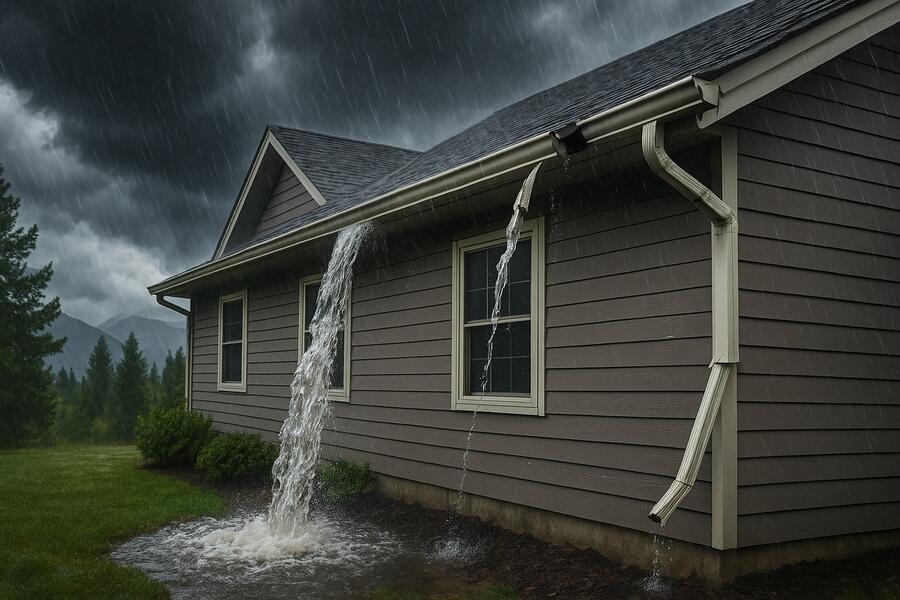
Your home’s gutter system is its first line of defense against water damage, channeling thousands of gallons of water away from your roof, siding, and foundation each year. When functioning correctly, gutters are easy to overlook. But when they fail, especially during a heavy downpour or rapid snowmelt, the consequences can be immediate and severe. Knowing when a gutter issue qualifies as an emergency can save you from costly damage to your Missoula, MT home.
Not every gutter problem requires immediate, same-day attention, but some situations demand urgent action to prevent escalating damage. Understanding the difference between a minor repair and an emergency is crucial for homeowners. At Aces Seamless Gutters, we’re equipped to handle all types of gutter issues, from routine maintenance to critical emergency fixes. If you’re searching for gutter repair near me, you’ve come to the right place.
Defining an Emergency Gutter Repair Situation
1. Detached or Fallen Gutter Sections
This is perhaps the most obvious and urgent gutter emergency. If a section of your gutter has completely fallen off the house, is hanging precariously, or has pulled away significantly from the fascia board, it poses multiple threats.
-
Loss of Water Diversion
Detached gutters cannot channel water, meaning a torrent will likely cascade directly onto your foundation, landscaping, or even into your basement. This can cause immediate soil erosion and foundation pressure.
-
Safety Hazard
A hanging gutter section is a significant safety risk. It can fall completely without warning, potentially injuring people or pets below, or damaging property like cars or patios.
-
Fascia Damage
When gutters pull away, they often take chunks of your fascia board with them, exposing the roof rafters to moisture and pests.
💡 Key Takeaway: Any detached, fallen, or severely hanging gutter section is an immediate emergency. It compromises water diversion, creates a safety hazard, and can lead to significant structural damage.
2. Major Leaks or Overflow During a Storm
While minor drips can often wait, substantial leaks or continuous overflow during active precipitation are urgent problems.
-
Water Intrusion
When water pours out of seams, corners, or over the top of your gutters, it can seep behind siding, into attic spaces, or directly against your foundation. This active water intrusion can lead to interior wall damage, mold growth, and basement flooding.
-
Foundation Threat
Consistent water spilling near the foundation saturates the soil, creating hydrostatic pressure against basement walls and increasing the risk of cracks and leaks.
-
Erosion
Heavy, uncontrolled runoff can rapidly erode landscaping, washing away soil and exposing roots or even foundation footings.
3. Blocked Downspouts Leading to Gutter Overflow
Downspouts are critical for draining water away from your gutters. If a downspout is completely blocked, even a well-maintained gutter can quickly overflow.
-
Localized Flooding
A blocked downspout causes water to back up in the gutter, often leading to overflow at the point of blockage or along the entire gutter run. This concentrates water in one area, increasing the risk of localized flooding and damage to that specific section of your home.
-
Ice Dams (in winter)
In Missoula’s winters, a blocked downspout can contribute to ice dam formation, which can force melting snow under your roof shingles and into your home’s interior.
💡 Key Takeaway: Major leaks, constant overflow during rain, or completely blocked downspouts are emergencies because they indicate active water intrusion threatening your home’s interior, foundation, or structural components.
4. Water Entering Interior Spaces
Any sign of water inside your home that can be directly attributed to gutter failure is an immediate emergency.
-
Wall Stains or Streaks
If you see water stains or streaks on interior walls, particularly those that align with exterior gutter runs, it means water is getting behind your siding and into your home’s structure.
-
Basement/Crawl Space Flooding
Water pooling in your basement or crawl space after rain is a clear sign of a critical drainage failure, often stemming from overflowing gutters or downspouts dumping water too close to the foundation.
| Emergency Gutter Situation | Why It’s Urgent | Immediate Action (if safe) |
|---|---|---|
| Detached/Fallen Gutters | Safety hazard, complete loss of water diversion, fascia damage. | Clear area, direct water away from foundation at ground level. |
| Major Leaks/Overflow | Active water intrusion into home/foundation, severe erosion. | Temporarily divert water away at ground level, photograph damage. |
| Blocked Downspout & Overflow | Localized flooding, foundation threat, potential for ice dams. | Clear ground-level blockage, divert overflow if possible. |
| Water Inside Home | Direct threat to interior finishes, structural integrity, and health. | Mitigate interior damage, then address exterior cause. |
What to Do in a Gutter Emergency
When faced with an emergency gutter situation, prioritize safety above all else. Avoid climbing ladders during active storms or if conditions are unsafe (wet, icy, windy). If it’s safe to do so, your goal should be to temporarily divert water away from your home’s foundation at ground level using tarps, buckets, or temporary downspout extensions. Document all damage with photos for insurance purposes, and then call professional emergency gutter repair services like Aces Seamless Gutters. Prompt action can significantly reduce the overall damage and repair costs.
Have questions about emergency gutter repair situations? Reach out to our team today.
Frequently Asked Questions About Gutter Emergencies
How quickly should I act on an emergency gutter repair?
You should act as quickly as safely possible. For situations like detached gutters or active water intrusion into your home, immediate action is crucial. The longer water is allowed to cause damage, the more extensive and costly the repairs will become. If you cannot safely perform a temporary fix, contact a professional immediately.
Can I claim emergency gutter repair on my home insurance?
Many emergency gutter repairs resulting from sudden events like storm damage (e.g., strong winds, hail, fallen trees) may be covered by your homeowner’s insurance. However, damage caused by neglect or lack of maintenance typically is not. It’s essential to photograph the damage before any cleanup and contact your insurance provider as soon as possible to understand your coverage.
What non-emergency gutter problems can wait for a scheduled repair?
Non-emergency issues typically include minor drips from seams, small dents or dings in the gutters, loose hangers that aren’t causing significant sagging, or infrequent, small clogs that can be easily cleared. These issues should still be addressed promptly to prevent them from escalating, but they don’t require immediate emergency service.

