
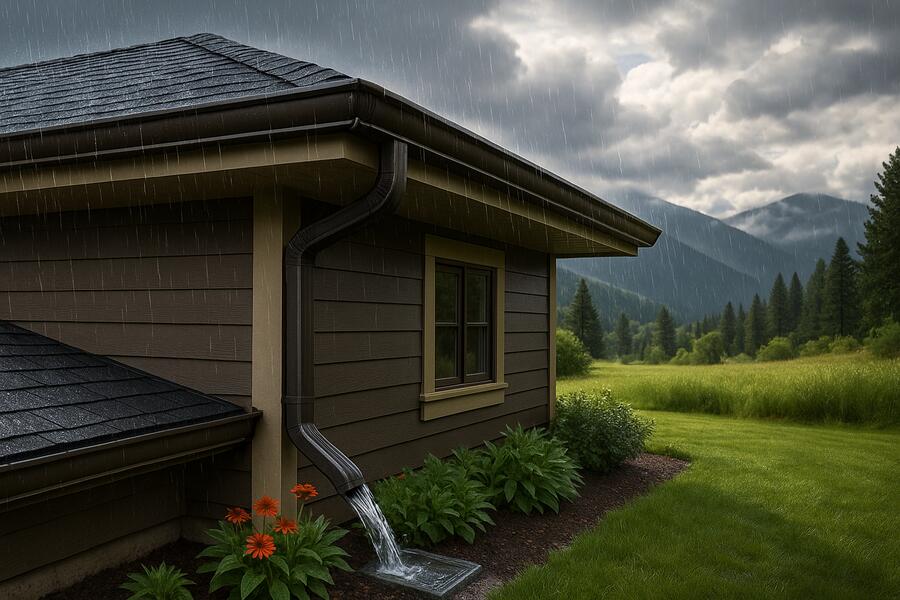
In Missoula, MT, where we experience everything from heavy rainfall to significant snowmelt, a well-functioning gutter system is much more than just a series of troughs around your roofline. It’s an interconnected drainage network, a silent guardian constantly working to protect your home from the relentless forces of nature. Many homeowners understand the basic concept of gutters, but a deeper appreciation for how each component works in harmony can highlight the importance of professional installation and maintenance.
At Aces Seamless Gutters, we specialize in ensuring every part of your home’s drainage system functions optimally. Understanding how a gutter system works as a whole is crucial for preventing costly water damage to your foundation, landscaping, fascia, and even interior. It’s not just about collecting water; it’s about efficiently managing its journey from your roof to a safe discharge point. If you’re looking for expert installation or maintenance of gutters near me, you’ve come to the right place.
The Integrated Components of a Gutter System
1. The Gutters (Channels/Troughs)
The gutters themselves are the primary collection points for water shedding off your roof.
-
Collection:
These long, horizontal channels are installed along the eaves of your roof, directly beneath the roofline. Their main job is to catch all the rainwater and snowmelt that flows off your roof’s surface.
-
Slope:
Crucially, gutters are installed with a slight, continuous downward slope (typically 1/4 inch per 10 feet) towards the downspouts. This ensures that water flows efficiently by gravity, preventing pooling and debris buildup.
-
Connection:
Individual gutter sections are joined together, often sealed at the seams, to create a continuous trough that spans the length of the roof edge.
2. Downspouts
Downspouts are the vertical pipes that carry collected water from the gutters down to ground level.
-
Vertical Transport:
Attached to the gutters at strategically placed outlets, downspouts efficiently transport the large volume of water from the roof’s edge downwards, away from the immediate foundation of your home.
-
Sizing and Placement:
The number and size of downspouts are determined by the roof’s drainage area and local rainfall intensity. Insufficient downspouts can lead to water backing up in the gutters, causing overflows and stress on the system.
-
Connection:
Downspouts connect to the gutter through a drop outlet and are secured to the side of the house with straps or brackets.
💡 Key Takeaway: The core of how a gutter system works involves gutters collecting water and downspouts channeling it vertically. Proper slope in the gutters and adequate downspout sizing are essential for preventing overflows and efficiently moving water away from your Missoula home.
3. Downspout Extensions
Once water reaches the bottom of the downspout, an extension is often necessary to direct it further away from the house.
-
Ground-Level Diversion:
These are sections of pipe or splash blocks attached to the bottom of downspouts. Their purpose is to carry the water far enough away from the foundation so it doesn’t pool directly around your home or saturate the soil.
-
Types of Extensions:
Extensions can be simple splash blocks, roll-out extenders that deploy during rain, or more permanent underground drainage systems that carry water to a safe discharge point, such as a storm drain or a designated drainage area.
-
Preventing Foundation Damage:
Without adequate extensions, the concentrated flow from downspouts can erode landscaping, create trenches, and ultimately seep into your basement or crawl space, leading to costly foundation repairs.
4. Gutter Guards (Optional but Recommended)
Gutter guards are a crucial enhancement that prevent debris from entering the gutters in the first place, ensuring uninterrupted water flow.
-
Debris Filtration:
Installed over or within the gutter channels, guards act as a filter, allowing rainwater to enter while keeping out leaves, twigs, pine needles, and other debris that cause clogs.
-
Types:
There are various types, including screens, micro-mesh, surface tension, and reverse curve designs, each offering different levels of filtration and durability. Micro-mesh systems are increasingly dominant for their fine filtration.
-
Reduced Maintenance & Enhanced Performance:
By preventing clogs, gutter guards significantly reduce the need for frequent gutter cleaning, save homeowners time and effort, and ensure the entire system operates at peak efficiency year-round, even during heavy Missoula storms.
| Component | Function | Why It’s Critical |
|---|---|---|
| Gutters | Collect water from the roof edge. | First line of defense against runoff; must have proper slope. |
| Downspouts | Channel water vertically to the ground. | Prevents concentrated runoff at the foundation; proper sizing is key. |
| Extensions | Direct water away from the immediate foundation. | Protects landscaping, prevents basement leaks, safeguards foundation. |
| Gutter Guards | Filter debris, allow water to flow freely. | Reduces clogs, minimizes maintenance, ensures year-round system efficiency. |
💡 Key Takeaway: Downspout extensions are vital for directing water far away from your foundation, protecting against erosion and basement leaks. Gutter guards are a highly recommended addition, effectively preventing clogs and significantly reducing maintenance while maintaining system efficiency.
Understanding how a gutter system works as an integrated whole highlights why each component is vital. From the initial collection in the gutters to the final discharge via extensions, with guards ensuring smooth operation, a complete and well-maintained system is your home’s best defense against water damage. For Missoula homeowners, investing in a robust gutter system is investing in long-term peace of mind.
Have questions about how a full gutter system works together? Reach out to our team today.
Frequently Asked Questions About Gutter Systems
How do I know if my gutter system is properly sized for my Missoula home?
Proper gutter sizing depends on several factors: the square footage of your roof, the pitch (steepness) of your roof, and the average maximum rainfall intensity in your area. A professional gutter installer can calculate the “effective roof area” and recommend the appropriate gutter size (e.g., 5-inch or 6-inch K-style) and the number/size of downspouts needed to handle typical Missoula precipitation without overflowing.
What are the benefits of installing underground downspout extensions?
Underground downspout extensions offer several benefits. They significantly improve aesthetics by keeping unsightly extensions off your lawn, prevent trip hazards, and most importantly, carry water much further away from your foundation than traditional splash blocks, providing superior protection against erosion, basement flooding, and foundation damage. They also protect your landscaping from concentrated water runoff.
Are gutter guards really worth the investment in Missoula?
For many Missoula homeowners, gutter guards are absolutely worth the investment, especially if you have trees near your home that shed leaves, pine needles, or seeds. They drastically reduce the frequency of gutter cleaning, prevent clogs that lead to overflows and water damage, and protect your gutters from premature wear and tear. While there’s an upfront cost, they can save money on professional cleanings and potential repairs in the long run.

