
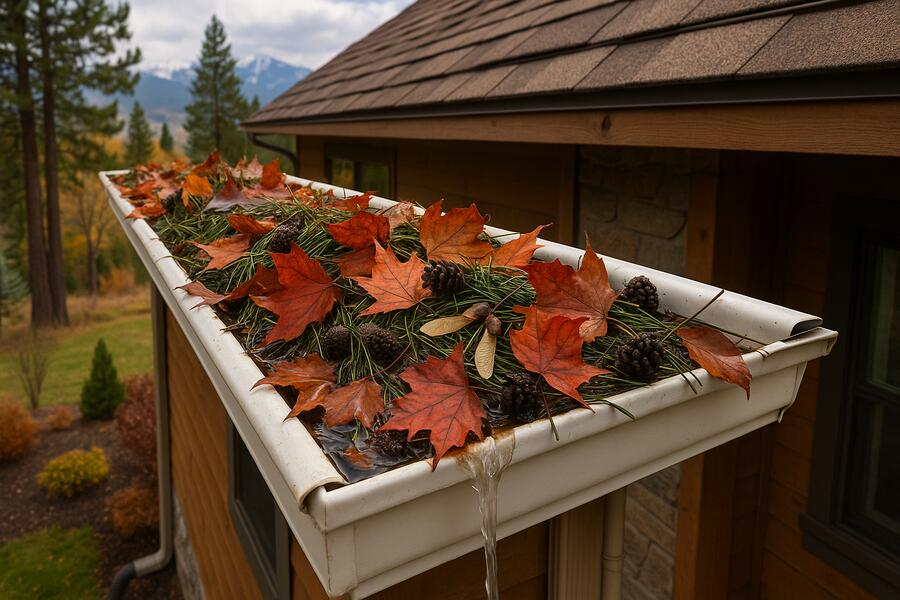
For homeowners in Missoula, MT, managing gutter debris is a year-round challenge, deeply influenced by the types of trees surrounding your property. It’s not just about “leaves” falling; different tree types produce distinct forms of debris that clog gutters in unique ways. Understanding this connection between tree type and gutter debris is essential for effective gutter maintenance and choosing the right protection strategy for your home.
At Aces Seamless Gutters, we’ve seen it all, from dense mats of oak leaves to stubbornly fine pine needles and sticky seed pods. Each presents its own set of challenges, impacting how quickly your gutters clog and what methods are most effective for keeping them clear. Recognizing how specific tree types contribute to gutter problems helps us recommend the best solutions, whether it’s a tailored cleaning schedule or the installation of robust leaf guards designed for your specific needs.
The Different Forms of Gutter-Clogging Debris
1. Broad Leaves (Deciduous Trees like Oaks, Maples, Elms)
Deciduous trees are perhaps the most common culprits for gutter clogs, especially in the fall.
-
Bulky Accumulation:
Large, flat leaves from trees like oaks and maples are bulky. They accumulate quickly, forming thick mats that can completely block water flow, especially when wet and compacted.
-
Seasonal Drop:
While they provide ample shade in summer, their concentrated fall drop creates a significant, albeit predictable, debris load. Leathery leaves from some oak varieties can be particularly stubborn.
-
Impact on Gutters:
These large leaves are relatively easy to scoop out during cleaning but, when left unattended, can cause severe overflows, leading to foundation damage, fascia rot, and landscape erosion.
2. Fine Needles (Coniferous Trees like Pines, Spruces, Firs)
Coniferous trees, prevalent in areas like Missoula, pose a different and often more persistent challenge.
-
Dense Matting:
Pine needles are thin, flexible, and much smaller than broad leaves. They easily slip through many basic gutter screens and guards, then clump together to form dense, impenetrable mats at the bottom of the gutter or in downspouts.
-
Year-Round Shedding:
Unlike deciduous trees, conifers shed needles throughout the year, meaning the accumulation is constant rather than seasonal. This requires more frequent attention or specialized gutter protection.
-
Wicking and Corrosion:
Needles tend to wick water, keeping gutters perpetually damp, which can accelerate corrosion in metal gutters and create a breeding ground for mildew and pests.
💡 Key Takeaway: Broad leaves from deciduous trees like oaks create bulky, seasonal clogs that are relatively easy to remove but cause severe overflows. Fine pine needles, however, shed year-round, forming dense, stubborn mats that easily bypass basic gutter guards and can lead to persistent dampness and corrosion.
Other Common Gutter Culprits and Their Impact
1. Seed Pods and “Helicopters” (Maples, Elms, Cottonwoods)
Beyond leaves, many trees produce seeds that can be highly problematic for gutters.
-
Sticky and Sludgy:
Maple “helicopters” (samaras) and elm seeds are small and can easily get past some guards. When wet, they become sticky and create a thick sludge that’s difficult to flush out.
-
Cottonwood Fluff:
Cottonwood trees release fluffy seeds that, when combined with rain, can form a particularly thick, gel-like substance that blocks gutters and downspouts.
-
Seasonal Release:
These seed drops often occur in spring, requiring a different cleaning focus than fall leaf drops.
2. Twigs, Bark, and Small Branches
Storms and high winds can deposit larger debris.
-
Obstructions:
Twigs and small branches, especially after a storm, can create structural blockages within the gutter channel or downspouts, preventing even water from flowing.
-
Impact on Guards:
Heavier debris can damage or dislodge gutter guards if they are not robustly constructed.
💡 Key Takeaway: Seed pods from maples, elms, and cottonwoods create sticky, sludgy blockages, particularly in spring. Twigs and bark, especially after storms, can cause physical obstructions or damage less robust gutter guards.
3. Acorns and Pine Cones (Oaks, Pines)
Heavier, more solid debris also contributes to clogging.
-
Weight and Blockage:
Acorns and pine cones are heavy and can quickly accumulate, causing significant blockages. Their weight also puts extra strain on gutter hangers.
-
Downspout Obstructions:
These larger items are notorious for getting lodged in downspouts, creating stubborn, hard-to-clear clogs that impede water flow.
| Tree Type / Debris | Characteristics | Gutter Impact |
|---|---|---|
| Broad Leaves (Oak, Maple) | Large, flat, bulky; seasonal drop. | Forms thick mats, causes major overflows. |
| Fine Needles (Pine, Spruce) | Thin, flexible, small; year-round drop. | Slips through guards, forms dense, persistent sludge. |
| Seed Pods (Maple “helicopters”) | Small, winged, sticky when wet; spring drop. | Creates sludgy blockages, hard to flush. |
| Acorns/Pine Cones | Heavy, solid, irregular shapes. | Causes physical obstructions, clogs downspouts. |
Understanding how tree type and gutter debris interact is the first step toward effective gutter maintenance for your Missoula home. Whether you’re dealing with the massive influx of fall leaves or the persistent challenge of pine needles, a tailored approach—from regular cleaning schedules to selecting the right gutter protection system—can make all the difference in safeguarding your home from water damage.
Have questions about tree type and gutter debris? Reach out to our team today.
Frequently Asked Questions About Tree Debris and Gutters
Which gutter guard is best for pine needles?
For pine needles, micro-mesh gutter guards are generally considered the most effective. Their extremely fine mesh prevents even tiny needles from entering the gutter trough, allowing them to typically blow off with the wind. Foam inserts can also block needles, but they can degrade over time and collect debris on top, while larger screen or cover types are often ineffective against fine needles.
How often should I clean my gutters if I have a lot of deciduous trees?
If your property has many deciduous trees, you should plan for gutter cleaning at least twice a year, with one essential cleaning in late fall after all leaves have dropped, and another in late spring to clear out any winter debris, spring seeds, and pollen. Depending on the density of trees and the frequency of storms, you might consider an additional light cleaning or inspection in between these main intervals.
Do certain trees shed debris all year long, or only seasonally?
Both. Deciduous trees (like oaks, maples, elms) primarily shed their leaves in the fall, creating a significant seasonal debris load. However, coniferous trees (like pines, spruces) shed their needles year-round, albeit with some seasonal peaks. Additionally, some trees release seeds, pollen, or small twigs throughout various seasons, meaning ongoing debris management is often necessary regardless of tree type.

