
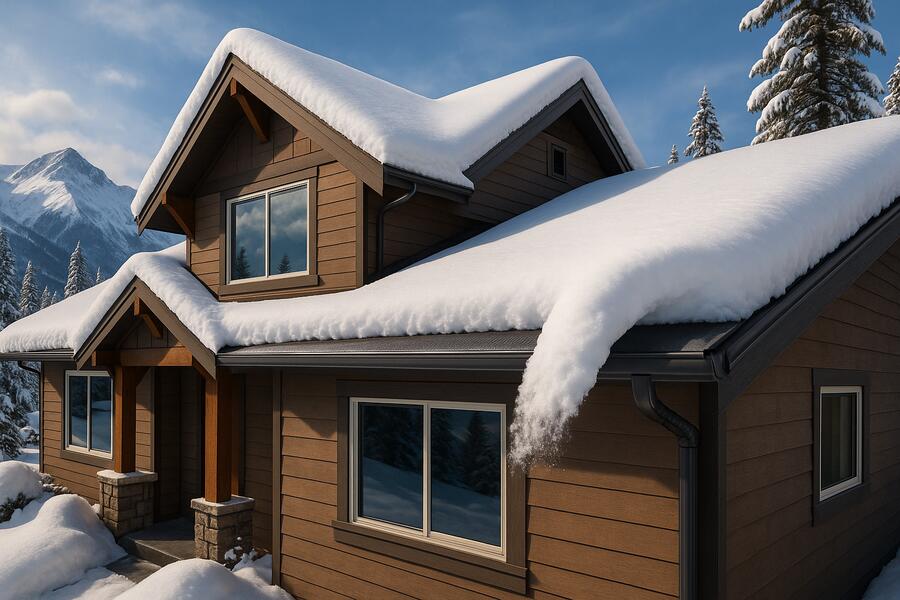
Living in Missoula, MT, means experiencing significant snowfall each winter. While gutter guards are excellent for keeping leaves and debris out of your gutters during warmer months, many homeowners naturally wonder: how do gutter guards perform during heavy snow loads and icy conditions? It’s a critical question because a malfunctioning gutter system in winter can lead to severe problems like ice dams, damaged gutters, and even structural issues.
At Aces Seamless Gutters, we’ve installed countless gutter guards missoula mt, and we understand the unique challenges our winters present. The interaction between gutter guard design, snow accumulation, and ice buildup is complex, but with the right system, gutter guards can actually help mitigate winter risks. This guide will explain how different guard designs interact with heavy snow and ice, helping you understand what to expect and how to choose the best protection for your home.
Understanding Snow Load and Gutter Capacity
Gutters are primarily designed to carry rainwater, not the heavy weight of snow and ice.
1. The Weight of Snow and Ice
Snow and ice can place immense stress on your gutter system.
-
Varying Weights:
Fresh, fluffy snow weighs approximately 4-7 pounds per cubic foot. However, wet, compacted snow can weigh 20-30 pounds per cubic foot, and solid ice weighs a staggering 57 pounds per cubic foot. A significant snow accumulation on your roof and gutters can quickly exceed their designed capacity.
-
Gutter Failure Risk:
Standard K-style gutters, without reinforcement, can typically support around 60 pounds per linear foot. If snow and ice accumulate and exceed this, gutters can sag, pull away from the fascia, or even collapse, causing extensive damage.
2. How Gutter Guards Factor In
The type of gutter guard plays a role in how well your system handles winter conditions.
-
Reinforcement:
Many professional-grade gutter guards, particularly those made from heavy-gauge aluminum or steel, are designed to add structural integrity to the gutter system. They can help distribute the weight of snow and ice more evenly, increasing the gutter’s overall load-bearing capacity. Some systems can support up to 120 pounds per linear foot or more.
-
Reduced Debris:
By keeping leaves and debris out, gutter guards prevent water from pooling on top of clogs and freezing. This reduces one potential source of ice accumulation within the gutter trough itself.
💡 Key Takeaway: Heavy snow and ice place immense weight on gutters, often exceeding their capacity. Quality gutter guards can reinforce the system, increasing its load-bearing ability and preventing internal clogs that exacerbate ice formation, making them beneficial for managing winter conditions.
Gutter Guards and Ice Buildup (Ice Dams & Icicles)
The interaction between gutter guards and ice is nuanced.
1. Do Gutter Guards Cause Ice Dams?
This is a common misconception that needs clarification.
-
No Direct Cause:
Gutter guards do not directly cause ice dams. Ice dams are primarily formed by inadequate attic insulation and ventilation, which allows heat to escape from the house, melt snow on the roof, and then refreeze at the colder eaves, forming a barrier. The gutter system, with or without guards, then becomes a reservoir for this refrozen water.
-
Potential Contribution (Poorly Designed/Installed Guards):
However, poorly designed or improperly installed gutter guards can *contribute* to ice buildup. Mesh or screen guards with large openings can trap snow and ice on their surface, slowing down drainage. Certain solid cover guards, if not installed with the correct pitch, can also hold melted snow on their surface, leading to icicles or contributing to the ice dam formation at the edge of the roof.
2. Mitigating Ice Problems with the Right Guards
Quality gutter guards can actually help.
-
Micro-Mesh Guards:
Fine micro-mesh gutter guards are often a good choice for snow and ice. Their tiny openings prevent debris from entering, and their flat, smooth surface allows snow to slide off more easily. The fine mesh typically sheds water well, reducing the chance of water freezing on the surface and impeding drainage.
-
Solid Cover/Surface Tension Guards:
These guards work on the principle of surface tension, allowing water to curve into the gutter while shedding debris. When designed correctly with a proper nose-forward pitch, they can allow snow to slide off rather than accumulating on top. However, if they become covered with a layer of ice, they might temporarily prevent melted snow from entering the gutter.
-
Heated Gutter Guards:
For homes in extreme cold or those prone to severe ice dams, heated gutter guard systems are available. These integrate heating cables within or alongside the gutter guards to keep the system above freezing, ensuring continuous water flow and preventing ice buildup.
💡 Key Takeaway: Gutter guards do not directly cause ice dams, which are primarily due to poor attic insulation. However, certain designs can contribute to ice buildup. The best guards for winter are micro-mesh or properly pitched solid covers that shed snow and water efficiently, with heated options available for severe conditions.
Choosing Gutter Guards for Missoula Winters
Selecting the right gutter guards for Missoula’s climate means considering specific design features.
-
Durability and Strength:
Opt for guards made from thick, sturdy aluminum or stainless steel that can withstand heavy snow loads without warping or detaching. Look for systems that are securely attached to the fascia or gutter structure.
-
Efficient Water Flow:
Choose guards that allow water to enter the gutter quickly and efficiently, even when the surface is wet or partially covered with slush. Fine micro-mesh or well-designed solid covers are often best.
-
Smooth Surface for Snow Shedding:
A relatively smooth, pitched surface on the guard helps snow and ice slide off the roof and over the gutter, rather than accumulating directly on the guard and potentially interfering with water entry.
-
Professional Installation:
Proper installation is paramount. An experienced contractor will ensure the guards are securely fitted, pitched correctly, and integrate seamlessly with your roofline to minimize winter issues.
| Gutter Guard Type | Snow Load Performance | Ice Buildup Interaction |
|---|---|---|
| Micro-Mesh | Good structural support; generally sheds snow well due to smooth surface. | Low risk of trapping ice; allows water in quickly. Best for reducing surface ice. |
| Solid Cover / Surface Tension | Excellent structural support; snow slides over if pitched correctly. | Can temporarily block water if ice forms on lip; generally good if designed well. |
| Screen / Slotted (DIY) | Poor structural support; prone to collapsing under heavy snow. | High risk of trapping snow/ice, which freezes and clogs openings. Avoid. |
| Heated Gutter Guards | Excellent structural support; actively melts snow/ice. | Eliminates ice buildup and ensures continuous flow. Ultimate solution for ice. |
The performance of gutter guards and snow load interaction during Missoula winters is heavily dependent on the type of guard and its installation quality. While no gutter guard can entirely prevent ice dams if your attic has poor insulation, the right system can significantly reduce the potential for ice buildup within the gutters themselves and add crucial structural support. Choose durable, well-designed guards and rely on professional installation to ensure your home is protected year-round.
Have questions about gutter guards and snow load? Reach out to our team today.
Frequently Asked Questions About Gutter Guards and Snow
Will heavy snow damage my gutter guards?
High-quality, professionally installed gutter guards, especially those made from durable materials like heavy-gauge aluminum or stainless steel, are designed to withstand significant snow loads. Many even reinforce the gutter’s structure. However, flimsy or improperly installed guards, particularly basic screens or plastics, can be damaged, collapse, or detach under the weight of heavy, wet snow or sliding snow from the roof. Always choose robust guards from a reputable installer.
Do gutter guards help prevent icicles?
Gutter guards can indirectly help reduce icicle formation by preventing internal gutter clogs, which can cause water to back up and spill over the edge, freezing into icicles. However, if snow or ice accumulates on top of the gutter guard itself and then melts, it can still form icicles as it drips off the leading edge. For absolute icicle prevention in severe climates, heated gutter guard systems are the most effective solution, as they actively melt snow and ice within the gutter.
What is the best type of gutter guard for heavy snow areas like Missoula?
For areas with heavy snow, micro-mesh gutter guards made from sturdy aluminum or stainless steel are often recommended. Their fine mesh prevents debris while allowing water to flow, and their durable construction can withstand snow loads. Solid cover/surface tension guards can also perform well if properly pitched to shed snow. For homes particularly prone to ice issues, integrating heated gutter guards offers the most comprehensive protection against snow and ice buildup in the gutters.

