
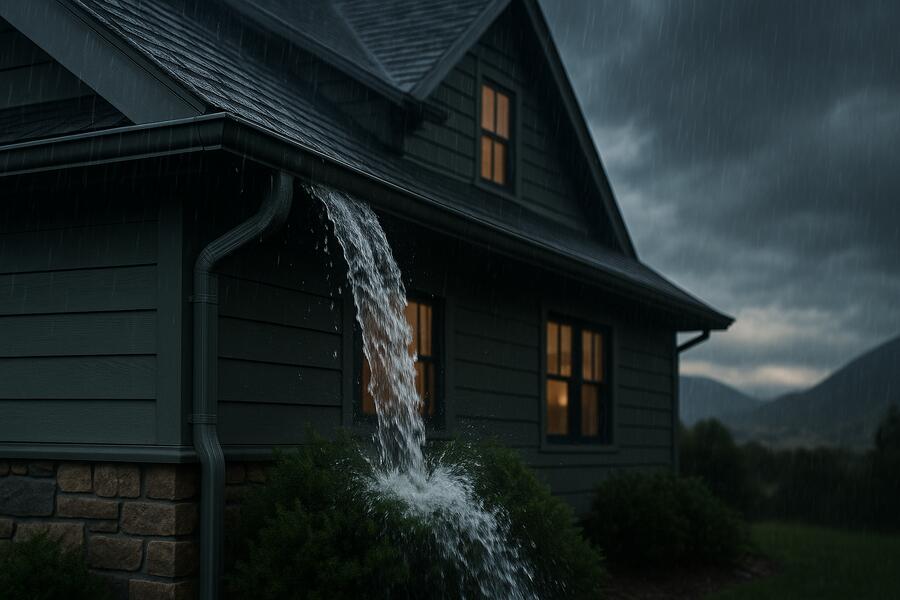
As a homeowner in Missoula, MT, you know how crucial a properly functioning gutter system is for protecting your home. When heavy rains hit or snow starts to melt rapidly, your gutters are the first line of defense against potential water damage to your roof, fascia, foundation, and landscaping. A common misconception is that all gutters are created equal, but the reality is that gutter size and water flow capacity are directly linked, significantly impacting how effectively your system can handle precipitation.
At Aces Seamless Gutters, we consistently emphasize the importance of correct gutter sizing during installation. An undersized gutter system, even if perfectly clean and installed, simply won’t be able to manage the volume of water from your roof during a significant downpour, leading to damaging overflows. Understanding the relationship between gutter size and water flow capacity is key to ensuring your home is adequately protected. This expertise is a cornerstone of our seamless gutters installation service.
The Physics of Gutter Size and Water Management
1. Defining Gutter Size: Width and Depth
When we talk about gutter size, we’re primarily referring to the dimensions of the trough itself—specifically its width and depth. These measurements determine the cross-sectional area, which directly translates to how much water the gutter can physically hold and convey.
-
Common Sizes:
The most common residential gutter sizes are 5-inch and 6-inch K-style gutters. The “inch” measurement refers to the width across the top of the gutter. Half-round gutters are also measured by their diameter.
-
Cross-Sectional Area:
A 6-inch gutter, for example, has a significantly larger cross-sectional area than a 5-inch gutter. This increased area allows it to handle a much greater volume of water before overflowing.
2. The Role of Roof Drainage Area
The size of your roof, or more accurately, the “effective roof area,” dictates the volume of water that will drain into your gutters.
-
Horizontal Footprint:
The primary factor is the horizontal footprint of the roof section that drains into a particular gutter run. This isn’t the actual slanted surface area, but rather the area as seen from directly above.
-
Roof Pitch:
For very steep roofs, the “effective area” calculation might include a factor for the vertical projection, as steeper roofs shed water faster and more directly into the gutters, increasing the instantaneous flow. However, for most residential applications, the horizontal footprint is the main consideration.
-
Multiple Downspouts:
The total roof area is divided by the number and placement of downspouts, as each downspout services a specific section of the gutter system.
💡 Key Takeaway: Gutter size, primarily its width and depth, directly determines its cross-sectional area and thus its water flow capacity. This capacity must be matched to your roof’s effective drainage area and Missoula’s typical rainfall intensity to prevent overflowing.
3. Rainfall Intensity: The Critical Variable
While the physical dimensions of the gutter are important, they must be matched to the expected rainfall intensity for your specific location.
-
Inches Per Hour:
Rainfall intensity is measured in inches per hour (or millimeters per hour) and represents how much rain is expected to fall within a certain period. Local building codes often specify a design rainfall intensity for gutter sizing, often based on a 5-year or 10-year storm event.
-
Peak Flow:
A gutter system needs to be sized not just for average rainfall, but for peak flow rates during intense downpours. An undersized gutter will quickly overflow when the rainfall intensity exceeds its capacity, even if it could handle the total volume over a longer period.
-
Missoula’s Climate:
In Missoula, factoring in sudden heavy rains and rapid snowmelt events is crucial for accurate gutter sizing, as these conditions produce high instantaneous water volumes.
4. The Flow Rate Calculation
Professionals use specific formulas to determine the required gutter and downspout sizes. One common simplified formula is Q = CIA, where:
- Q = Flow rate in gallons per minute (the required capacity of the gutter)
- C = Runoff coefficient (a factor for the roof material, typically 0.9 for most roofs)
- I = Rainfall intensity in inches per hour
- A = Effective roof drainage area in square feet
This calculation helps determine the volume of water the gutters must handle, which then dictates the necessary cross-sectional area of the gutter and the number/size of downspouts.
💡 Key Takeaway: Rainfall intensity is a critical factor; gutters must be sized to handle peak flow rates during heavy downpours, not just average rain. Professionals use calculations that consider roof area and local rainfall data to ensure the gutter system can effectively manage water volume in Missoula’s varied climate.
5. Downspout Sizing and Placement
It’s not just the gutters themselves; the downspouts also play a critical role in the overall water flow capacity of the system.
-
Vertical Drainage:
Downspouts are responsible for vertically conveying the collected water from the gutters to the ground or an extension. If downspouts are too few, too small, or clogged, the water will back up in the gutters, causing them to overflow.
-
Balancing Act:
The number and size of downspouts must be balanced with the gutter’s capacity. A large gutter with too few or too small downspouts will still fail to drain effectively. Conversely, large downspouts cannot compensate for an undersized gutter.
| Factor | Description | Impact on Water Flow |
|---|---|---|
| Gutter Width/Depth | Physical dimensions of the gutter trough. | Directly determines the volume of water it can hold and convey. Larger = more capacity. |
| Roof Drainage Area | Horizontal footprint of roof section draining to gutter. | Determines the total volume of water expected to enter the gutter. Larger area = more water. |
| Rainfall Intensity | Rate of rainfall (inches/hour) for a given location. | Crucial for calculating peak flow rates. Higher intensity = higher instantaneous flow. |
| Downspout Size/Number | Vertical pipes draining gutters; how many and how wide. | Affects how quickly water can exit the gutter. Insufficient downspouts cause backups. |
Choosing the correct gutter size for your Missoula home is a critical decision that should not be taken lightly. It’s a complex calculation that factors in local climate data, roof dimensions, and the interconnected capacity of the entire gutter system. Undersizing your gutters, even slightly, can lead to consistent overflows and expensive water damage. Consulting with experienced professionals ensures your home gets a system perfectly tailored to its needs.
Have questions about how gutter size affects water flow capacity? Reach out to our team today.
Frequently Asked Questions About Gutter Sizing
How do I know if my existing gutters are too small?
The most telling sign that your gutters are too small is consistent overflowing during moderate to heavy rainfall, even when they are clean and clear of debris. You might also notice water staining on your fascia or siding directly below the gutters, or erosion in the landscaping near your foundation. A professional assessment can confirm if their capacity is insufficient for your roof and local rainfall.
Is it always better to install larger gutters (e.g., 6-inch instead of 5-inch)?
While larger 6-inch gutters do offer significantly more water flow capacity and are often recommended for larger roofs, steep pitches, or areas with very heavy rainfall, they aren’t always strictly “better” for every home. For smaller homes with less roof area or moderate rainfall, a properly sized 5-inch gutter system can be perfectly adequate. The key is correct sizing based on calculations, not just going “bigger” without reason. Aesthetics can also play a role, as 6-inch gutters are more prominent.
What factors does a professional consider when sizing gutters for a home in Missoula?
A professional gutter installer in Missoula will consider several key factors: the total square footage of your roof, the pitch (steepness) of your roof, the local historical rainfall intensity data (specifically the maximum 5-minute or 1-hour rainfall intensity for your region), and the optimal placement and number of downspouts for efficient drainage. They will perform calculations to ensure the chosen gutter size and downspout configuration can effectively handle the expected water volume without overflowing.

