
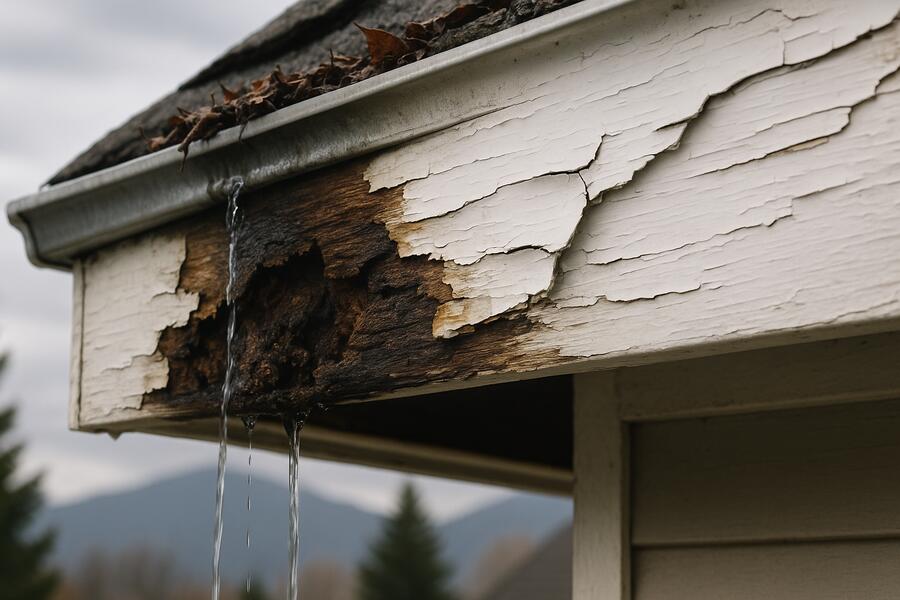
The fascia board, that critical trim piece running along your Missoula, MT roofline, plays a vital role in both protecting and beautifying your home. It’s the surface to which your gutters are attached, and it seals off the ends of your roof rafters from the elements. However, despite its importance, the fascia is often one of the first components to show signs of long-term moisture damage, particularly in a climate like ours that sees significant precipitation and freeze-thaw cycles.
At Aces Seamless Gutters, we routinely encounter homes where seemingly minor issues have led to extensive fascia rot over multiple seasons. Understanding how moisture and fascia damage are inextricably linked is key to preventative maintenance and protecting your investment. This isn’t a quick decay; it’s a slow, insidious process that can compromise your home’s structure. If you suspect issues, our team is skilled in professional fascia and soffit repair.
The Slow, Insidious Process of Moisture Damage
1. Initial Exposure: The Compromise of Protective Coatings
The first line of defense for a wooden fascia board is its paint or sealant. This protective coating is designed to repel water and shield the wood underneath.
-
Wear and Tear:
Over time, UV radiation from the sun, extreme temperature fluctuations, and repeated exposure to rain and snow cause the paint or sealant to chalk, crack, peel, or blister.
-
First Entry Points:
Once the protective layer is compromised, even microscopic openings allow moisture to penetrate the wood fibers. This often happens behind gutter brackets, at seams, or where the drip edge is failing.
-
Common Culprits:
Persistent moisture exposure is the foremost enemy. The most common source is overflowing or clogged gutters, which cause water to pool against the fascia board instead of being directed away.
2. Absorption and Expansion/Contraction Cycles
Once moisture breaches the surface, a destructive cycle begins.
-
Wood Swelling:
When wood absorbs water, its cellular structure swells. When it dries out, it contracts. This constant expansion and contraction, especially over repeated wetting and drying cycles across seasons, slowly breaks down the wood’s cellular structure.
-
Weakening Fibers:
Each cycle weakens the wood, making it softer and more susceptible to further water absorption and decay. You might notice the fascia no longer appears perfectly straight, beginning to bow or warp as its internal structure is compromised.
-
Paint Failure Exacerbated:
This internal movement of the wood further stresses the paint film, leading to more widespread peeling, bubbling, and flaking, which in turn exposes even more wood to moisture.
💡 Key Takeaway: Moisture damage to fascia begins when protective paint or sealant fails, allowing water to penetrate. Repeated wetting and drying cycles cause wood to swell and contract, progressively weakening its cellular structure and leading to warping and further paint failure over time.
3. Fungal Decay: The Onset of Wood Rot
With consistent moisture (above 19% wood content), moderate temperatures, and oxygen, the perfect conditions are created for fungal decay, commonly known as wood rot, to set in.
-
Fungal Growth:
Fungi feed on the cellulose and lignin in the wood, breaking it down and causing it to become soft, spongy, and discolored. This process is irreversible without removing the affected wood.
-
Progression of Rot:
Initially, rot might be localized and subtle, perhaps just a soft spot that gives way under pressure. Over seasons, it spreads, turning the wood dark, crumbly, or stringy. This significantly compromises the structural integrity of the fascia.
-
Pest Infestation:
Rotting wood also becomes an attractive target for pests like carpenter ants, termites, and wasps, which can further excavate and damage the weakened material, creating additional pathways for moisture.
4. Structural Compromise and Domino Effect
As the fascia continues to rot, it can have cascading negative effects on other parts of your home.
-
Gutter Detachment:
Since gutters are directly attached to the fascia, a rotten fascia board cannot hold them securely. This can lead to sagging gutters, which then overflow even more, exacerbating the fascia damage and potentially causing leaks into the soffits or attic.
-
Soffit and Rafter Damage:
Uncontrolled water flow from a compromised fascia or overflowing gutter can saturate the soffit boards and even reach the rafter tails, leading to rot in these structural components.
-
Roof Edge Issues:
A severely rotted fascia can also affect the integrity of the roof edge, potentially compromising the drip edge and allowing water to get under shingles.
| Stage of Damage | Signs to Look For | Long-Term Impact |
|---|---|---|
| 1. Initial Exposure | Peeling, bubbling, flaking paint; water stains on fascia/siding. | Allows moisture into wood fibers, starting decay process. |
| 2. Absorption Cycles | Warped, bowing fascia; more widespread paint failure. | Weakens wood structure, making it prone to rot and further water absorption. |
| 3. Fungal Decay (Rot) | Soft, spongy, crumbly wood; dark discoloration; visible mold/fungus. | Destroys wood structure, attracts pests, compromises structural integrity. |
| 4. Structural Compromise | Sagging/detached gutters; water damage to soffits/rafters. | Leads to widespread water damage, potential roof/foundation issues. |
💡 Key Takeaway: Wood rot is the final stage of long-term moisture exposure, where fungi break down the fascia’s structure, turning it soft and crumbly. This can lead to sagging gutters, further water damage to soffits and rafters, and ultimately, significant repair costs for your Missoula home.
Protecting your fascia from moisture damage is crucial for the overall health of your Missoula home. Regular gutter cleaning, prompt gutter repairs, and ensuring your roof’s drip edge is properly installed are the best defenses against this slow but destructive process.
Have questions about moisture and fascia damage? Reach out to our team today.
Frequently Asked Questions About Fascia Damage
What are the earliest warning signs of moisture damage on fascia?
The earliest warning signs of moisture damage on fascia include peeling, bubbling, or cracking paint, especially on the underside or face of the board. You might also notice dark streaks or blotchy discoloration, often appearing directly below where your gutters attach or at corner joints. These indicate moisture is getting behind the protective coating.
Can rotten fascia be repaired, or does it always need to be replaced?
In many cases, localized rotten fascia can be repaired without replacing the entire board. The first step is to correct the source of moisture (e.g., clean gutters, fix a roof leak). Then, the unsound wood is carefully removed, and the remaining healthy wood fibers can be strengthened before the damaged area is rebuilt using wood epoxies or new wood sections. However, if the rot is extensive, deep, or affects a long run, full replacement is often the more durable and cost-effective solution.
How do clogged gutters specifically contribute to fascia rot?
Clogged gutters are a primary cause of fascia rot. When gutters are blocked by leaves and debris, rainwater cannot drain properly. Instead, it overflows and spills directly over the gutter lip and down the fascia board. This constant exposure to standing and flowing water keeps the fascia wet for prolonged periods, especially the top edge and the area directly behind the gutter. This persistent saturation quickly breaks down paint and wood, leading to rot.

