
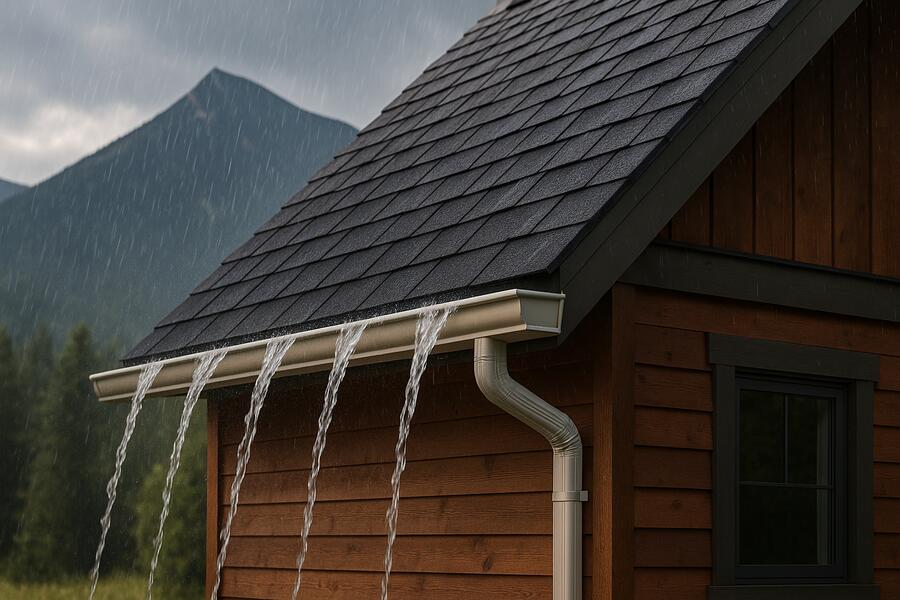
When planning a gutter system for your Missoula, MT home, it’s easy to think that the size of your house is the only factor. However, one critical element often overlooked is your roof pitch. This measurement, essentially the steepness of your roof, plays a surprisingly significant role in how efficiently water sheds from your roof and, consequently, how your gutters need to be sized. Ignoring the roof pitch can lead to undersized gutters that quickly overflow, causing water damage to your home and landscaping.
At Aces Seamless Gutters, we understand that effective water management starts at the roofline. That’s why we meticulously consider factors like roof pitch when designing and installing seamless gutters. Steeper roofs, while visually striking, funnel water with greater velocity and volume towards your gutters. This guide will explain the relationship between roof pitch and gutter sizing, helping you understand why it matters and how it influences recommendations for your home.
Understanding Roof Pitch
Roof pitch is a fundamental measurement of your roof’s slope.
1. What is Roof Pitch?
It’s the ratio of the vertical rise to the horizontal run.
-
Measurement:
Roof pitch is typically expressed as a ratio, such as “4/12” or “8 in 12.” This means for every 12 inches of horizontal run, the roof rises 4 inches or 8 inches, respectively. The higher the first number, the steeper the roof.
-
How to Measure:
You can estimate your roof pitch using a 2-foot level and a tape measure. Hold one end of the level against the roof, level it, and measure the distance between the roof and the underside of the level at its midpoint (12-inch mark). For instance, a 5-inch gap at the 12-inch mark indicates a 5/12 pitch.
2. How Pitch Affects Water Flow
The steeper the roof, the faster and more forcefully water moves.
-
Increased Velocity:
On a shallow pitch (e.g., 2/12 or 3/12), rainwater drains relatively slowly. As the pitch increases (e.g., 8/12 or 12/12), gravity pulls water down with greater speed and force. This increased velocity means water hits the gutters with more momentum.
-
Greater Volume at the Eaves:
Steeper roofs also have a larger “effective” or “projected” roof area from a rainfall perspective. While the footprint of the house might be the same, a steeper roof collects and channels more water to the gutter line in a given amount of time compared to a flatter roof of the same footprint. This effectively means more water needs to be captured and drained.
💡 Key Takeaway: Roof pitch, expressed as a ratio (e.g., 4/12), measures your roof’s steepness. A higher pitch means water sheds with greater velocity and volume toward the gutters. This increased water flow demands careful consideration during gutter sizing to prevent overflow and ensure effective drainage.
Gutter Sizing Principles and Pitch Factor
Effective gutter sizing combines roof area, local rainfall, and the critical pitch factor.
1. Key Sizing Factors
Beyond roof pitch, other elements influence gutter size.
-
Drainage Area:
The square footage of the roof surface that drains into a specific section of gutter. This is your starting point for any calculation.
-
Rainfall Intensity:
The maximum expected rainfall in your specific geographic area (e.g., Missoula). This is typically expressed in inches per hour and is a critical variable for determining peak water flow.
-
Gutter Material & Shape:
The capacity of a gutter also depends on its shape (K-style, half-round) and material, which affects internal friction and flow rate.
-
Downspout Sizing & Placement:
The number and size of downspouts are equally important. Even perfectly sized gutters will overflow if the downspouts can’t handle the volume.
2. The Pitch Factor (Roof Pitch Multiplier)
This adjusts the “effective” roof area for steeper roofs.
-
Adjusting for Steepness:
To account for the increased volume and velocity of water from steeper roofs, a “pitch factor” or “multiplier” is applied to the horizontal roof area. This converts the actual footprint into an “effective” drainage area that better represents the water volume hitting the gutters.
-
Example Multipliers:
- Flat to 3/12 pitch: Factor of 1.0 (no adjustment)
- 4/12 to 5/12 pitch: Factor of 1.05
- 6/12 to 8/12 pitch: Factor of 1.1
- 9/12 to 11/12 pitch: Factor of 1.2
- 12/12 or higher pitch: Factor of 1.3
These factors are used to calculate the adjusted square footage, which is then used with local rainfall data to determine the required gutter and downspout capacity.
💡 Key Takeaway: Gutter sizing depends on drainage area, local rainfall, and the gutter system’s specifics. The “pitch factor” is crucial: it multiplies the roof’s horizontal area for steeper roofs to reflect the increased water volume and velocity. This adjusted area is then used to accurately determine the necessary gutter and downspout capacity.
Practical Implications for Gutter Design in Missoula
For Missoula homeowners, understanding roof pitch means making informed decisions about gutter systems.
1. Sizing Recommendations for Steeper Roofs
Larger gutters and more downspouts are often needed.
-
Larger Gutter Channels:
Homes with steeper roof pitches often require larger gutters, such as 6-inch K-style gutters, rather than the standard 5-inch. This increased capacity is vital to handle the higher volume and faster flow of water.
-
More or Larger Downspouts:
Even with larger gutters, the system can fail if the downspouts aren’t adequate. Steeper roofs may necessitate more downspouts per lineal foot of gutter or larger diameter downspouts (e.g., 3×4 inch rectangular or 4-inch round instead of 2×3 inch rectangular or 3-inch round).
-
Optimized Placement:
Strategic placement of downspouts is key to quickly drawing water away from the gutters and minimizing runoff over the sides.
2. The Role of Professional Installation
Accurate sizing and proper installation are non-negotiable.
-
Precise Calculations:
An experienced gutter professional will accurately measure your roof’s drainage area and pitch, research Missoula’s specific rainfall intensity data, and apply the correct pitch factor to determine the ideal gutter and downspout sizes for your home.
-
Ensuring Proper Slope:
Even with appropriately sized gutters, proper slope (or pitch) during installation is crucial for efficient drainage. Gutters should have a slight slope towards the downspouts, typically about 1/16 to 1/8 inch per foot.
| Roof Pitch (Rise/Run) | Water Flow Characteristics | Gutter Sizing Implication |
|---|---|---|
| Flat to 3/12 (Low Pitch) | Slower water flow, lower effective drainage area. | Standard 5-inch gutters often sufficient. |
| 4/12 to 8/12 (Moderate Pitch) | Moderate to faster water flow, increased effective drainage area. | May require 5-inch or 6-inch gutters depending on roof size/rainfall. |
| 9/12 and Steeper (Steep Pitch) | Very fast water flow, significantly higher effective drainage area. | Likely requires 6-inch gutters, potentially more/larger downspouts. |
Understanding how roof pitch affects gutter sizing is fundamental to installing an effective and durable water management system for your Missoula home. By correctly accounting for the increased volume and velocity of water from steeper roofs, you can ensure your gutters are adequately sized to prevent overflows, protect your foundation, and preserve your home’s exterior for years to come. Always consult with a professional gutter installer to get precise calculations and an optimally designed system.
Have questions about how roof pitch affects gutter sizing? Reach out to our team today.
Frequently Asked Questions About Roof Pitch and Gutter Sizing
Why do steeper roofs need larger gutters?
Steeper roofs shed water faster and direct a larger “effective” volume of water towards the gutters in a shorter period compared to flatter roofs of the same footprint. This increased velocity and volume means the gutters need to have a greater capacity to capture and channel the water away efficiently, preventing overflows. If the gutters are too small, the sheer force and quantity of water can overshoot them.
How can I measure my roof pitch?
A common method is to use a 2-foot level. Place one end against the underside of your roof’s eaves (or rafters if accessible from the attic), and extend it horizontally. Then, measure the vertical distance from the 12-inch mark on the level down to the roof surface. If that distance is, for example, 6 inches, your roof has a 6/12 pitch. For safety, it’s often best to have a professional measure it.
What happens if my gutters are undersized for my roof pitch?
If your gutters are undersized for your roof pitch, they will likely overflow during moderate to heavy rainfall. This overflow can lead to significant problems: water cascading over the sides can erode landscaping, damage fascia boards and siding, lead to foundation cracks, and cause basement flooding. Over time, consistent overflow can even undermine the structural integrity of your home. Proper sizing is crucial for effective water management.

