
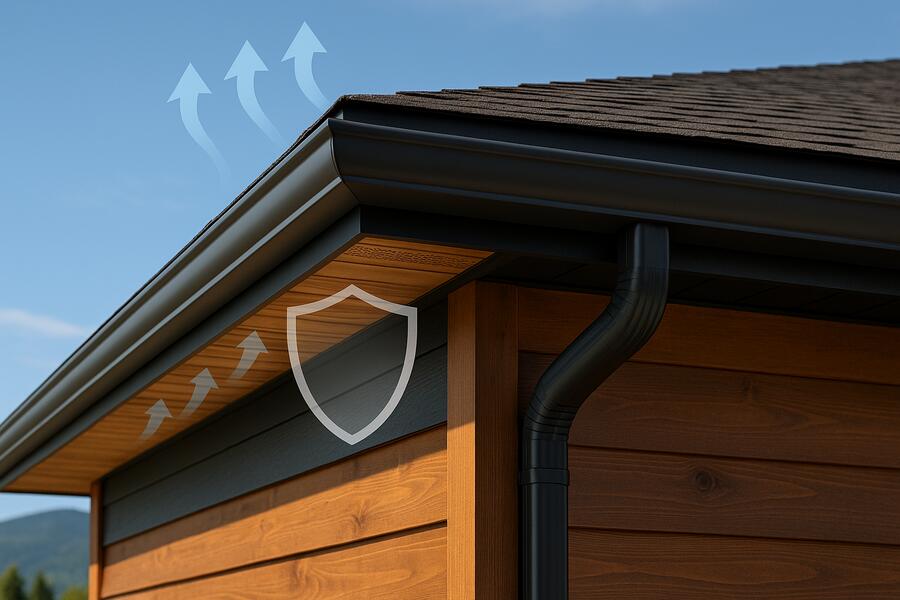
The roofline of your Missoula, MT home is more than just an aesthetic feature; it’s a complex system designed to protect your property from the elements and ensure proper attic ventilation. Among its critical components are the soffit and fascia. These two elements, often overlooked by homeowners, play distinct yet interconnected roles in maintaining the health and integrity of your home. Understanding their individual functions and, more importantly, how the soffit and fascia relationship works in tandem is key to appreciating their importance.
At Aces Seamless Gutters, we routinely see the consequences when these components are neglected or damaged. From water infiltration to poor attic airflow, problems with your soffits and fascia can lead to significant issues like wood rot, mold, and even structural damage. Let’s delve into how these two essential parts of your roofline interact to manage ventilation and water, safeguarding your home for years to come. If you’re dealing with damage, our team specializes in fascia and soffit repair.
Understanding Each Component Individually
What is Fascia?
The fascia board is the long, straight board that runs horizontally along the edge of your roof, just below the roofline. It’s essentially the “face” of your roof’s edge. Think of it as the trim piece that caps the end of your roof rafters.
-
Primary Functions:
- Aesthetics: Provides a smooth, finished appearance to the roof’s edge, concealing the exposed ends of the rafters.
- Gutter Attachment: Serves as the primary mounting surface for your gutters, securely holding them in place.
- Weather Barrier: Helps prevent moisture, pests, and wind from entering the attic or roof structure from the eaves.
-
Common Materials:
Fascia can be made from wood (often pine or cedar, which can be painted), vinyl, aluminum, or fiber cement. Aluminum fascia is frequently used to cap wooden fascia boards, providing a low-maintenance, weather-resistant layer.
What is Soffit?
The soffit is the finished surface that covers the underside of your roof’s overhang, spanning from the exterior wall of your house to the fascia board. “Soffit” comes from the French word meaning “something fixed underneath.”
-
Primary Functions:
- Attic Ventilation: Many soffits are perforated or contain vents that allow air to flow into the attic space. This is crucial for regulating attic temperature and preventing moisture buildup.
- Pest Barrier: Closes off the open eaves, preventing birds, squirrels, insects, and other pests from nesting in your attic.
- Aesthetics: Provides a neat, finished appearance to the underside of the eaves, complementing the fascia and the rest of the home’s exterior.
-
Common Materials:
Soffits are commonly made from vinyl, aluminum, wood, or fiber cement, often matching or complementing the siding and fascia materials.
💡 Key Takeaway: Fascia is the vertical board at the roof’s edge that gutters attach to, providing a finished look and weather protection. Soffit is the horizontal panel beneath the roof overhang, primarily responsible for attic ventilation and pest deterrence.
The Interplay: How Soffits and Fascia Work Together
The true strength of your roofline’s protective and functional capabilities lies in the seamless integration of your soffits and fascia. They are not merely adjacent components but interdependent parts of a larger system.
1. Comprehensive Weather Protection
-
Fascia’s Role:
The fascia provides a solid, vertical barrier against rain, snow, and wind that might otherwise blow directly into your roof structure. It also takes the brunt of any water overflowing from clogged gutters.
-
Soffit’s Role:
The soffit seals off the underside of the eaves horizontally, preventing wind-driven rain, moisture, and pests from entering the attic from below. Together, they create a complete seal around the lower perimeter of your roof.
2. Critical Attic Ventilation
This is where the soffit and fascia relationship truly shines. Proper attic ventilation is paramount for:
-
Moisture Control:
Warm, moist air naturally rises into the attic. Without adequate ventilation, this moisture can condense, leading to mold growth, wood rot, and compromised insulation. Perforated soffits act as intake vents, drawing fresh, cooler air into the attic.
-
Temperature Regulation:
In summer, proper airflow prevents attics from overheating, which reduces the load on your air conditioning and extends the life of your roof shingles. In winter, it helps prevent ice dams by keeping the roof deck temperature closer to the outside air temperature.
-
The System:
Soffit vents work in conjunction with exhaust vents (like ridge vents or gable vents) to create a continuous airflow, drawing cool air in through the soffits and pushing warm, moist air out through the exhaust vents. The fascia, though not directly venting, ensures this channel is clear and properly sealed.
💡 Key Takeaway: Soffits and fascia form a cohesive unit that provides comprehensive weather protection. Ventilated soffits are essential for attic airflow, preventing moisture buildup and regulating temperature, working with the fascia to create a sealed, healthy roofline.
3. Supporting Gutters and Managing Water
-
Fascia as the Anchor:
As the strong, vertical anchor point for your gutters, the fascia board bears the significant weight of water and sometimes snow/ice. A strong, well-maintained fascia is essential for your gutters to function correctly.
-
Soffit as the Shield:
Should gutters overflow due to clogs or heavy rain, the soffit helps prevent water from directly entering the eaves and attic. It directs any overflow away from the direct entry points into your home’s structure.
| Component | Primary Function | How It Interacts |
|---|---|---|
| Fascia | Aesthetics, Gutter Attachment, Vertical Weather Barrier | Provides attachment point for gutters, forms the front edge of the ventilation channel. |
| Soffit | Attic Ventilation, Pest Barrier, Horizontal Weather Barrier | Draws air into the attic (if vented), seals the underside of the eaves. Works with fascia to create a complete seal and ventilation system. |
The coordinated effort of soffit and fascia is a testament to thoughtful home design. They are more than just decorative trims; they are vital components that protect your Missoula home from water damage, pests, and the adverse effects of poor ventilation. Regular inspection and maintenance of these areas are crucial to ensure your roofline continues to perform its critical functions effectively.
Have questions about soffit and fascia relationship? Reach out to our team today.
Frequently Asked Questions About Soffits and Fascia
What are the common signs of damage to soffits or fascia?
Common signs of damage include peeling paint, rotting wood (especially on fascia where gutters are attached), cracks or holes, sagging sections, and visible pest activity (like nests or entry points). Water stains, particularly below the roofline, are also a strong indicator of an issue, often related to overflowing gutters or roof leaks affecting the fascia.
Do all homes have soffits and fascia?
Most homes with an overhang or eaves will have both soffits and fascia. However, some modern architectural styles, particularly those with a minimalist design or flat roofs, might have a very minimal or non-existent overhang, in which case the roof edge might integrate ventilation differently without traditional soffits.
Can damaged soffits and fascia affect my energy bills?
Yes, absolutely. Damaged or poorly ventilated soffits can lead to inadequate attic ventilation. This results in your attic becoming excessively hot in the summer, making your air conditioning work harder and increasing energy consumption. In winter, poor ventilation can lead to moisture buildup and less effective insulation, potentially increasing heating costs and risking structural damage.

