
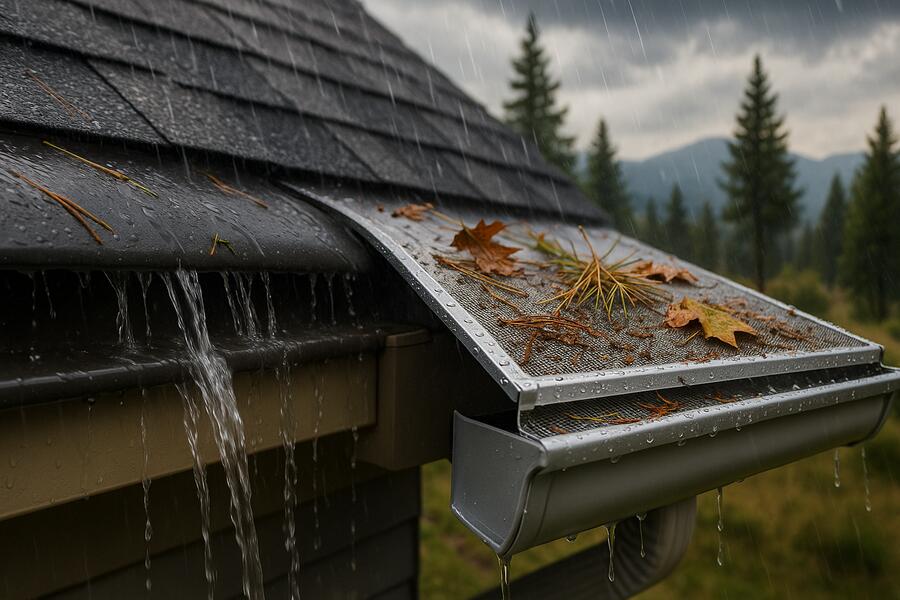
When it comes to protecting your Missoula, MT home from clogged gutters and the resulting water damage, gutter guards are an excellent investment. They significantly reduce the need for hazardous ladder climbing and frequent cleaning, ensuring proper water flow away from your foundation. However, navigating the various gutter guard styles can be overwhelming. Two of the most popular and effective designs are mesh (specifically micro-mesh) and reverse-curve systems.
Each of these gutter guard styles offers distinct advantages and disadvantages in terms of debris filtering capabilities, handling heavy rainfall, and maintenance requirements. Understanding their differences is crucial to choosing the best system for your home, roof type, and the types of trees surrounding your property. Let’s dive into a detailed comparison to help you make an informed decision about these advanced leaf guards.
Micro-Mesh Gutter Guards: Precision Filtering
How Micro-Mesh Works
Micro-mesh gutter guards feature a fine screen, often made of surgical-grade stainless steel or aluminum, stretched over the gutter opening. This mesh has tiny openings, sometimes just microns wide, allowing rainwater to pass through easily while blocking virtually all solid debris. The design ensures that leaves, pine needles, shingle grit, seeds, and even pollen stay on top of the mesh.
Pros of Micro-Mesh
-
Superior Debris Filtration
Micro-mesh systems excel at blocking even the finest particles. This is particularly beneficial in areas with pine trees, deciduous trees that shed small seeds, or older roofs that produce shingle grit.
-
Excellent for Pine Needles
Unlike many other gutter guard types, high-quality micro-mesh is highly effective at preventing pine needles from entering and clogging gutters.
-
Handles Heavy Rainfall
Good micro-mesh designs are engineered to handle significant rainfall by ensuring water passes through quickly, even during heavy downpours, without overshooting the gutter.
-
Durability
Often constructed with aluminum frames and stainless steel mesh, these systems are built to last, resisting rust, warping, and UV degradation.
Cons of Micro-Mesh
-
Potential for Surface Buildup
While debris stays out of the gutter, it can accumulate on top of the mesh. Although wind and rain often clear this naturally, a sticky sap from certain trees or excessive pollen can sometimes create a thin film, potentially requiring occasional light brushing or rinsing from the ground.
-
Higher Upfront Cost
Micro-mesh systems are typically professionally installed and can be more expensive per linear foot than basic screens or DIY options, though costs vary by brand and material.
💡 Key Takeaway: Micro-mesh gutter guards offer unparalleled filtration, stopping virtually all types of debris, including pine needles and shingle grit. They are highly effective in heavy rain and durable, making them a top choice for comprehensive protection, despite a higher initial investment.
Reverse-Curve (Surface Tension) Gutter Guards: The “Helmet” Style
How Reverse-Curve Works
Reverse-curve gutter guards (often referred to as “gutter helmets” or “hoods”) feature a solid cover that extends over the gutter opening and then curves downward, tucking back into the gutter. This design relies on the principle of surface tension: water adheres to the curved surface and follows it into a narrow slot at the bottom, while leaves and larger debris are designed to fall off the edge.
Pros of Reverse-Curve
-
Excellent for Large Debris
These guards are highly effective at shedding large leaves and twigs, which simply slide off the curved surface.
-
Minimal Visible Debris
Since the gutter opening is almost entirely covered, very little debris is visible from the ground, offering a clean aesthetic.
-
Durability
Often made from solid aluminum, these systems are robust and can withstand harsh weather conditions.
Cons of Reverse-Curve
-
Vulnerability to Heavy Rainfall
A significant drawback of some reverse-curve designs is their potential to overshoot in heavy rainfall. If the volume of water is too great for surface tension to handle, it can simply cascade over the front edge of the guard, missing the gutter entirely.
-
Issues with Small Debris
While great for large leaves, fine debris like pine needles, shingle grit, and small seeds can sometimes enter the narrow slot or accumulate near it, potentially causing clogs over time.
-
More Expensive
Like micro-mesh, reverse-curve guards are typically professionally installed and are among the more expensive options on the market.
-
Installation Challenges
Some reverse-curve systems can be bulky and may alter the aesthetics of your roofline or even interfere with roof shingles, potentially voiding roof warranties if not installed correctly.
💡 Key Takeaway: Reverse-curve gutter guards are excellent for large leaves and offer a clean look. However, they can struggle with heavy rainfall and fine debris like pine needles. Their installation might also be more invasive than micro-mesh systems.
Mesh vs. Reverse-Curve: A Direct Comparison
| Feature | Micro-Mesh Gutter Guards | Reverse-Curve Gutter Guards |
|---|---|---|
| Debris Filtration | Excellent (blocks fine debris, pine needles, shingle grit) | Good for large leaves; struggles with small debris, pine needles. |
| Heavy Rainfall Handling | Excellent (water passes directly through) | Variable (can overshoot/fail in heavy downpours) |
| Maintenance | Low; occasional light brushing for surface buildup. | Low; occasional checking for debris near slot. |
| Cost (Installed) | Typically $6 – $30+ per linear foot | Typically $15 – $45+ per linear foot (often higher) |
| Installation Impact | Often less intrusive; mounts to gutter lip. | Can be more invasive; may install under shingles. |
For most homeowners in Missoula, MT, especially those with pine trees or a mix of deciduous trees, high-quality micro-mesh gutter guards often provide the most comprehensive and reliable protection. Their superior filtration capabilities ensure that even the smallest debris is kept out, minimizing the need for maintenance and providing long-term peace of mind, even during intense rainfall or heavy snowmelt seasons. However, a professional assessment of your home’s specific needs, roof type, and surrounding foliage is always the best approach to selecting the ideal gutter guard system.
Have questions about gutter guard styles comparison? Reach out to our team today.
Frequently Asked Questions About Gutter Guard Styles
Which gutter guard style is better for pine needles?
Micro-mesh gutter guards are generally superior for handling pine needles. Their extremely fine mesh prevents even the smallest needles from entering the gutter. Reverse-curve guards, with their larger entry slot, can sometimes allow pine needles and small seeds to slip through or accumulate near the opening, potentially causing clogs.
Can reverse-curve gutter guards handle heavy rain?
The performance of reverse-curve gutter guards in heavy rain can vary significantly by brand and design. While some high-quality models perform well, many struggle with intense downpours, leading to water overshooting the gutter due to the limitations of surface tension. Micro-mesh systems generally have a more reliable capacity for high-volume rainfall.
Do micro-mesh gutter guards ever need cleaning?
While micro-mesh gutter guards prevent debris from entering the gutter, some fine particles, pollen, or sticky tree sap can occasionally accumulate on the surface of the mesh. This buildup is usually minimal and often cleared by wind and rain. However, very infrequent, light brushing or rinsing from the ground (not on a ladder) might be beneficial for optimal performance in areas with extremely high pollen or specific types of trees.

