
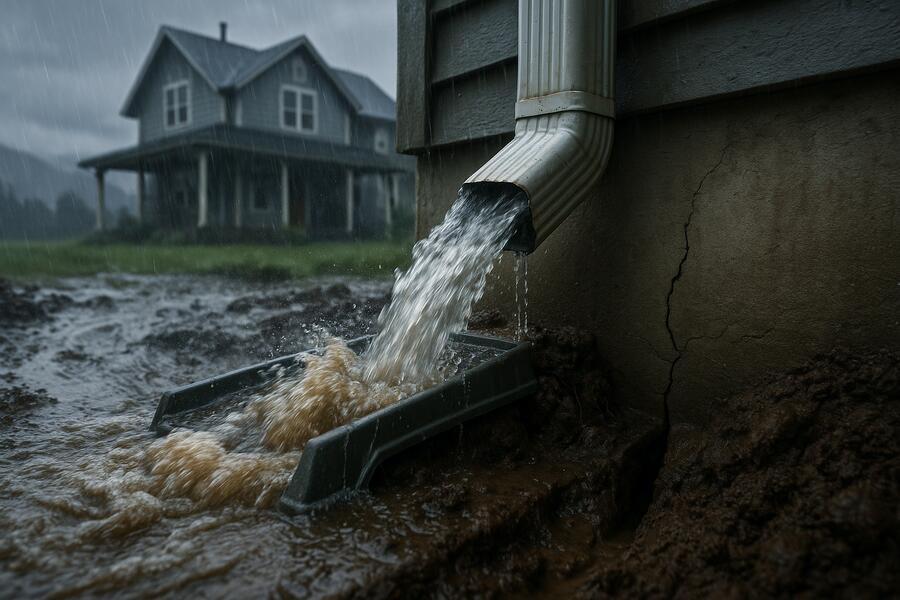
The functionality of your home’s gutter system extends far beyond simply catching rainwater off the roof. Once collected, that water needs to be efficiently and safely diverted away from your home’s foundation. If not, you’re looking at potential problems like soil erosion, basement moisture, and even costly foundation damage. For homeowners in Missoula, MT, where seasonal precipitation can be substantial, proper downspout extensions are a non-negotiable component of a healthy home.
Many homeowners overlook the critical role of downspout extensions, often letting water dump directly at the base of their home. This seemingly small oversight can lead to significant and expensive issues. At Aces Seamless Gutters, we emphasize that effective drainage, starting with your gutter downspouts missoula mt, is your first line of defense against water-related structural problems. Let’s explore how downspout extensions prevent foundation erosion and protect your most valuable asset.
The Critical Role of Downspout Extensions
1. Understanding the Risk: Why Water Near the Foundation is Dangerous
When downspouts discharge water directly at the foundation, a cascade of problems can begin.
-
Soil Erosion
Concentrated water flow from a downspout can rapidly erode soil at the base of your foundation. This washes away precious topsoil, exposes foundation footings, and can create channels or depressions that actually direct more surface water *towards* your house, reversing the grade that should slope away.
-
Basement & Crawl Space Moisture
As water saturates the soil directly around your foundation, it increases hydrostatic pressure against basement walls. This pressure can force water through tiny cracks, leading to leaks, dampness, mold growth, and a generally unhealthy environment in basements or crawl spaces.
-
Foundation Damage
Repeated cycles of soil saturation and drying can cause the ground to expand and contract. This movement puts immense stress on your foundation walls, potentially leading to cracks, settlement issues, and compromised structural integrity. Repairing foundation damage can be one of the most expensive home repairs a homeowner faces.
-
Landscape Damage
Beyond the foundation, concentrated runoff can damage landscaping, wash away mulch, and create muddy, unsightly areas around your home.
💡 Key Takeaway: Water pooling near your foundation from inadequate downspout discharge causes soil erosion, hydrostatic pressure, basement leaks, and potential foundation damage. Proper extensions are essential to prevent these costly issues.
2. The “Five-Foot Rule” and Beyond: How Far is Far Enough?
Industry standards and common sense dictate that downspouts must extend a safe distance from your home.
-
The Minimum Distance
Most building professionals and drainage experts recommend that downspouts extend at least 4-6 feet away from the foundation. Some even advocate for a “five-foot rule” as a critical metric for foundation preservation. Discharging water within 3 feet of the home can lead to a significantly higher risk of soil expansion and subsequent wall shearing.
-
Ideal Distances for Protection
For optimal protection, especially in wet climates like Missoula or for homes with basements, an extension of 8-10 feet or more is highly preferred. This greater distance ensures that runoff disperses over a wider area, preventing concentration and saturation near the critical foundation zone.
-
Considering Your Property’s Grade
The slope of your land is also a factor. Even with extensions, if your yard slopes back towards the house, water can still migrate to the foundation. Ensure your landscape has a positive grade (slopes away) to further assist drainage.
💡 Key Takeaway: Downspout extensions should direct water at least 4-6 feet, and ideally 8-10 feet or more, away from the foundation. This distance is crucial to prevent water from pooling and compromising the soil and structural integrity of your home.
3. Types of Downspout Extension Solutions
There are several effective ways to extend your downspouts and ensure proper water diversion:
-
Splash Blocks
These are simple, often concrete or plastic, U-shaped blocks placed directly under the downspout outlet. They disperse water over a wider surface area and guide it away from the foundation. While better than nothing, their reach is limited, typically only 2-3 feet.
-
Flexible & Roll-Out Extensions
These are corrugated plastic tubes that attach to the downspout. They can be rolled out during rain and rolled back up or collapsed afterward. They offer greater reach (often 6-10 feet) and are inexpensive, but can look unsightly and are prone to clogs or damage.
-
Rigid Extensions (Surface Pipes)
Made of PVC or metal, these extensions offer a more durable and permanent solution than flexible options. They maintain their shape, are less prone to clogs, and can be extended further (4-10+ feet). They can be an aesthetic improvement over flexible hoses.
-
Underground Drainage Systems
This is the most comprehensive and aesthetically pleasing solution. Downspouts connect to underground pipes (preferably rigid PVC, not corrugated) that carry water much further away from the house to a pop-up emitter in the yard, a dry well, or a storm sewer connection. This completely hides the drainage and ensures maximum protection.
| Extension Type | Pros | Cons | Best For |
|---|---|---|---|
| Splash Blocks | Inexpensive, easy to install. | Limited reach (2-3 ft), minimal erosion control. | Minor drainage issues, very tight budgets. |
| Flexible/Roll-out | Inexpensive, good reach (6-10 ft), retractable. | Unsightly, prone to clogs/damage, can freeze. | Temporary solutions, moderate budgets. |
| Rigid Surface Pipes | Durable, good reach (4-10+ ft), fewer clogs. | More visible, can be tripped over. | Effective, visible solution for good drainage. |
| Underground Systems | Aesthetically pleasing, maximum protection, no tripping hazard. | Higher upfront cost, more complex installation. | Long-term solution, severe drainage issues, desire for clean aesthetics. |
Investing in proper downspout extensions is one of the most cost-effective ways to protect your Missoula home from significant and expensive water damage. Whether you opt for simple splash blocks or a comprehensive underground system, ensuring water is directed well away from your foundation is paramount. Don’t let a simple oversight lead to major structural headaches.
Have questions about dowpout extensions and foundation erosion? Reach out to our team today.
Frequently Asked Questions About Downspout Extensions and Foundation Protection
How far should my downspouts extend from the house to prevent damage?
Downspouts should extend at least 4-6 feet away from the foundation. For optimal protection, especially in wet climates or if you have a basement, extending them 8-10 feet or more is highly recommended. The goal is to ensure water disperses over a large area and does not saturate the soil directly around your foundation.
What happens if I don’t extend my downspouts far enough?
If downspouts don’t extend far enough, water will pool near your foundation. This can lead to soil erosion around the house, hydrostatic pressure against basement walls (causing leaks), foundation cracks, mold growth in crawl spaces, and even pest infestations attracted to damp conditions. These issues can be very costly to repair.
Are underground downspout extensions better than surface extensions?
Underground downspout extensions are generally considered the superior solution for long-term foundation protection and aesthetics. They move water a significant distance away, often out of sight, and prevent erosion and pooling near the foundation effectively. While they have a higher initial cost and more complex installation than surface extensions, they offer unparalleled peace of mind and curb appeal.

