
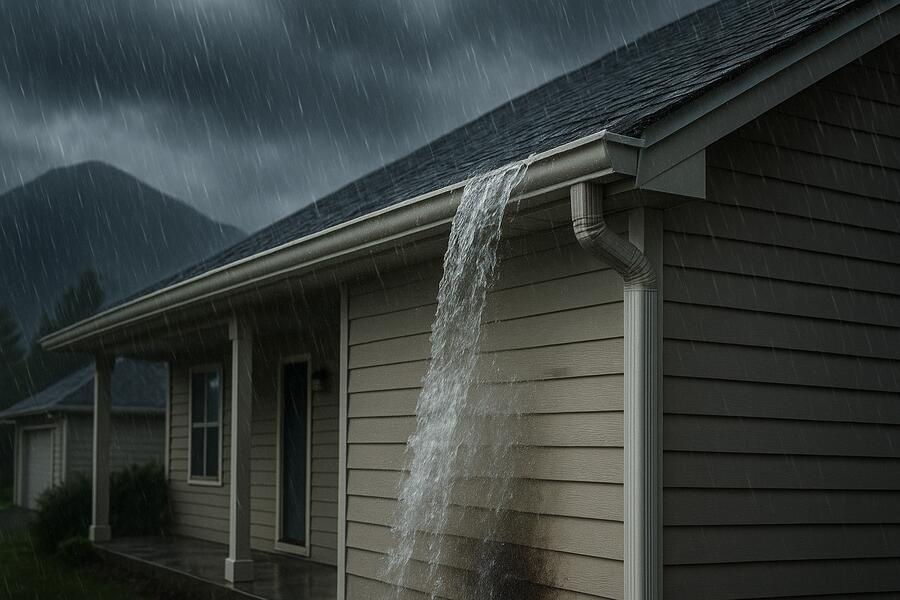
In Missoula, MT, our weather can shift from gentle drizzles to heavy downpours with surprising speed. Your home’s gutter system is designed to manage this runoff, protecting your foundation, siding, and landscaping. While we often focus on gutter size, the unsung heroes of effective drainage are your downspouts. If they’re not adequately sized for your roof’s drainage area and local rainfall intensity, you’ll start seeing problems—even if your gutters are clean and in perfect condition.
An undersized downspout simply can’t handle the volume of water rushing into it during a significant rain event. Instead of efficiently channeling water away, it causes bottlenecks and overflows, leading to concentrated water runoff near your home’s foundation. Recognizing the signs of an undersized downspout is critical for preventing serious water damage and ensuring your entire gutter system performs as it should. For expert advice and services on gutter downspouts missoula mt, trust Aces Seamless Gutters.
Key Overflow Patterns Indicating an Undersized Downspout
1. Gutter Overflowing Mid-Span During Rain
This is perhaps the most direct and unmistakable sign. If you observe water spilling over the edges of your gutters at points between downspouts, especially during moderate to heavy rain, even when the gutters are clean and free of clogs, it’s a strong indication that the downspouts are insufficient.
-
The Bottleneck Effect:
Water collects in the gutter faster than the downspout can drain it. The downspout essentially creates a bottleneck, causing the water level in the gutter to rise and overflow. This is different from an overflow caused by a localized clog right at the downspout opening.
-
Concentrated Overflow:
Unlike a general overflow from completely clogged gutters, this overflow often occurs along a section of gutter furthest from the downspout, or in the middle of a long gutter run, because the water has to travel a greater distance to an insufficient outlet.
💡 Key Takeaway: If your gutters are overflowing between downspouts during heavy rain, even when clean, it’s a primary indicator that the existing downspouts are undersized and cannot handle the volume of water.
2. Water Backing Up at Downspout Outlets
Stand near your downspouts during a heavy rain. If you see water visibly backing up and pooling at the top of the downspout opening, almost reaching the gutter lip, it means the downspout cannot evacuate the water fast enough.
-
Visual Confirmation:
This is a clear sign that the downspout’s capacity is being exceeded. The water is trying to enter the downspout but can’t flow through quickly enough, causing a temporary backup.
-
Consequences:
This backup can lead to water lingering in the gutter longer, increasing the chance of leaks, premature wear, and even ice dams in colder climates.
3. Overflow at Gutter Corners
Gutter corners, especially inside corners, are natural points of high water concentration. If water is consistently overflowing at these junctions during rain, it often points to a downspout inadequacy further along the gutter run that services that corner.
-
High-Stress Zones:
Corners collect water from two different gutter sections. If the nearest downspout is undersized, water quickly overwhelms the corner, leading to localized overflow.
-
Impact on Fascia:
Consistent overflow at corners can quickly lead to rot in the fascia board and underlying roof structure.
💡 Key Takeaway: Water visibly backing up at downspout openings or overflowing at gutter corners indicates the downspouts are struggling to process the water flow, creating drainage bottlenecks and potential damage.
Long-Term Consequences of Undersized Downspouts
Ignoring the signs of undersized downspouts can lead to a host of expensive and damaging problems:
-
Foundation Damage:
Repeated water overflow near the foundation saturates the soil, leading to hydrostatic pressure, foundation cracks, and basement leaks.
-
Erosion and Landscape Damage:
Concentrated overflow washes away topsoil, mulch, and can damage garden beds and landscaping around your home.
-
Fascia and Soffit Rot:
Water constantly spilling over or backing up can soak into the fascia boards and soffits, leading to wood rot, paint peeling, and pest infestations.
-
Siding Damage:
Splashback from overflowing gutters can damage siding, leading to stains, mold, mildew, and premature deterioration.
-
Gutter Stress and Failure:
Overloaded gutters are under constant stress, which can lead to sagging, detachment from the fascia, and reduced lifespan of the entire system.
Sizing Your Downspouts Correctly
Determining the correct downspout size and quantity involves a few key factors:
-
Roof Drainage Area:
This is the square footage of the roof surface that drains into a particular gutter section. Remember, it’s the footprint, not the sloped surface, that matters most for rain collection.
-
Local Rainfall Intensity:
Missoula’s historical data on peak rainfall intensity (often expressed in inches per hour over a short duration, like 5-10 minutes) is crucial. A system designed for light rain will fail in a downpour.
-
Rule of Thumb:
A common guideline is to have 1 square inch of downspout cross-section for every 100 square feet of roof drainage area. For example, a 2×3-inch rectangular downspout has 6 square inches of cross-section and can handle approximately 600 square feet of roof area, while a 3×4-inch downspout has 12 square inches and can handle around 1200 square feet.
| Downspout Size (Rectangular) | Cross-Section Area | Approx. Max Roof Area (Sq Ft)* |
|---|---|---|
| 2×3 inches | 6 sq inches | 600-1000 sq ft |
| 3×4 inches | 12 sq inches | 1200-2200 sq ft |
*_Note: Max roof area capacity varies significantly based on local rainfall intensity and roof pitch. These are general approximations._
If you’re noticing any of these signs around your Missoula home, it’s time to assess your downspout system. Upgrading to larger downspouts or adding more downspout drops can dramatically improve your home’s drainage, preventing future headaches and costly repairs.
Have questions about undersized downspout signs? Reach out to our team today.
Frequently Asked Questions About Undersized Downspouts
How can I accurately determine my roof’s drainage area?
To accurately determine the drainage area for each downspout, you need to measure the footprint of the roof section that drains into the corresponding gutter. For a simple gable roof, this is typically the length of the house times half the width of the roof. For more complex roofs, it’s best to divide the roof into sections and calculate the square footage for each area that directs water to a specific downspout.
What happens if my downspouts are undersized for a long time?
Long-term consequences of undersized downspouts can be severe and expensive. They include foundation cracks due to repeated soil saturation, basement flooding, wood rot in fascia and soffits, mold growth on siding and interior walls, and premature wear and tear on your entire gutter system leading to leaks and detachment.
Can adding more downspouts help an undersized system?
Yes, adding more downspouts can often effectively address an undersized system, especially for long gutter runs. By increasing the number of outlets, you distribute the water flow more efficiently, reducing the volume each individual downspout has to handle. This can prevent water from backing up in the gutters and overflowing, ensuring water is moved away from your home more quickly.

