
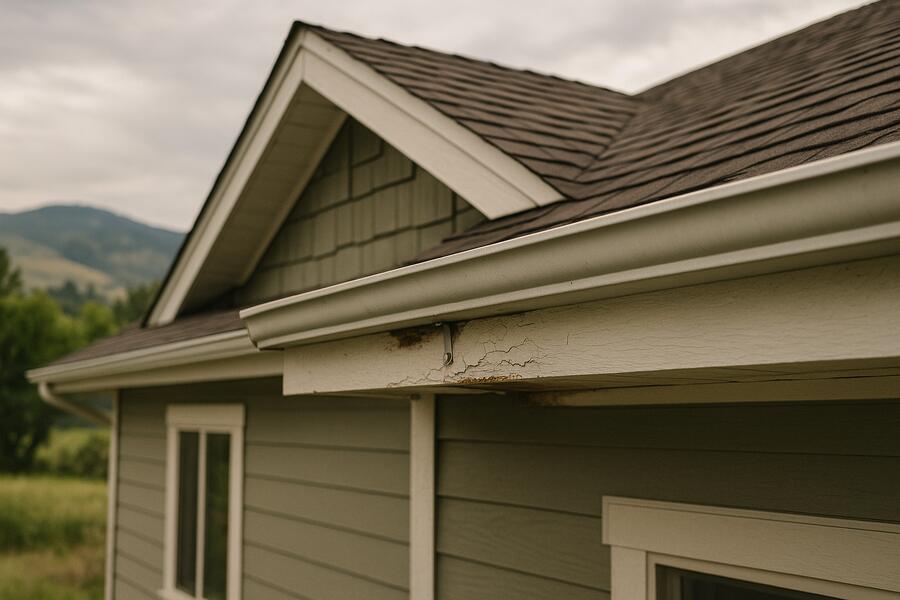
The fascia board, the long, straight board that runs along the lower edge of your roofline, plays a critical role in protecting your home. It supports the bottom row of roof tiles or shingles, serves as an anchor for your gutters, and seals off the roof from the elements and pests. When your fascia is made of wood, it’s particularly susceptible to moisture damage, especially in climates like Missoula, MT, where we experience significant rainfall and snowmelt.
Rotting wood fascia isn’t just an aesthetic problem; it compromises your entire roof and gutter system, potentially leading to widespread damage and costly repairs. Catching the signs of rotting fascia early can save you a significant amount of money and headache down the road. This guide will walk you through the key visible clues that indicate fascia rot, helping you identify problems before they escalate.
Recognizing the Visible Clues of Rotting Fascia
1. Peeling, Bubbling, or Discolored Paint
One of the earliest and most common signs of rotting fascia is compromised paint. When wood fascia absorbs moisture, the paint loses its adhesion and begins to blister, bubble, or peel. This is particularly noticeable if it happens in the same spot repeatedly, even after repainting. You might also see dark stains, streaks, or general discoloration on the paint surface, indicating water is consistently present.
- What to look for: Paint that isn’t smooth, has raised areas, flakes off easily, or shows distinct water marks or streaks below the gutter line.
💡 Key Takeaway: Pay close attention to the paint on your fascia. Peeling, bubbling, or discolored paint, especially with recurring water stains, is often the first visual indicator of underlying moisture damage and potential rot.
2. Soft, Spongy, or Crumbly Wood
Healthy wood fascia should feel solid and firm. Rotting wood, however, will lose its structural integrity as its fibers break down from moisture and fungal growth. This creates distinct changes in its texture.
- What to look for: Gently press on the fascia board with your finger or poke it with a screwdriver. If the wood feels soft, spongy, or gives way easily under pressure, it’s a strong sign of rot. In advanced stages, the wood might even crumble or flake away when touched. Any area that feels less dense than the surrounding wood is suspicious.
3. Visible Fungal Growth or Mold
Wood rot is caused by fungi that thrive in moist conditions. Therefore, visible fungal growth or mold on your fascia is a clear indicator of a moisture problem that can lead to rot.
- What to look for: Dark spots, green or black discoloration, or furry/fuzzy patches on the fascia board. You might also notice a musty odor, particularly during humid weather or after rain, which suggests trapped moisture behind the fascia.
4. Sagging or Separated Gutters
Your gutters are directly attached to the fascia board. When the fascia rots, it loses its ability to firmly hold the gutter fasteners. This can cause the gutters to pull away from the roofline, sag, or even detach entirely.
- What to look for: Gutters that are noticeably tilting, have gaps between them and the fascia, or appear to be lower in some sections than others. If you see gutter fasteners pulling out of the wood, it’s almost certainly a sign that the fascia behind them has softened due to rot. This is a crucial sign that professional fascia installation missoula mt may be required.
💡 Key Takeaway: Sagging or detached gutters are a critical warning sign. They indicate that the underlying fascia has lost its integrity due to rot and can no longer support the weight of the gutters, especially when full of water.
5. Warping, Swelling, or Cracks
Moisture absorption causes wood to expand and contract, which can lead to warping, swelling, or cracking of the fascia board. This deformation can also create gaps between the fascia and the roof overhang or soffit.
- What to look for: Boards that are no longer straight and flat, visible cracks running along the length of the board, or sections that appear swollen or distorted. These physical deformations indicate that the wood has been exposed to prolonged moisture and is breaking down.
6. Pest Activity
Rotting wood becomes an attractive target for various pests, including carpenter ants, termites, and even woodpeckers. The softened wood provides easy access and a suitable environment for nesting.
- What to look for: Small holes in the fascia, sawdust-like material (frass) accumulating below the fascia, or increased bird activity (pecking) around the roofline. These could indicate that pests are exploiting the weakened wood.
| Sign of Rotting Fascia | What it Looks/Feels Like | Why it Matters |
|---|---|---|
| Peeling/Bubbling Paint | Raised, flaking paint; dark streaks or discoloration. | Early indicator of trapped moisture and paint adhesion loss. |
| Soft/Spongy Wood | Wood that “gives” under pressure; crumbles or flakes. | Loss of structural integrity due to fungal decay. |
| Visible Fungal Growth | Dark spots, green/black discoloration, musty odor. | Direct evidence of moisture and wood-destroying fungi. |
| Sagging/Separated Gutters | Gutters pulling away, tilting, or fasteners loose. | Fascia can no longer support gutter weight due to rot. |
| Warping/Swelling/Cracks | Deformed or non-straight boards, visible splits. | Physical breakdown of wood fibers from moisture cycles. |
| Pest Activity | Small holes, frass, increased bird pecking. | Pests are attracted to and exploiting softened, rotted wood. |
Regular inspections of your fascia, especially after heavy rains or harsh winters, can help you catch these signs early. Addressing rotting fascia promptly is crucial to prevent further damage to your roof, gutters, and potentially even your home’s interior structure. If you suspect fascia rot, it’s always best to consult with a professional.
Have questions about signs of rotting fascia? Reach out to our team today.
Frequently Asked Questions About Rotting Fascia
What causes wood fascia to rot?
Wood fascia primarily rots due to prolonged exposure to moisture. Common causes include overflowing or leaky gutters, inadequate drip edge flashing that allows water to run behind the fascia, ice dams, and poor paint maintenance that leaves the wood exposed to the elements. Once moisture penetrates, fungi can begin to grow and break down the wood fibers.
Can I repair rotted fascia myself, or do I need a professional?
Minor, localized soft spots or small sections of rot (e.g., 1-2 feet) might be repairable by a handy homeowner using epoxy wood filler or by replacing a small section of the board. However, if the rot is extensive, spans several feet, or extends into the rafter tails, it’s highly recommended to hire a professional. Addressing significant rot requires expertise in safely working at heights, matching materials, and ensuring proper structural repair and water diversion to prevent recurrence.
How can I prevent my fascia from rotting in the future?
To prevent fascia rot, ensure your gutters are always clean, free-flowing, and properly pitched. Maintain your gutter system to prevent leaks and overflows. Install a proper drip edge to direct water into the gutters and away from the fascia. Consider upgrading to metal fascia wrap (aluminum or PVC) over your existing wood fascia, as it provides a durable, low-maintenance, and weather-resistant barrier that can last decades without painting and is impervious to rot.

