
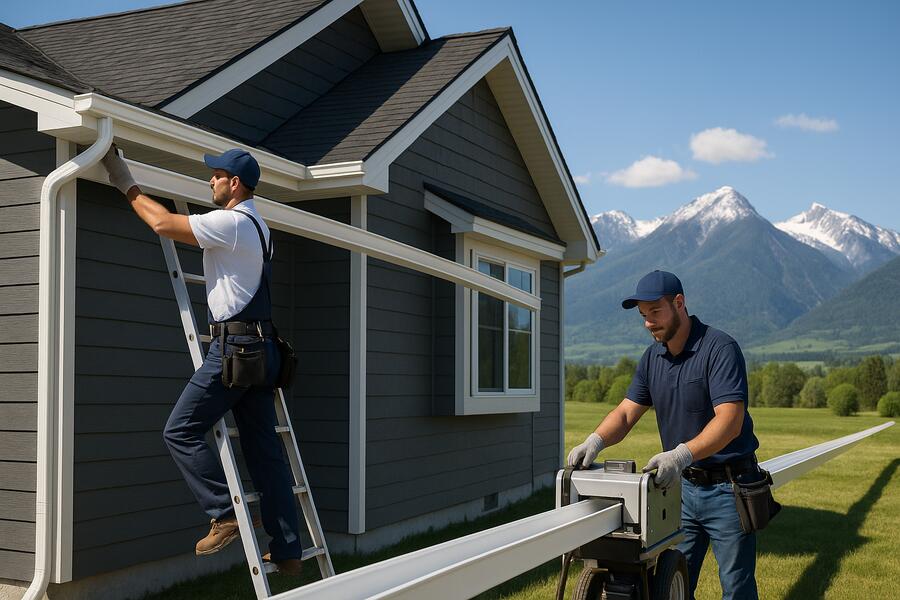
When you’re planning a gutter installation for your Missoula, MT home, one of the first questions on your mind is often, “How long will this take?” While many homeowners hope for a quick, same-day job, the truth is that the gutter installation timeline can vary significantly. There’s no one-size-fits-all answer, as several factors come into play, from the specifics of your home to the materials chosen and the team on the job.
At Aces Seamless Gutters, we believe in transparency and setting clear expectations. We understand that your time is valuable, and you want to know what to anticipate. For quality gutter installation, you can learn more about our approach to seamless gutters in Missoula. This guide will delve into the primary gutter installation timeline factors, including your home’s size and complexity, the type of gutters and additional features, and the efficiency of the installation crew, to help you understand what influences the duration of your project.
Key Gutter Installation Timeline Factors
Several variables contribute to how long a gutter installation will take.
1. Home Size and Architectural Complexity
The bigger and more intricate your home, the longer the job.
-
Linear Footage of Gutters:
This is arguably the most significant factor. A small, single-story ranch home with a simple roofline might only require 100-140 linear feet of gutters, potentially completed in 4-8 hours. A larger, multi-story home (200-300+ linear feet) with multiple roof sections and corners can easily push the timeline to 12-20 hours, or even two to three full days.
-
Number of Stories:
Multi-story homes require installers to work at greater heights, often necessitating more safety equipment, scaffolding, and slower, more meticulous work. Accessing higher rooflines adds time and complexity.
-
Roofline Complexity:
Homes with intricate roof designs, multiple gables, dormers, and valleys require more precise measurements, more cuts, more downspout connections, and more careful bending of custom pieces. A simple, rectangular roof is much faster to work on than a sprawling, complex one.
2. Type of Gutter System and Materials
Your choice of gutters also impacts the timeline.
-
Seamless vs. Sectional Gutters:
Seamless gutters are custom-fabricated on-site using a gutter machine, which can be faster than assembling many individual sectional pieces, especially for long runs. However, transporting and setting up the seamless gutter machine adds a small initial overhead. Sectional gutters require more joining and sealing, which can add time.
-
Gutter Material:
Aluminum gutters are relatively lightweight and easy to cut and maneuver, contributing to faster installation. Heavier materials like copper or steel gutters require more specialized tools, careful handling, and often more robust fastening systems, extending the timeline.
-
Additional Features:
Adding gutter guards, multiple downspouts, rain chains, or intricate drainage systems will naturally increase the installation time. Each additional component requires careful measurement, fitting, and securement.
💡 Key Takeaway: Gutter installation timelines are significantly influenced by a home’s linear footage, number of stories, and roofline complexity. Larger, multi-story homes with intricate roofs take longer. The choice of seamless vs. sectional gutters, the gutter material (e.g., aluminum vs. copper), and the inclusion of additional features like gutter guards also play a critical role in determining the overall project duration.
Pre-Installation Considerations & Crew Efficiency
Factors before and during installation also affect the overall duration.
1. Condition of Existing Structure
Addressing underlying issues takes time.
-
Old Gutter Removal:
If you’re replacing an old system, the time it takes to safely remove and dispose of existing gutters must be factored in. This can add a few hours to a half-day, especially if the old gutters are corroded or difficult to detach.
-
Fascia Board Repair:
Gutters attach directly to the fascia board. If the fascia is rotted, damaged, or unstable, it must be repaired or replaced before new gutters can be installed. This unforeseen structural work can add significant time and cost to the project.
-
Rotten Soffits or Rafter Tails:
Sometimes, fascia damage indicates deeper issues with the soffits or even the ends of the roof rafters. Discovering and repairing these problems during installation will extend the timeline considerably.
2. Crew Size, Experience, and Accessibility
The human element and site conditions play a role.
-
Crew Size:
A larger, well-coordinated crew can complete a job much faster than a small team. A typical 2-3 person crew can often install 150-250 linear feet of aluminum gutters in a single day.
-
Experience and Expertise:
Experienced installers work efficiently and meticulously, minimizing errors and re-work. Their expertise in handling specific materials and complex rooflines contributes to a smoother, faster installation.
-
Weather Conditions:
Gutter installation is an outdoor job. Rain, snow, high winds, or extreme temperatures can cause delays, rescheduling, or slower work for safety and quality reasons.
-
Site Accessibility:
Easy access around the perimeter of your home (e.g., no dense landscaping, fences, or obstructions) allows the crew to work more efficiently. Difficult-to-reach areas or uneven terrain can slow down the process.
💡 Key Takeaway: Pre-installation tasks like old gutter removal and necessary fascia or soffit repairs can significantly extend timelines. During the job, the efficiency of a well-sized, experienced crew, favorable weather conditions, and easy site accessibility are crucial for keeping the project on schedule. Unexpected structural damage discovered during the process is a common reason for delays.
| Factor | Impact on Timeline | Typical Range |
|---|---|---|
| Small, Simple Home | Fewer linear feet, minimal complexity. | 4-8 hours (half to one day) |
| Medium, Standard Home | Moderate linear footage, some roofline features. | 8-12 hours (one to one and a half days) |
| Large, Complex Home | Extensive linear footage, multiple stories/gables, custom work. | 12-24+ hours (one and a half to three days) |
| Old Gutter Removal | Adds initial task before new installation. | +2-6 hours |
| Fascia/Soffit Repair | Requires addressing structural issues first. | +Half day to multiple days |
| Adverse Weather | Causes delays, rescheduling, or slower work. | Variable delays |
The gutter installation timeline is a dynamic estimate, influenced by a combination of your home’s unique characteristics, the materials and features you choose, and the conditions on the day of installation. While a standard home might see new gutters installed in a single day, larger or more complex projects, or those with underlying structural issues, can easily extend over several days. Always work with a reputable installer who provides a clear timeline and keeps you informed throughout the process.
Have questions about gutter installation timeline factors? Reach out to our team today.
Frequently Asked Questions About Gutter Installation Timelines
How long does a typical seamless gutter installation take on a standard home?
For a typical single-story home with a straightforward roofline, requiring around 150-200 linear feet of gutters, a professional crew of 2-3 experienced installers can often complete the seamless gutter installation within 4 to 8 hours. However, this is an average, and factors like site conditions or unexpected repairs can adjust this estimate.
Does choosing a specific gutter material affect the installation time?
Yes, the gutter material can affect installation time. Aluminum gutters are generally the quickest to install because they are lightweight and easy to cut and shape. Heavier materials like copper or steel take more time due to their weight, rigidity, and the need for more specialized tools and fastening techniques. Custom materials or elaborate designs will also extend the timeline.
What if hidden damage is found during the gutter installation?
It’s not uncommon for installers to discover hidden damage, such as rotted fascia boards, damaged soffits, or even compromised roof decking, once the old gutters are removed. When this happens, the installation will pause to address these structural issues. Your installer should communicate these findings immediately, explain the necessary repairs, and provide an updated timeline and cost estimate before proceeding. Addressing these underlying problems is crucial for the longevity and effectiveness of your new gutter system.

