
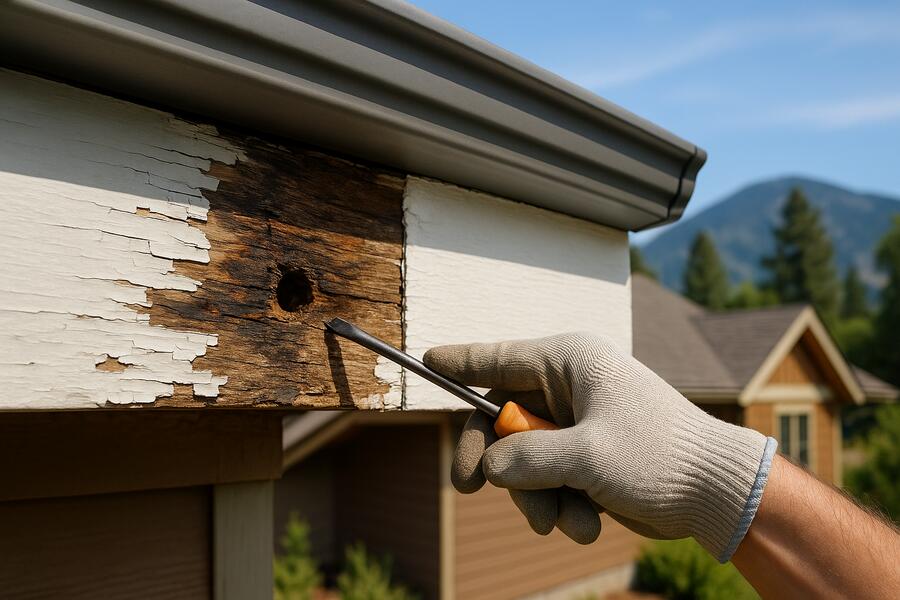
The fascia board is a crucial, yet often overlooked, component of your Missoula, MT home’s roofing system. It’s the long, straight board that runs along the lower edge of your roof, directly beneath the roofline, providing a finished look and serving as the attachment point for your gutters. Given its exposed position, fascia is highly susceptible to water damage, rot, and pest infestations. When you notice damage, a key decision arises: should you opt for a targeted repair or a complete replacement of the fascia boards?
At Aces Seamless Gutters, we regularly deal with damaged fascia as part of our gutter services, and we understand the importance of making the right call. Deciding whether to repair vs replace fascia boards can save you time, money, and prevent further damage down the line. This guide will provide a clear framework for Missoula homeowners to assess fascia damage and choose the most effective solution for their home, from minor fixes to comprehensive fascia and soffit repair.
Assessing Fascia Damage: What to Look For
Before making any decisions, a thorough inspection is crucial.
1. Common Causes of Fascia Damage
Understanding the cause helps determine the best fix.
-
Water Damage from Gutters:
This is by far the most common culprit. Clogged, overflowing, or leaking gutters allow rainwater to continuously saturate the fascia board, leading to rot. Improperly installed drip edges can also direct water behind the fascia.
-
Poor Roof Ventilation:
Trapped moisture in the attic can lead to condensation and moisture buildup in the eaves, affecting the fascia and soffit.
-
Pest Infestations:
Insects like carpenter ants or termites, as well as nesting birds or rodents, can chew through or nest within fascia boards, especially if the wood is already softened by moisture.
-
General Wear and Tear:
Exposure to sun, wind, rain, and temperature fluctuations over many years can cause paint to peel, wood to crack, or the material to simply degrade.
2. Signs of Damage
Look for these indicators during your inspection.
-
Discoloration or Staining:
Dark streaks or water stains on the fascia often indicate water overflow from gutters.
-
Soft Spots or Sponginess:
Probe the fascia with a screwdriver. If the wood feels soft, spongy, or crumbles easily, it’s likely suffering from rot.
-
Peeling Paint or Cracking Wood:
While cosmetic, these can be early signs of moisture penetration or general deterioration.
-
Visible Mold or Fungal Growth:
This is a clear indicator of persistent moisture issues and rot.
-
Sagging or Gaps:
If the fascia board appears to sag or pull away from the roofline, it indicates significant structural compromise.
💡 Key Takeaway: Fascia damage is most often caused by overflowing gutters or moisture issues. Inspect for discoloration, soft/spongy spots, peeling paint, or visible mold. These signs are critical in determining whether a repair or full replacement is needed, as they indicate the severity and extent of the underlying problem.
When to Choose Repair Over Replacement
Spot repairs are suitable for isolated, minor damage.
1. Cosmetic Damage
If the integrity of the board is not compromised.
-
Minor Discoloration or Fading:
If the fascia is discolored but still solid, a thorough cleaning, sanding, and repainting can restore its appearance. This is a common solution for surface stains from minor gutter drips.
-
Small Cracks or Chips:
For small, isolated cracks or chips that don’t extend deeply into the wood, a good quality wood filler, sanding, and repainting can provide an effective, long-lasting repair.
2. Isolated Soft Spots
When rot is contained to a small area.
-
Small Section of Rot:
If you find a soft or rotting section that is less than a few feet long and hasn’t spread to adjacent areas or underlying framing, it can often be cut out and replaced with a new piece of fascia. This patch should be primed, painted, and properly sealed to match the existing board.
-
Early Stage Fungal Growth:
If mold or fungus is superficial and the wood beneath is still largely solid, treating the area, addressing the moisture source, and then repairing with appropriate products might be feasible.
💡 Key Takeaway: Choose fascia repair for cosmetic issues like discoloration, minor cracks, or small, isolated soft spots (under a few feet) where the underlying structural integrity is still sound. This approach is cost-effective for localized damage, but requires addressing the root cause of the moisture or deterioration.
When Full Replacement is Necessary
Extensive or structural damage almost always calls for a full replacement.
1. Widespread Rot or Multiple Soft Sections
If the damage is extensive, patching is insufficient.
-
Multiple Compromised Areas:
If you find several soft or rotting sections along a single run of fascia, or if the rot extends for many linear feet, a full replacement of that entire section is typically more cost-effective and structurally sound than attempting multiple patches.
-
Structural Integrity Compromised:
If the fascia is sagging, pulling away, or feels extensively soft throughout, its structural integrity is compromised. This means it can no longer adequately support the gutters or protect the roof edge, necessitating a complete replacement.
2. Damage to Underlying Components
Fascia damage can often be a warning sign of deeper issues.
-
Rafter Tail or Soffit Damage:
If the rot in the fascia has spread to the rafter tails (the ends of the roof rafters) or the adjacent soffit boards, a full replacement of the fascia is required, along with repairs to these underlying structural elements. This is a more complex job, often requiring partial roof deconstruction.
-
Chronic Moisture Issues:
If the fascia has repeatedly suffered from water damage despite previous repairs, it’s often a sign of a persistent problem with your gutters, drip edge, or roofline. In such cases, replacing the fascia and simultaneously upgrading your gutter system (e.g., seamless gutters, gutter guards) can provide a long-term solution.
| Damage Type | Recommendation | Why |
|---|---|---|
| Cosmetic (Stains, Minor Peeling Paint) | Repair (Clean, Sand, Repaint) | No structural integrity loss; surface-level issue. |
| Small, Isolated Soft Spot (under 2-3 ft) | Spot Repair (Cut out, replace section) | Damage is contained; full board is still sound. |
| Multiple Soft Spots / Extensive Rot (over 3-4 ft) | Full Section Replacement | Widespread damage compromises durability and appearance; patching is inefficient. |
| Sagging, Warping, or Structural Failure | Full Replacement (potentially with rafter repair) | Board can no longer perform its function; indicates deeper structural issues. |
| Damage to Rafter Tails or Soffit | Full Replacement & Underlying Repair | Indicates extensive moisture intrusion and requires comprehensive structural work. |
The decision to repair vs replace fascia boards boils down to the extent and depth of the damage. While minor issues can be effectively patched, widespread rot or structural compromise demands a full replacement to ensure the long-term integrity and protection of your Missoula home. Always address the root cause of the damage – most often, a faulty gutter system – to prevent recurrence. Consulting with a seasoned professional can provide an accurate assessment and the most appropriate solution for your specific situation.
Have questions about when to repair vs fully replace fascia boards? Reach out to our team today.
Frequently Asked Questions About Fascia Board Repair and Replacement
How much does it cost to replace fascia boards?
The cost to replace fascia boards varies significantly based on material, linear footage, and whether underlying damage (like to rafter tails) needs repair. Generally, expect costs between $7 to $22 per linear foot, including materials and labor. For an average single-story home (150-200 linear feet), a full replacement can range from $1,050 to $3,300 or more. Repairing small sections will be less, potentially a few hundred dollars, but always factor in the cost of addressing the source of the damage.
What happens if I don’t repair or replace damaged fascia?
Ignoring damaged fascia can lead to a cascade of costly problems. Without a sound fascia board, your gutters can detach, causing water to pour directly onto your foundation, leading to erosion, basement leaks, and structural foundation damage. Exposed rafter tails become vulnerable to rot and pests, compromising your roof’s integrity. Furthermore, damaged fascia reduces your home’s curb appeal and can decrease its overall value. It’s an essential component for protecting your entire home envelope.
Can I just cover rotting fascia with aluminum or PVC?
While wrapping existing fascia with aluminum or PVC is a common practice for low-maintenance aesthetics, it should only be done over sound, dry wood. Covering rotting fascia will trap moisture, accelerate the decay process, and lead to more extensive and expensive damage down the line. If there’s any rot or significant damage, the compromised wood *must* be removed and replaced before any wrapping or capping is applied. A thorough inspection by a professional can determine if your existing fascia is suitable for wrapping.

