
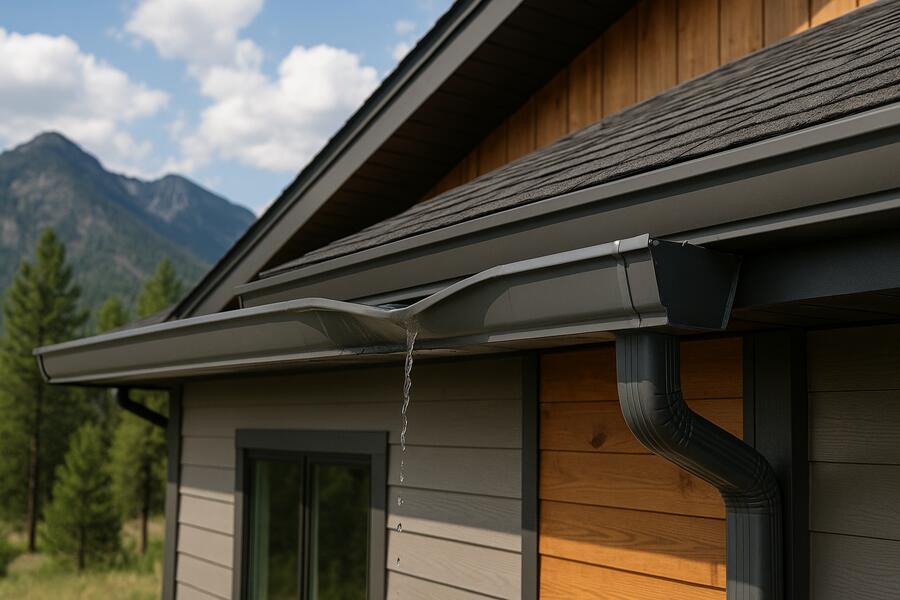
For homeowners in Missoula, MT, damaged gutters are more than just an eyesore; they’re a direct threat to your home’s structural integrity. When you spot a problem—be it a leak, sag, or a visible dent—the immediate question is often: “Can I fix this, or do I need to replace it?” Deciding whether to repair vs replace a gutter section is a common dilemma, and making the right choice can save you significant time and money in the long run.
At Aces Seamless Gutters, we understand that every situation is unique. Our experience with Missoula’s climate and housing stock gives us a clear perspective on when a quick fix will suffice and when a more substantial replacement is genuinely needed. We aim to provide homeowners with a clear framework for this decision, ensuring that any gutter repair missoula mt service we provide is the most cost-effective and durable solution for your specific problem.
When a Gutter Repair Is Sufficient
Minor issues often lend themselves well to a straightforward repair. These are typically localized problems that haven’t compromised the overall integrity of the gutter system.
1. Small Leaks or Drips
Leaks are common, especially in sectional gutters where joints can fail, or in seamless gutters with small holes.
-
Identifying the Leak:
Often caused by failing sealant at seams, small holes from debris, or minor cracks. Check during a rainstorm or by running water through the gutter with a hose.
-
Repair Solution:
For small holes or cracks, a metal-repair patch combined with roofing cement or a high-quality gutter sealant can provide an effective, long-lasting fix. For seam leaks, cleaning and resealing the joint is usually sufficient.
2. Sagging or Poor Pitch
If a gutter is sagging, it’s typically due to loose or insufficient hangers, leading to water pooling.
-
Identifying the Sag:
Visually inspect the gutter; water pooling or overflow in one section indicates poor pitch. This can be verified by a level.
-
Repair Solution:
This often involves adding more gutter hangers, repositioning existing ones, or reinforcing them to restore the correct pitch (a slight slope towards the downspouts). Ensuring hangers are securely fastened to the fascia is key.
3. Loose or Detached Sections
Individual sections of sectional gutters can sometimes pull apart, or a seamless section can detach from the fascia in a small area.
-
Identifying the Problem:
Visible gaps between sections or a section pulling away from the house are clear indicators.
-
Repair Solution:
For sectional gutters, rejoining and resealing the loose section, often with new fasteners, is the fix. For seamless gutters, reattaching the loose portion to the fascia with stronger, longer fasteners (and potentially addressing any underlying fascia damage) is required.
💡 Key Takeaway: Gutter repairs are often sufficient for localized issues like small leaks, sagging due to loose hangers, or minor detachments. Solutions typically involve patching holes, resealing seams, adding or repositioning hangers to correct pitch, or re-fastening loose sections.
When Gutter Section Replacement Is Necessary
More severe or widespread damage often warrants replacing a section of your gutter system to ensure proper function and prevent recurring issues.
1. Extensive Rust, Corrosion, or Multiple Holes
While small holes can be patched, widespread deterioration is a sign that the metal itself is failing.
-
Identifying the Problem:
Visible rust spanning a significant portion of the gutter, numerous small holes, or brittle, corroded material indicate that the gutter has reached the end of its lifespan in that section.
-
Replacement Solution:
Attempting to patch multiple areas is a temporary fix at best. Replacing the entire damaged section provides a fresh, durable channel that will reliably move water away from your home.
2. Severely Bent, Dented, or Crushed Sections
Physical damage, often from falling tree branches, ladders, or heavy ice, can permanently deform a gutter.
-
Identifying the Damage:
Sections that are significantly bent, dented, or crushed beyond their original shape cannot effectively hold or channel water. This often compromises the gutter’s structural integrity.
-
Replacement Solution:
Once the shape is compromised, it’s very difficult to restore it to a functional condition. Replacing the damaged section ensures proper water flow and maintains the aesthetic appeal of your home.
3. Recurring Problems After Repairs
If you find yourself repeatedly fixing the same section, it’s a clear signal that a repair isn’t enough.
-
Identifying the Pattern:
Frequent leaks, re-sagging, or consistent detachment in the same area indicate an underlying issue that a patch-up isn’t resolving, or that the material itself is too fatigued to hold.
-
Replacement Solution:
Investing in a section replacement at this point is more cost-effective than continuous, ineffective repairs. It addresses the root cause of the recurring problem with a fresh, sound piece of gutter.
💡 Key Takeaway: Gutter section replacement is necessary for widespread rust or corrosion, severe physical damage (bends, dents, crushing), or recurring problems that repairs fail to resolve. These issues often indicate that the material’s integrity is compromised beyond a simple fix.
Factors Influencing Your Decision
| Factor | Repair Is Likely Best If… | Replacement Is Likely Best If… |
|---|---|---|
| Age of Gutters | Gutters are relatively new (under 10-15 years old) and in good condition overall. | Gutters are 15-20+ years old, showing general wear and tear, or are frequently failing. |
| Extent of Damage | Damage is localized (e.g., a single small leak, one loose hanger). | Damage is widespread, involves multiple holes, severe bending, or significant rust in a section. |
| Cost-Effectiveness | Repair cost is significantly less than replacement and expected to last. | Repair cost is close to 50% or more of replacement cost, or repairs are recurring. |
| Aesthetics | Repair can be made invisibly or without noticeable visual impact. | Damage is highly visible and a repair would look unsightly or uneven. |
Choosing between gutter repair and replacement for a damaged section boils down to a careful assessment of the damage’s nature, extent, and the overall condition of your existing gutter system. For Missoula homeowners, consulting with an experienced professional like Aces Seamless Gutters is invaluable. We can provide an honest assessment and recommend the most durable and cost-effective solution, ensuring your home remains protected for years to come.
Have questions about whether to repair vs replace a gutter section? Reach out to our team today.
Frequently Asked Questions About Gutter Section Repair & Replacement
How do I know if my gutters are old enough to warrant replacement over repair?
Generally, if your gutters are over 15-20 years old and showing signs of widespread wear such as multiple leaks, extensive rust, frequent sagging, or numerous bent sections, it’s often more cost-effective to replace them. While a minor repair on an older system might get you through a season, it often leads to a cascade of other problems. If you’re continually repairing different sections, a full replacement is usually the better long-term investment.
Can I just replace a section of seamless gutters?
Yes, it is possible to replace a section of seamless gutters. While the name “seamless” implies a continuous run, a damaged section can be cut out and a new, custom-fabricated piece can be inserted and joined with a slip joint and sealed. This requires specialized equipment (a gutter machine) and expertise to ensure the new section is perfectly matched in profile, color, and correctly pitched and sealed to prevent leaks.
What is the typical cost difference between repairing and replacing a section?
The cost difference can vary significantly based on the type of damage, gutter material, and linear footage. A minor repair (e.g., re-sealing a leak, reattaching a loose hanger) might cost $100-$450. Replacing a 10-20 foot section of gutter, however, could range from $300-$600 or more, depending on the material (e.g., aluminum vs. copper). If the repair cost approaches 50% or more of what a new section would cost, replacement is often the more sensible choice for long-term value.

